
Extending AOD Refractory Life
Refractory linings are among the highest recurring operating costs in Argon-Oxygen Decarburization (AOD) refining. A single unplanned failure can halt production, compromise chemistry control, and expose crews to unnecessary safety risks. Effective AOD refractory maintenance blends clever vessel design, temperature management, targeted inspections, and data-driven relining decisions—all aimed at maximizing lining life without increasing downtime.
Below are proven tactics melt shops use to stretch lining campaigns, reduce spalling, and remove avoidable wear mechanisms from day-to-day operations.
Understanding Wear Mechanisms
The first step in extending lining life is understanding how it fails. AOD refractories take on simultaneous thermal, chemical, and mechanical stresses:
- Thermal cycling: Rapid heating and cooling drive spalling and cracking.
- Chemical attack: Slag chemistry, oxygen lancing, and refining stages consume lining in predictable zones.
- Mechanical erosion: Tuyere areas, impact zones, and charge splash zones suffer the highest abrasion.
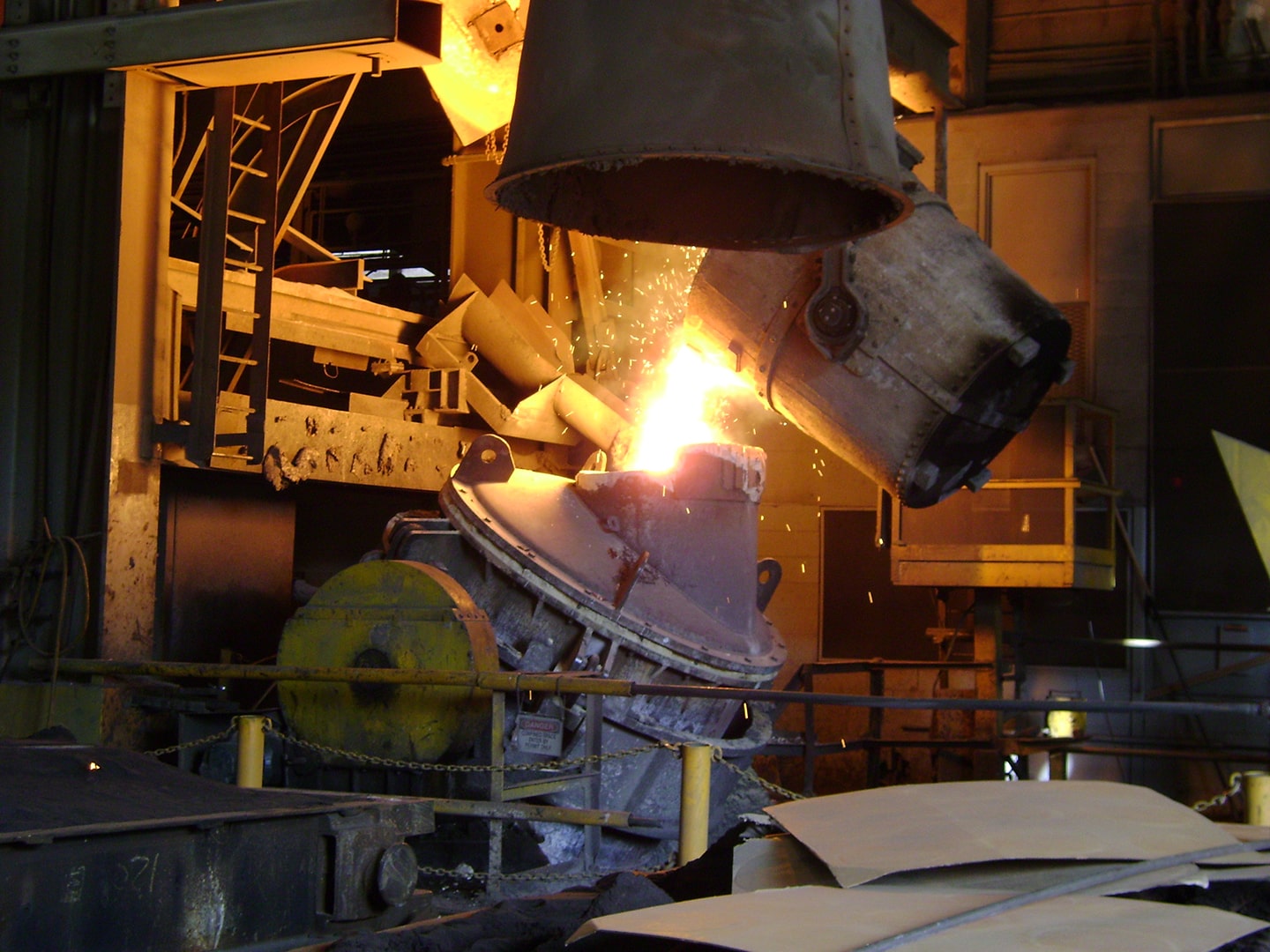
Whiting’s AOD vessel design directly addresses structural stress to help preserve refractory geometry. The 70/85-ton vessel uses an all-welded, stress-relieved shell reinforced with heavy steel ribs and gusset plates—an approach specifically intended to retain vessel shape after many heats, preventing distortion that would otherwise accelerate lining loss.
Lining Materials & Zoning
Modern AOD linings are rarely a single material. Most shops apply zoned linings to match wear patterns with material performance:
- Basic refractory in tuyere and slag zones to resist chemical attack.
- High-strength brick in mechanical impact areas.
- Protective gunning mixes or patch materials to extend lining life between full relines.
A three-vessel rotation (one in operation, one cooling or being serviced, and one ready for immediate use) is a well-established industry strategy that allows proper zoning without forcing linings beyond their safe campaign life.

Cooling & Spall Control
Thermal management has more influence on AOD refractory maintenance outcomes than any other factor. The most overlooked cause of premature lining failure is temperature cycling during downtime. Whiting’s design addresses this with purpose-built preheating systems:
- Horizontal AOD Operating Vessel Preheater (10×10⁶ BTU/h): Keeps the lining hot when the vessel is idle in the trunnion ring.
- Vertical Standby Vessel Preheater (10×10⁶ BTU/h): Ensures the next vessel is already at operating temperature and ready to swap in.
These systems dramatically reduce thermal shock and spalling from “cold starts,” one of the fastest ways to destroy a lining.
In addition, the refractory-lined, air-cooled fume hood helps protect upper-zone lining from overheating and off-gas attack—an indirect but meaningful contributor to lining life.
Inspection & Relining Efficiency
Even the best lining won’t last if inspection and repair access is slow or unsafe. Maintenance-friendly design speeds relining and reduces hot-work exposure:
- One-hour or less vessel changeover: Quick-release trunnion locking design.
- Removable top cone section: Allows faster tear-out and rebrick cycles.
- Motorized fume hood swings horizontally clear: Gives crane unobstructed vertical lift access.
Dedicated bricking platforms further improve safety and productivity when working inside the vessel. In ladle applications, similar relining lifts have shown up to 20% productivity improvement and a 32% reduction in worker fatigue—and these same ergonomic and workflow principles apply to AOD vessel relining.
Safety & Hot Work Considerations
AOD relining and patching involve high-risk confined-space work. Best practices include:
- Permit-to-work and air-quality monitoring for all entries.
- Cooling down to safe temperatures where possible.
- Use of mechanized platforms to eliminate ladder work.
- Clear lockout procedures for preheaters, cranes, and gas lines.
Thermal cameras, portable shell thermocouples, and insulated access platforms can further reduce personnel risk.
Data Logging for Wear & Budgeting Relines
While your supplied data does not reference an AOD-specific wear-monitoring module, Whiting’s broader melt-shop control systems include tools that support data-driven refractory planning.
The Volta Furnace Master logs operational data—including Refractory Running Time—which is instrumental for identifying campaign life trends and forecasting maintenance windows. Many operators combine this with:
- Heat-count targets by zone.
- Slag chemistry records to correlate wear.
- Overlay of gas-stage duration vs. wear rates.
This enables more accurate budgeting for relines and evidence-based decisions on whether patching or full relining is the better economic choice.
Final Thoughts
Extending AOD lining campaigns isn’t about one silver bullet—it’s the cumulative result of vessel design, thermal stability, disciplined inspection routines, and data-informed maintenance scheduling. Plants that take a holistic approach to AOD refractory maintenance consistently reduce brick consumption, prevent emergency relines, and maintain more stable refining conditions. Ready to learn more about Whiting’s designs? Let’s talk.