

AOD Lance Design & Gas Mixing Best Practices
Controlling carbon and nitrogen during Argon-Oxygen Decarburization (AOD) is central to achieving chemical accuracy, cleanliness, and final steel quality. The design of the AOD lance, the gas-mixing strategy, and the associated control instrumentation directly influence decarburization rates, nitrogen pickup, and endpoint consistency. This guide outlines best practices in AOD lance design, gas delivery, control logic, and performance monitoring—supported by proven operating data.
Lance Types & Placement
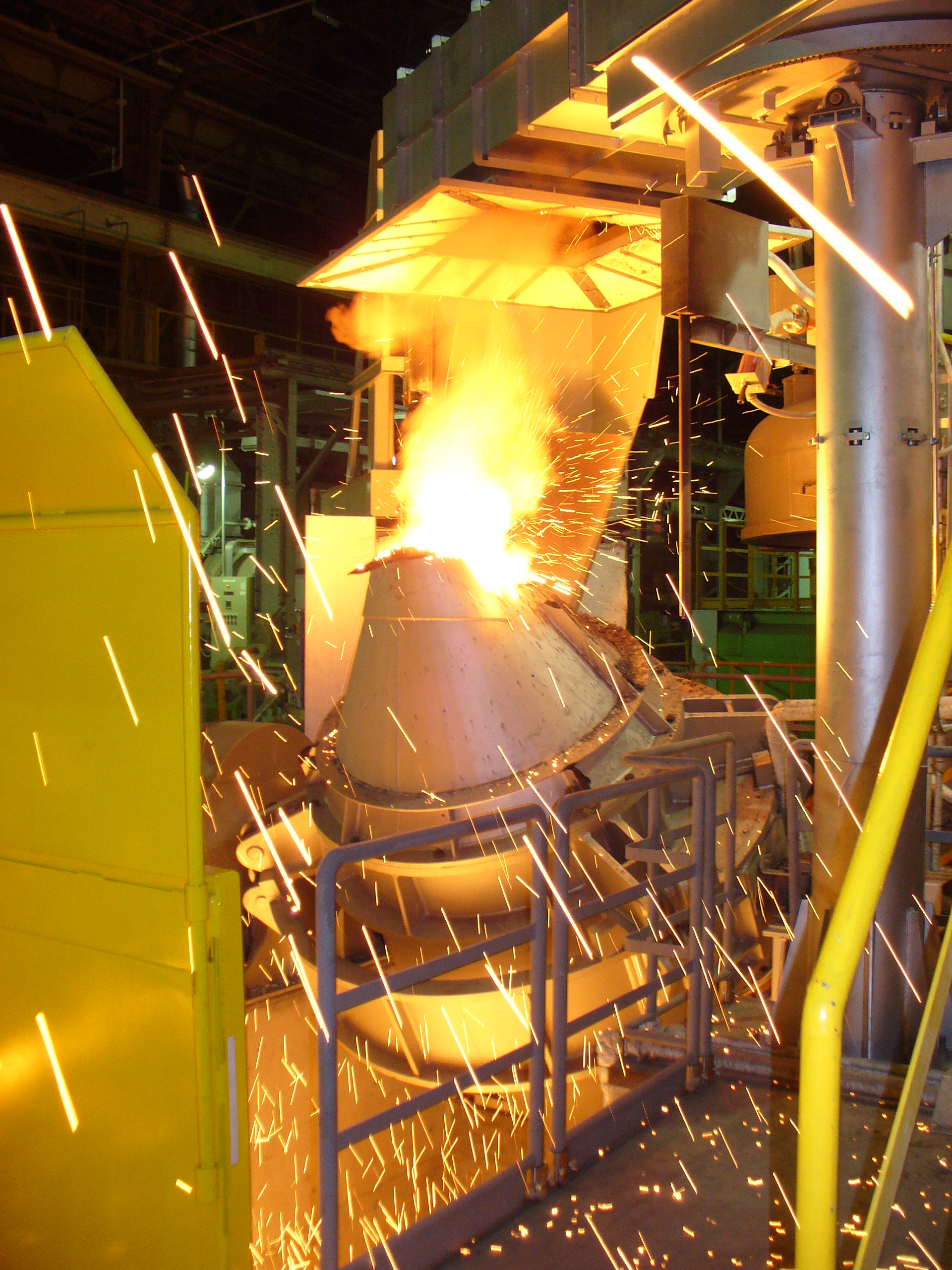
AOD refining uses a dual-blowing strategy, combining a top-blown water-cooled lance with bottom tuyeres.
Top Oxygen Lance Design and Function
- Purpose: Rapid decarburization while minimizing nitrogen pickup in early blow stages.
- Cooling: The lance is water-cooled to withstand prolonged high-temperature service at the vessel mouth.
- Placement: Installed through the motorized fume hood, sharing the same horizontal drive system.
- Range of Motion:
- Horizontal travel: 21 ft-0 in.
- Vertical travel: 9 ft-0 in.
- Drive System: A 20 hp hoist drive raises/lowers the lance for precise immersion depth and retraction.
Bottom Tuyere System
- Five (5) bottom tuyeres supply process gases for dilution, decarburization, and final trimming.
- Tuyere blowing becomes increasingly dominant in later refining stages to reduce nitrogen reabsorption.
Gas Ratios & Stages
AOD gas control optimizes the balance between oxygen (O₂), argon (Ar), and nitrogen (N₂) through staged refining:
| Stage | Primary Goal | Typical Gas Approach (Industry Practice) |
| Decarburization | Remove C aggressively | High O₂ at lance, Ar at tuyeres to dilute N₂ |
| Transition | Balance C removal with N control | Reduce O₂, maintain Ar, avoid N₂ |
| Reduction/Trim | Final chemistry accuracy | Argon and limited N₂ (if alloy grades require it) |
Gas Delivery Architecture
- Gas feed is controlled by the Valve Rack and Gas Control System using Praxair’s IRS (Intelligent Refining System).
- IRS software precalculates all gas compositions to hit final chemistry targets.
Instrumentation & Control
AOD performance depends on a fast, integrated automation environment that links gas control, lance position, vessel conditions, and chemistry feedback.
Control Hardware
- Centralized control is interfacing with the steelmaker’s mainframe and hardware.
- A single operator can monitor and control the whole AOD operation via a touch-screen HMI console with dual monitors.
- A secondary operator station is installed at the pouring area for local control.
Key Automation Capabilities
- Automated sequencing of gas stages and flow rates.
- Lance position presets are tied to the refining stage.
- Interlocks ensuring safe lance withdrawal before vessel tilt.
Maintenance & Clogging
Optimal design incorporates key features that support practical maintenance, such as:
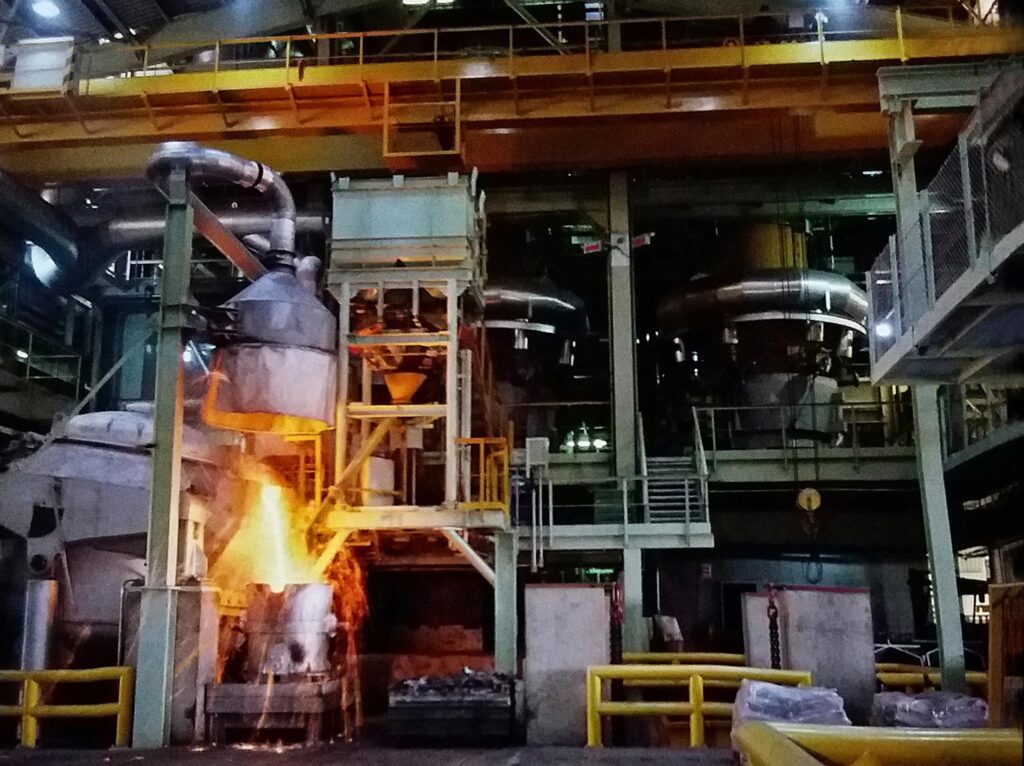
- Motorized fume hood slides horizontally out of the way to allow crane access for vessel removal and lance maintenance.
- Top access to the lance for inspection, cooling-circuit flushing, and tip replacement.
- Good practice (industry norms):
- Scheduled water-circuit flow checks to prevent scaling or flow blockages.
- Regular bore cleaning to prevent slag or metal build-up at the nozzle.
KPIs for Lance & Gas Performance
Reliable AOD lance design and gas control systems directly influence chemistry quality. Operators track the following KPIs to validate performance:
Chemistry & Refining Targets
- Carbon control to 0.01% or lower.
- Nitrogen and hydrogen are minimized for cleaner steel.
- Desulfurization down to <0.001%.
- Lead removal to <0.001%.
Process Stability Indicators
- Lance insertion depth accuracy.
- Gas-flow deviation alarms.
- Tuyere backpressure and flow stability.
- Heat time duration vs. aim time.
- Slag foaming behavior and off-gas temperature trends.
Case: Reducing Nitrogen Variation
A melt shop using IRS-controlled gas staging can expect to obtain a measurable reduction in nitrogen variation at tap due to:
- More consistent early-stage oxygen lance practice.
- Improved Ar/O₂ ratio tracking and automated trim logic.
- Interlocks preventing lance mis-positioning during transitions.
(Example based on industry-standard outcomes.)
Alarm & Setpoint Examples (Common Practice)
| Parameter | Example Setpoint / Alert Trigger |
| Lance cooling water flow | Alarm if <95% of set flow |
| Gas flow deviation | ±3% of the programmed rate |
| Nitrogen pickup | Trigger a corrective gas mix if N increase is detected mid-blow |
| Lance retraction | Hard interlock before vessel tilt |
Final Thoughts
Optimizing AOD lance design and gas-mix control is one of the most impactful ways to stabilize decarburization, reduce nitrogen reabsorption, and consistently hit low-carbon targets. When engineering or upgrading an AOD system, a holistic view—spanning lance mechanics, gas staging logic, automation, and KPIs—delivers the best chemistry outcomes.
Want to look at the latest in AOD lance design and gas-mix control? Contact our team to begin a no-obligation conversation.