


The Engineering Behind Modern Fertilizer Production
Modern fertilizer manufacturing is a precision-intensive industrial process that extends far beyond blending raw materials. It demands specialized equipment, exacting process controls, and a deep understanding of chemical behaviour at scale.
Feeding a global population that continues to grow requires fertilizer production at a volume and consistency that only purpose-built industrial systems can deliver. And while the end product, a granule, a liquid, or a powder, looks deceptively simple, the path to get there is anything but. The global fertilizer production industry accounts for 1.2% of total world energy consumption, a figure that underscores both the scale of the industry and the engineering discipline required to run it efficiently.
Fertilizer manufacturing equipment falls into four core categories that work in sequence: evaporators, crystallizers, dryers, and granulators. Each piece of equipment serves a distinct function, but together they form an integrated production chain. Evaporators concentrate nutrient-rich solutions. Crystallizers drive the formation of uniform solid particles. Dryers remove residual moisture. Granulators shape the final product for handling, storage, and application. Remove or compromise any one of these stages, and product quality suffers across the board.
Of these four, raw material concentration is arguably the most consequential phase. What happens during evaporation determines the purity, particle size, and nutrient density of everything that follows. Inconsistent concentration leads to downstream variability that no amount of drying or granulation can fully correct. This is why industrial operations invest heavily in evaporation systems built for demanding chemical environments — precision at this stage is foundational, not optional. The sections ahead explore how each piece of this system contributes to optimized fertilizer yield.
Evaporation and Concentration: The Foundation of Nutrient Density
Evaporation is where raw liquid fertilizer streams become commercially viable products, removing water with precision until nutrient concentrations reach the saturation thresholds required for downstream processing.
The thermal process works by applying controlled heat to a dilute liquid stream, driving off water as vapor while the dissolved nutrients become progressively more concentrated. As water leaves the solution, the remaining liquid approaches its saturation point. This is the threshold at which dissolved solids can no longer stay in solution and begin to form crystals. That transition point is critical. It’s the gateway into the ammonium sulfate crystallization process and similar solidification stages that determine final product quality.
Fertilizer streams requiring evaporation span a wide range of chemistries, each with distinct handling requirements:
- UAN (Urea Ammonium Nitrate) — concentrated from dilute synthesis streams to standard grades like 28% or 32% nitrogen solutions
- Phosphoric acid — produced at enormous energy cost, requiring evaporation to reach merchant-grade concentrations (54–56% P₂O₅)
- Ammonium sulfate liquor — concentrated before crystallization to maximize solid yield
- Potassium nitrate and nitric acid solutions — processed under strict thermal controls to prevent decomposition
Energy efficiency isn’t optional at industrial scale. It’s a competitive differentiator. Modern evaporator designs address this directly. Falling Film evaporators minimize residence time and thermal degradation, making them ideal for heat-sensitive streams. Forced Circulation units handle scaling and viscous slurries that would foul other designs. Multi-effect and MVR configurations recover and reuse steam energy across multiple stages, significantly cutting operating costs.
Custom engineering matters here because fertilizer environments are chemically aggressive. Acids, ammonium compounds, and high-temperature brines demand materials and geometries purpose-built for each application. Whiting specializes in exactly this – designing evaporators that hold up in harsh chemical service while delivering the concentration performance that makes downstream crystallization possible.
Crystallization: Achieving Solid Grade Purity
Crystallization is the pivotal step where dissolved nutrients transition from a concentrated liquid state into the precise solid forms that commercial fertilizer markets demand.
Once evaporation has driven a solution to supersaturation (as covered in the previous section) crystallization controls exactly how that transition happens. Crystallization is essential for producing solid fertilizer grades that meet specific size and purity standards, and the engineering decisions made at this stage directly affect both product quality and downstream profitability.
Ammonium sulfate crystallization is particularly sensitive to process parameters. Temperature gradients, agitation rates, and residence time all influence crystal size distribution (CSD) — the spread of particle sizes in the final product. A tighter, more uniform CSD translates directly to higher market value, because consistent granule size improves spreading accuracy in field application and reduces dust loss during handling. Producers targeting premium grades can’t afford wide CSD variance; it undermines both agronomic performance and buyer confidence.
Potash (Potassium Chloride) production presents a different set of crystallization demands. Potash solutions require carefully managed cooling or evaporative crystallization to separate KCl from sodium chloride co-contaminants, making selective crystal growth a functional necessity, not just a quality preference. The purity standards here are non-negotiable for fertilizer-grade classification.
On the process design side, batch vs. continuous crystallization involves real trade-offs at industrial scale. Batch systems offer flexibility for smaller production runs or specialty grades, but continuous crystallizers deliver the throughput consistency that high-volume operations require. And it’s worth noting that the crystal output from either system feeds directly into the next stage — where a rotary drum granulator and drying equipment transform those raw crystals into the uniform, market-ready pellets you’ll find in every commercial fertilizer bag.

Drying and Granulation: Shaping the Final Product
The journey from chemical slurry to commercial fertilizer is completed in the drying and granulation stages where moisture control and mechanical shaping determine everything that ends up in the bag.
Once evaporators and crystallizers have done their work producing a concentrated slurry or seeded crystal mass, that material still needs to be transformed into a stable, flowable, market-ready product. The rotary drum granulator is central to this transformation. It tumbles the semi-wet feed material in a rotating cylinder, building uniform pellets through a combination of moisture, heat, and mechanical action. Consistent pellet size isn’t just cosmetic — it affects how evenly product spreads in the field and how reliably it flows through application equipment.
Moisture control in the downstream dryer is equally non-negotiable. Too much residual moisture and the product cakes inside the bag, clumping into unusable masses by the time it reaches the end user. A typical system can be sized to process 1 tonne of material with 97% moisture in a 10-hour batch-shift, which illustrates just how much water needs to be driven out before granulation even begins. Hitting precise moisture targets requires tight temperature and airflow management throughout the drying circuit.
| Equipment | Function |
| Rotary Drum Granulator | Builds uniform pellets from wet crystal or slurry feed |
| Rotary Drum Dryer | Removes residual moisture to prevent caking and ensure shelf stability |
| Screening Equipment | Separates on-spec pellets from oversize and fines for recycle |
| Cooler | Lowers product temperature before bagging to prevent condensation |
The synergy between crystallizer output and granulator input is what makes inorganic fertilizer processing so tightly integrated. Crystallizer discharge that’s too wet overwhelms the granulator; too dry and pellet formation suffers. Getting that handoff right in terms of solids content, particle size distribution, and temperature, separates a well-engineered system from one that produces inconsistent product. The result, when everything is dialed in, is a granule that’s chemically precise, physically durable, and ready for the demands of modern agriculture. The next question is how those systems get designed to withstand the harsh chemicals and operating environments fertilizer plants demand.
Whiting’s Role in Engineered Fertilizer Solutions
Custom-engineered evaporation and crystallization systems are essential when standard equipment simply can’t survive the chemical realities of fertilizer production.
Fertilizer processing exposes equipment to some of the most aggressive conditions in industrial manufacturing. Concentrated acids, caustic salts, and corrosive brines demand purpose-built systems — not catalogue selections. Whiting designs for exactly these environments, developing evaporation and crystallization equipment that holds up under sustained chemical stress while maintaining the throughput that large-scale operations require.
The fertilizer types Whiting supports reflect the breadth of that engineering challenge:
- Potash — Potash production equipment must resist highly concentrated chloride and sulfate brines at elevated temperatures. Whiting engineers forced-circulation crystallizers and evaporator trains specifically sized for the solubility curves and scaling behavior unique to potassium-based salts.
- Urea Ammonium Nitrate (UAN) — UAN processing requires precise concentration control to hit target nitrogen content without triggering hazardous decomposition. Custom evaporator design is non-negotiable here.
- Phosphate — Phosphoric acid concentration demands materials and construction methods that off-the-shelf systems rarely accommodate.
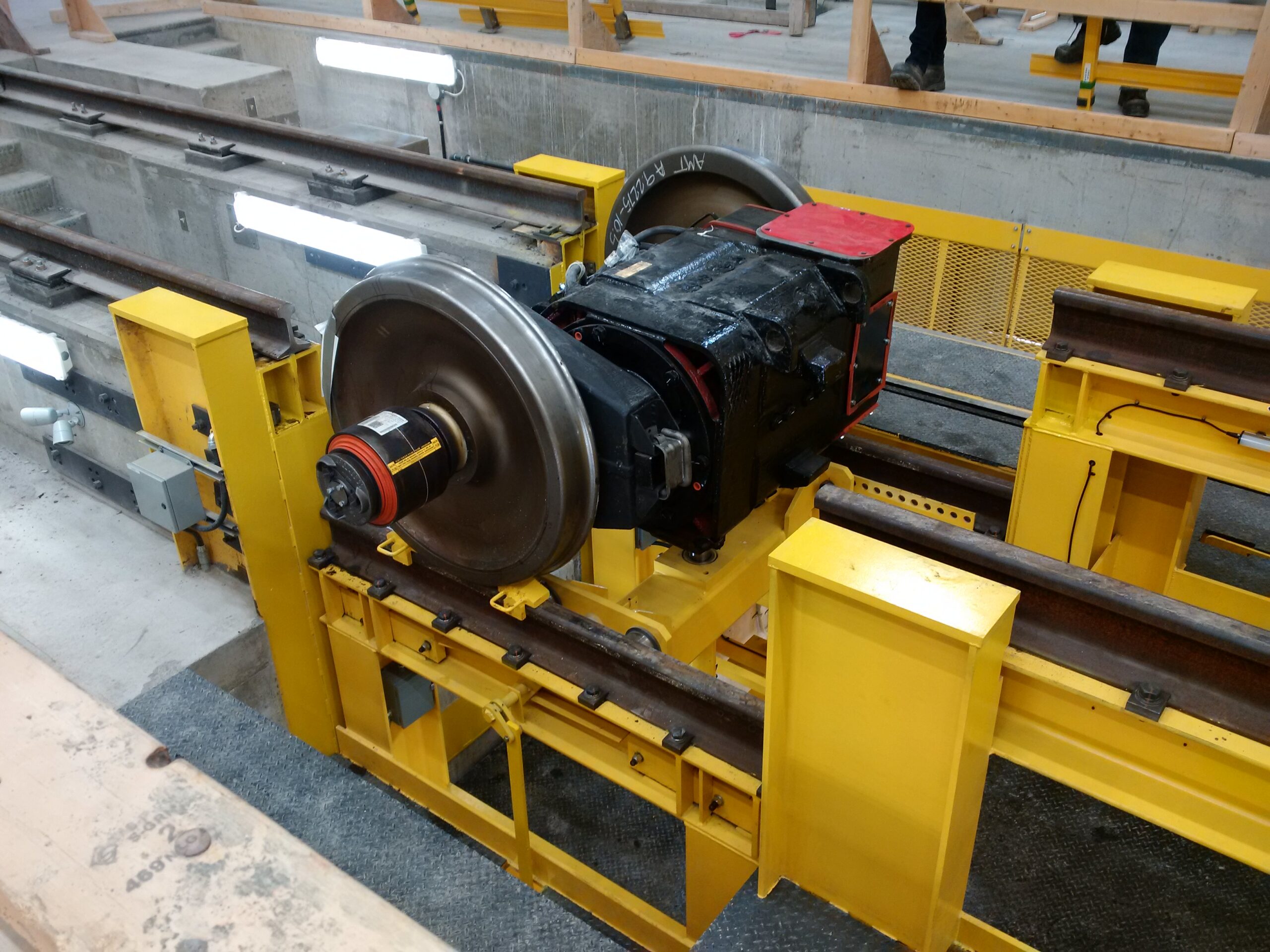
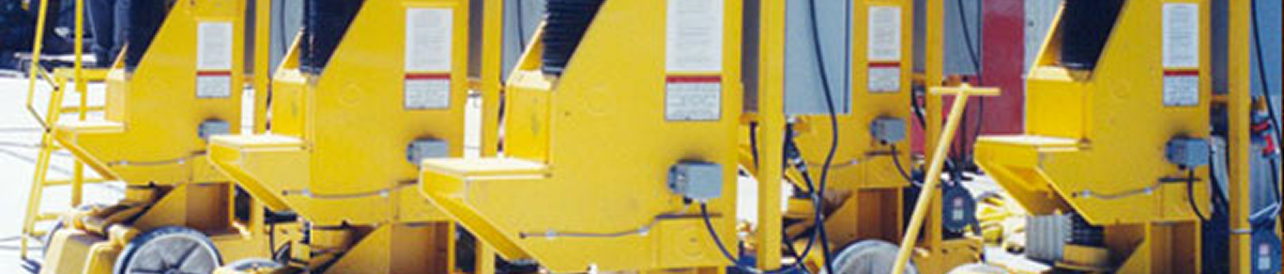
And it doesn’t stop at the evaporator skid. For large-scale fertilizer plants, Whiting integrates material handling systems and railcar movers into the broader production line which connect bulk solid discharge through to distribution-ready shipping. That full-scope capability matters when you’re coordinating multiple process stages under one production roof.
What separates a well-run fertilizer plant from a struggling one often comes down to how well each system was engineered for its specific process conditions. A point worth keeping in mind as you review the key takeaways ahead.
The Bottom Line: Key Takeaways for Fertilizer Producers
Fertilizer producers who optimize evaporation, crystallization, and granulation as an integrated system rather than isolated stages, consistently achieve better yield, purity, and product stability.
Each stage in the production chain carries a distinct responsibility. Evaporation is the energy-intensive heart of the process, driving off massive volumes of water to concentrate feed liquors before any solid product can form. Because energy costs can represent a significant share of operating expenses, inefficiencies here ripple through every downstream stage. Whether you’re running a standard ammonium nitrate line or navigating the nuances of the UAN manufacturing process, the evaporator’s performance sets the ceiling for everything that follows.
Crystallization is where physical quality and chemical purity take shape. Crystal size distribution, habit, and uniformity are not accidental — they’re the direct result of controlled supersaturation, residence time, and temperature management. A poorly controlled crystallizer produces irregular, dusty, or impure crystals that create real problems in bagging, storage, and field application. On the other hand, a well-tuned system delivers consistent, market-grade solids that meet specification every time.
Granulation and drying then lock in the product’s shelf stability and handleability, protecting everything the earlier stages worked to achieve. And cutting across all three stages is the challenge of corrosion resistance. Ammonium sulfate, potash, and similar process streams are notoriously aggressive toward standard materials. Custom engineering, selecting the right metallurgy, coatings, and mechanical configurations, isn’t optional; it’s the difference between equipment that lasts a decade and equipment that fails in months. These realities make a strong case for evaluating your entire production system with a long-term lens, which is exactly where the conversation turns next.
Future-Proofing Your Fertilizer Manufacturing Facility
Fertilizer producers who invest in durable, high-performance evaporation and crystallization systems don’t just solve today’s throughput problems. They build the operational resilience to meet tomorrow’s market and regulatory demands.
In practice, the strongest case for capital investment in engineered process equipment comes down to total cost of ownership (TCO). Upfront equipment costs matter, but they rarely tell the full story. Unplanned downtime, corrosion-driven maintenance cycles, and energy waste accumulate quietly, eroding margins over time. Plant managers who evaluate equipment through a TCO lens consistently identify long-term savings that justify premium, application-specific designs over off-the-shelf alternatives.
Energy efficiency is no longer a nice-to-have in this industry. Energy consumption and greenhouse gas emissions are the primary regulatory drivers in modern fertilizer production, and that pressure will only intensify as carbon accountability frameworks tighten across North American and global markets. Facilities that optimize steam usage, recover heat through mechanical vapor recompression, and minimize process waste are positioning themselves ahead of compliance requirements rather than scrambling to meet them.
And the window to act strategically, rather than reactively, is narrowing. Whether you’re planning a capacity expansion, replacing aging equipment, or optimizing an existing process train, the decisions made now will shape operational performance for decades. Contact Whiting to discuss how custom-engineered evaporation and crystallization solutions can be designed specifically for your facility’s chemistry, throughput targets, and long-term cost objectives.