
Scaling is the silent enemy of every high-salinity lithium refinery. When mineral deposits form on heat-transfer surfaces, pipe walls, or crystallizer internals, they can choke throughput, distort crystal growth, and drive up maintenance costs. In systems processing lithium brines — already rich in calcium, magnesium, and sulfate ions — scaling prevention cannot be an afterthought; it must be introduced from the beginning as a design principle.
Whiting Equipment Canada Inc. and its licensee, Swenson Technology, build lithium crystallization and evaporation systems specifically designed for this challenge. Their designs combine advanced materials, optimized hydraulics, and rigorous pilot testing to identify and mitigate scaling issues before they become plant-wide problems.
Scaling Mechanisms and Risks
In lithium brine concentration and crystallization, scaling typically arises from supersaturation of sparingly soluble salts such as calcium sulfate (gypsum), calcium carbonate, and sodium chloride. As water evaporates or temperature changes shift solubility limits, these salts precipitate on surfaces instead of remaining in suspension.
The consequences are predictable but severe:
- Reduced heat-transfer efficiency in evaporators and crystallizers.
- Flow restriction and pressure drop in recirculation loops.
- Off-spec product due to contamination or poor crystal morphology.
- Unplanned shutdowns for mechanical cleaning or acid washing.
To prevent this, Swenson incorporates pilot testing and simulation early in process development. Each brine source — whether from a Chilean salar or a geothermal brine stream — has a distinct scaling behavior, and this data is essential for sizing, residence time, and circulation velocity targets. Identifying fouling and scaling tendencies during pilot testing enables the engineering team to select the right equipment and operating window before the system is built.
Materials and Coatings
Material selection is the first line of defense against corrosion and scaling adhesion. Whiting Equipment’s evaporators and crystallizers are constructed to perform in the harshest environments, including chloride-rich and high-temperature conditions.
Typical materials and coatings include:
- Duplex and super-austenitic stainless steels (e.g., 2205, 904L) for brine exposure and high chloride resistance.
- Nickel alloys (Alloy 625, C-276) in zones with aggressive chlorides and acid cleaning cycles.
- High-density polymer coatings or fluoropolymer linings for non-stick performance in smaller vessels and piping.
Surface smoothness and anti-adhesion coatings reduce the energy barrier for particle detachment, minimizing the nucleation of hard scale. These design choices extend maintenance intervals and sustain thermal efficiency across long campaigns.
Hydraulics and Velocities
Hydrodynamic control is crucial to preventing scale formation. Scaling favors stagnant or low-velocity regions where concentration polarization occurs — a thin boundary layer near surfaces where solute concentration exceeds bulk levels.
To combat this:
- Forced-circulation crystallizers are used to maintain turbulent flow, keeping solids in suspension and minimizing deposition.
- Draft-tube-baffle (DTB) crystallizers promote uniform supersaturation and high internal circulation, balancing crystal growth with minimal fouling.
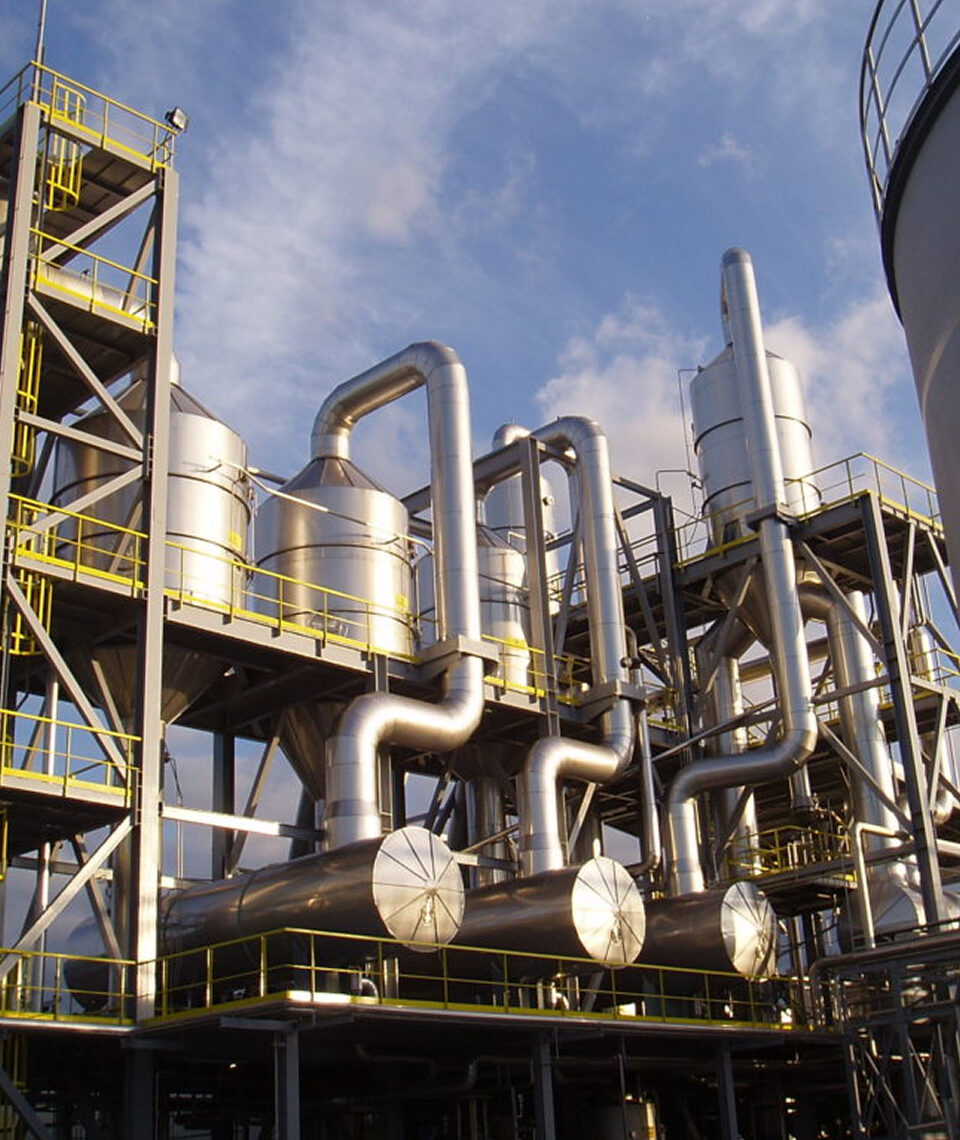
- Falling-film evaporators sustain thin liquid films and rapid heat transfer, reducing residence time and local supersaturation.
Maintaining design velocities in pipework (often above 1.5–2 m/s) helps suppress surface deposition. Computational fluid dynamics (CFD) modeling further refines flow geometry to eliminate dead zones and maintain stable hydrodynamic shear.
Chemical Conditioning
Chemical conditioning supplements mechanical and design defenses. For lithium brines, scale inhibitors and pH adjustment remain proven tools:
- Anti-scalants such as phosphonate, polyacrylate, or polycarboxylate formulations delay precipitation by interfering with crystal nucleation.
- Lime or soda dosing can precipitate calcium or magnesium upstream, preventing their entry into evaporative stages.
- Acid dosing (controlled to avoid corrosion) helps maintain a stable pH window that suppresses carbonate scaling.
Because reagent compatibility depends on brine chemistry, these programs are validated through bench and pilot testing — ensuring that anti-scalants do not affect product purity or crystallization kinetics.
Cleaning Strategies
Even the best designs need a maintenance playbook. Cleaning-in-place (CIP) systems allow operators to restore performance without extended downtime:
- Acid Cleaning: Dilute mineral acids (e.g., citric, hydrochloric) dissolve carbonate and sulfate scales.
- Boil-Out Cycles: Hot water or condensate flushing removes loosely bound deposits.
- Mechanical Cleaning: High-pressure water lances or pigging systems may be employed in heat exchangers or circulation loops.
Pilot data on crystal washing requirements and centrifuge performance also support solid-product quality, confirming that impurities from residual scale do not transfer into the lithium salt product.
Monitoring and Alarms
Preventive monitoring turns scale control from a reactive to a predictive discipline. Modern crystallization plants increasingly integrate:
- Inline conductivity and turbidity sensors to detect early precipitation.
- Ultrasonic or thermal fouling monitors embedded in heat-transfer surfaces to track scale thickness.
- Automated alarm thresholds within SCADA systems, alerting operators to deviations in flow or temperature that indicate deposit formation.
Whiting’s process control architectures — leveraging PLC/SCADA integration from its Volta industrial systems — enable operators to visualize parameters such as flow rate, power consumption, and thermal efficiency in real time, supporting early intervention before scaling impacts uptime.
Case Learnings and ZLD Connection
Scaling control is not only about operational stability; it also directly supports environmental goals. In Zero Liquid Discharge (ZLD) systems, where every drop of water must be recovered, scaling determines how efficiently brines can be concentrated before crystallization.
Field experience shows that stable hydraulic conditions, proper metallurgy, and chemical conditioning can extend cleaning intervals by months and maintain near-design throughput across high-salinity lithium operations. These same lessons apply to any evaporative process where sustainability targets and energy recovery are linked.
Conclusion
Scaling is inevitable in brine crystallization — but it can be controlled, delayed, and managed through innovative design and active monitoring. By combining Swenson’s crystallization expertise with Whiting’s engineered equipment, lithium refiners gain robust, maintainable systems capable of handling aggressive brines and meeting uptime targets critical to the global energy storage supply chain.
Partner with Whiting Equipment Canada to design or retrofit your brine crystallization systems for long-term performance. From alloy selection and hydraulic optimization to pilot testing and SCADA-linked monitoring, Whiting helps you build a data-driven, anti-scaling strategy that maximizes uptime and supports your path to sustainable lithium recovery. Contact us to discuss your requirements.