
Multi-Effect Evaporation: Design & Economics
In industrial processes where water must be removed efficiently—whether in lithium refining, fertilizer production, or chemical manufacturing—multi-effect evaporation (MEE) remains one of the most effective tools for improving steam economy and reducing operating costs. By reusing vapor energy across multiple stages, MEE systems deliver high efficiency without the steep capital expense associated with more complex thermal recovery systems, such as mechanical vapor recompression (MVR).
Whiting Equipment Canada Inc., through its licensee Swenson Technology, has decades of experience designing energy-optimized evaporation systems for some of the world’s most demanding process environments. Our forced-circulation and falling-film evaporators form the backbone of these solutions, engineered for long service life and reliable performance in corrosive or scaling-prone applications.
MEE Basics
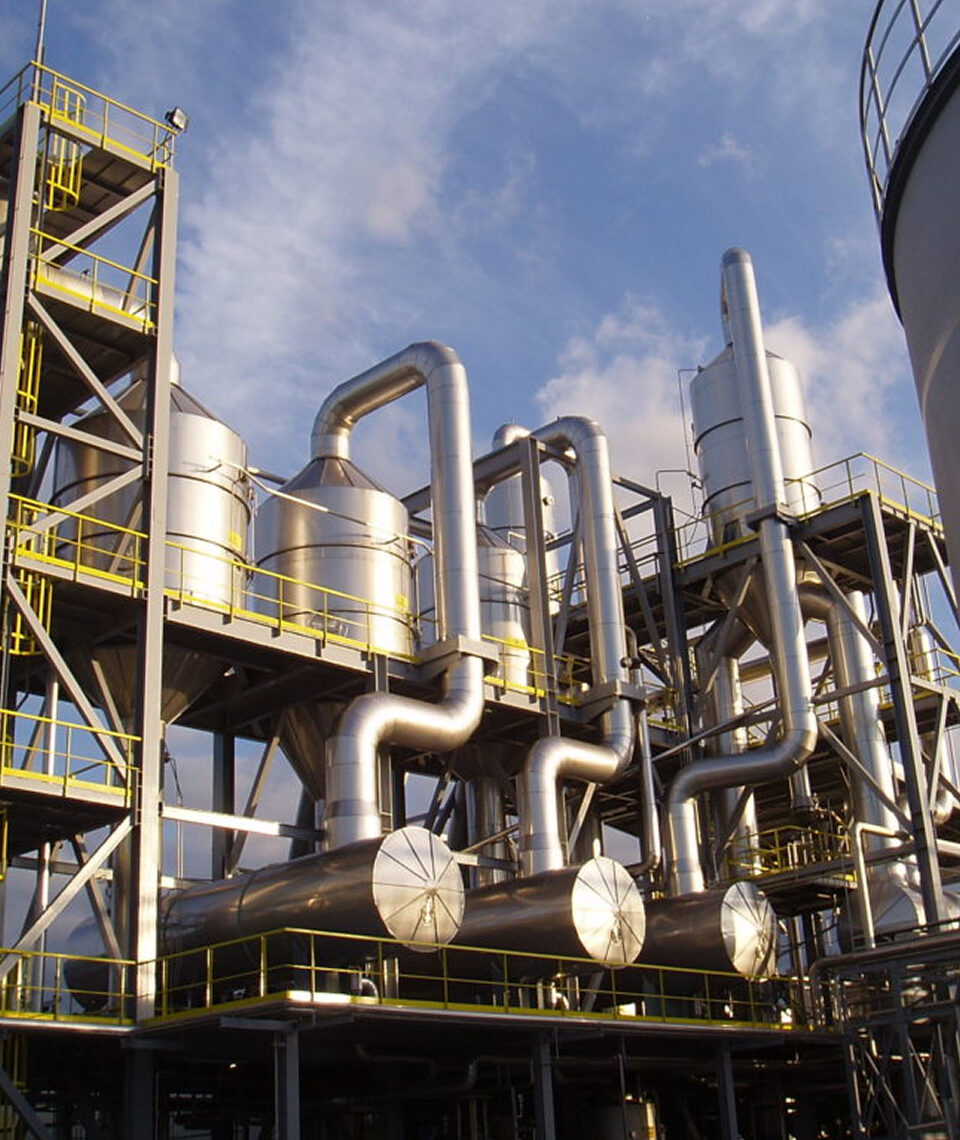
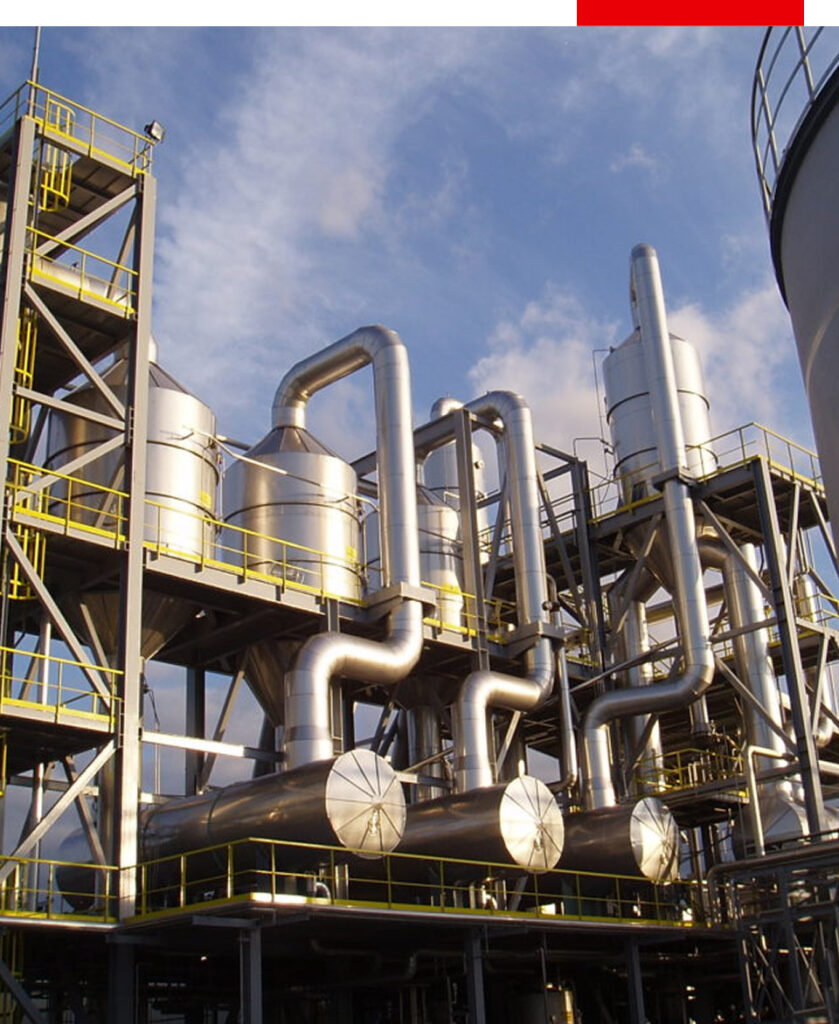
At its core, a multi-effect evaporator utilizes the vapor produced in one effect (stage) as the heating medium for the subsequent stages. Each subsequent effect operates at a lower pressure and temperature, allowing the same quantity of steam to evaporate progressively more water.
A single-effect evaporator might achieve a steam economy close to 1.0 (one kilogram of vapor produced per kilogram of steam supplied). By contrast, a three-effect system can achieve 2.5–3.0, and a five-effect system can reach as high as 4.0–5.0, resulting in energy consumption that is more than half that of a single-stage unit.
Swenson’s forced-circulation and falling-film designs are ideal for MEE configurations. Falling-film units provide excellent heat transfer at low temperature differences, while forced-circulation systems handle viscous or scaling fluids such as lithium brines or fertilizer intermediates.
Effect Count vs. Economy
Adding effects improves steam efficiency, but only for a while. Each stage adds complexity, surface area, and incremental capital cost. The trade-off between effect count and economy typically peaks between three and six effects, depending on utility prices, condensate return temperature, and the process stream’s heat-transfer coefficients.
Whiting and Swenson engineers evaluate the “sweet spot” through thermodynamic modeling and simulation during the conceptual design phase. These models balance capital cost (CAPEX) with operating efficiency (OPEX), identifying where additional effects no longer deliver a meaningful return.
Heat Integration
Integrating MEE systems with other heat sources, such as crystallizers, condensate preheaters, or cooling water loops, further enhances energy recovery. In a lithium refining application, for example, vapor from the final evaporation effect can be used to preheat brine feed or provide latent heat for crystallization, minimizing utility demand.
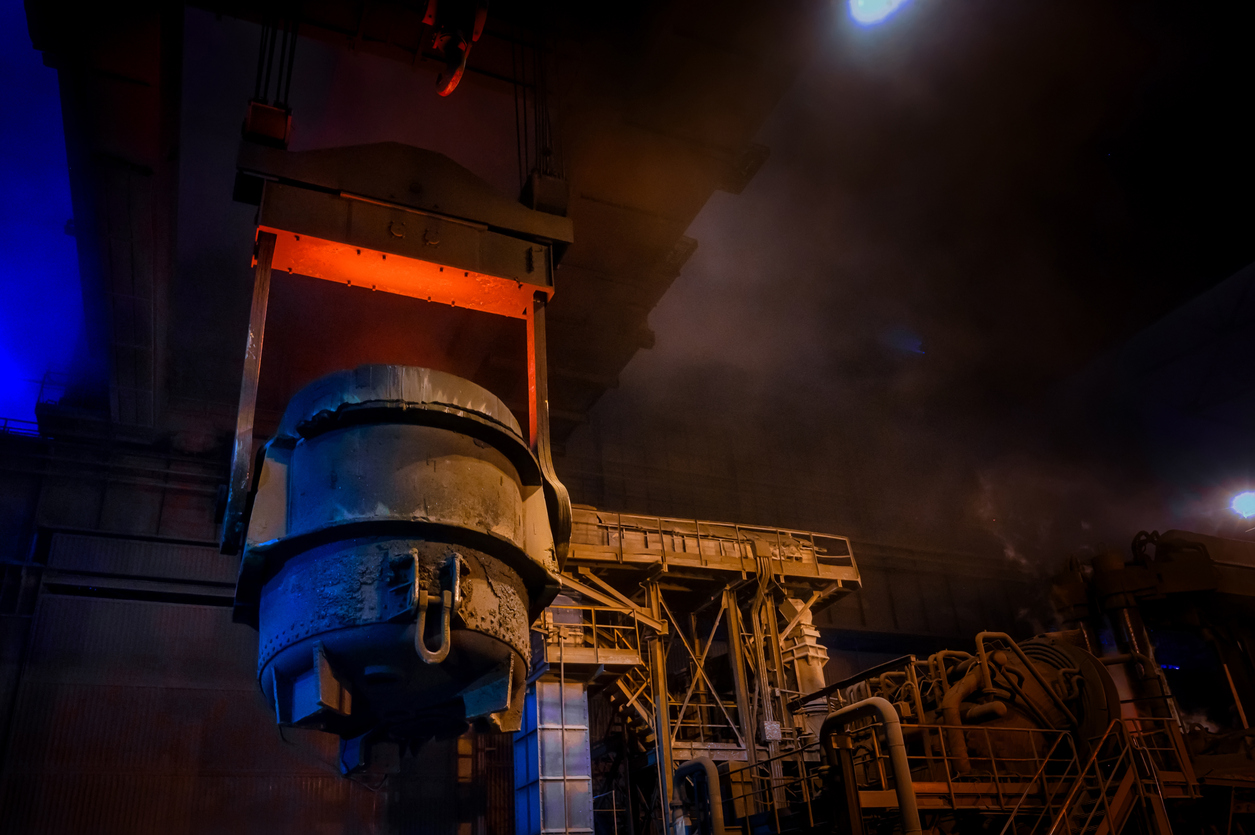
Whiting’s broader engineering experience with heat-intensive systems, such as electric arc and AOD furnaces, informs its approach to thermal integration. Their designs emphasize temperature control, water-cooled components, and precise monitoring of flow and pressure—capabilities that directly translate to optimizing evaporator duty and reliability.
CAPEX / OPEX Considerations
The financial case for multi-effect evaporation rests on achieving the lowest life-cycle cost. While multi-effect systems require more heat-transfer surface and vacuum equipment than a single-effect unit, the savings in steam consumption and condensate return often justify the initial investment within a few years.
Swenson’s design process—built on rigorous modeling, pilot testing, and cost estimation—ensures accurate CAPEX forecasting and energy balance predictions before full-scale fabrication. Because these systems are modular, operators can start with fewer effects and add more later as production capacity grows or energy prices shift.
From an OPEX standpoint, maintenance remains manageable due to robust mechanical design and clean-in-place (CIP) provisions for scaling fluids. The combination of corrosion-resistant alloys and carefully controlled flow velocities reduces downtime and extends service intervals.
Controls and Instrumentation
A centralized PLC- or SCADA-based system manages pressure, temperature, and condensate levels in each effect, automatically adjusting feed rate and vacuum to maintain steady operation.
Advanced energy-management modules can monitor overall steam economy, providing operators with real-time performance metrics. Alarm thresholds for parameters like temperature deviation or fouling rate ensure consistent operation without overshooting critical limits.
Worked Energy Example
Consider a three-effect falling-film evaporator processing 30 tons per hour of water removal. A comparable single-effect system would consume approximately 30 tons of steam per hour. By cascading vapor energy across the three effects, steam demand drops to around 10–12 tons per hour—a 60% reduction in utility consumption.
Assuming steam costs of $25 per ton, annual energy savings approach $4 million for continuous operation. With a modest increase in capital cost, the payback period can be reduced to below 18 months—demonstrating why MEE systems are often preferred over single-effect or fully mechanical vapor recompression solutions for mid-scale plants.
Note: The above example is illustrative and intended to show typical performance and payback relationships, not data from a specific installation.
Retrofit Considerations
Many existing evaporation systems can be upgraded to multi-effect operation without complete replacement. Key steps include:
- Adding parallel or series effects with shared condensate and vapor piping.
- Integrating heat recovery loops to preheat feed streams.
- Installing upgraded controls for pressure balancing and vapor sequencing.
Whiting and Swenson’s modular hardware and software designs make these retrofits practical, often enabling staged upgrades where savings from the first phase fund subsequent expansions.
Conclusion
As industries strive for sustainability and lower energy intensity, multi-effect evaporation offers a proven middle ground between efficiency and affordability. By combining thermodynamic modeling, robust mechanical design, and flexible control integration, Whiting Equipment Canada and Swenson Technology help operators achieve exceptional steam economy—without the sticker shock of over-engineered systems.
Ready to explore the modernization of your evaporation system?
The Whiting team can help you evaluate your current setup, simulate multi-effect options, and design an upgrade path that reduces OPEX while extending equipment life. Contact us to discuss your requirements.