

Heavy Product Handling in Melt Shops
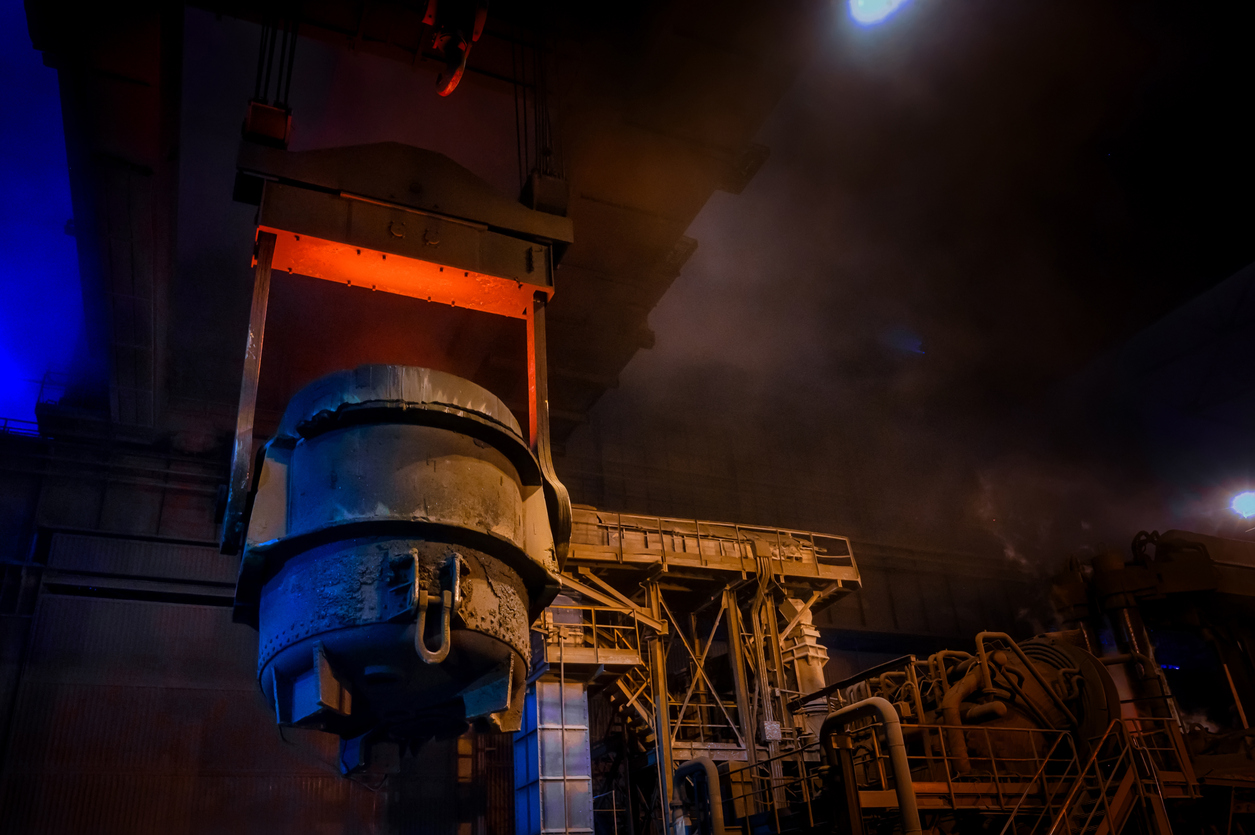
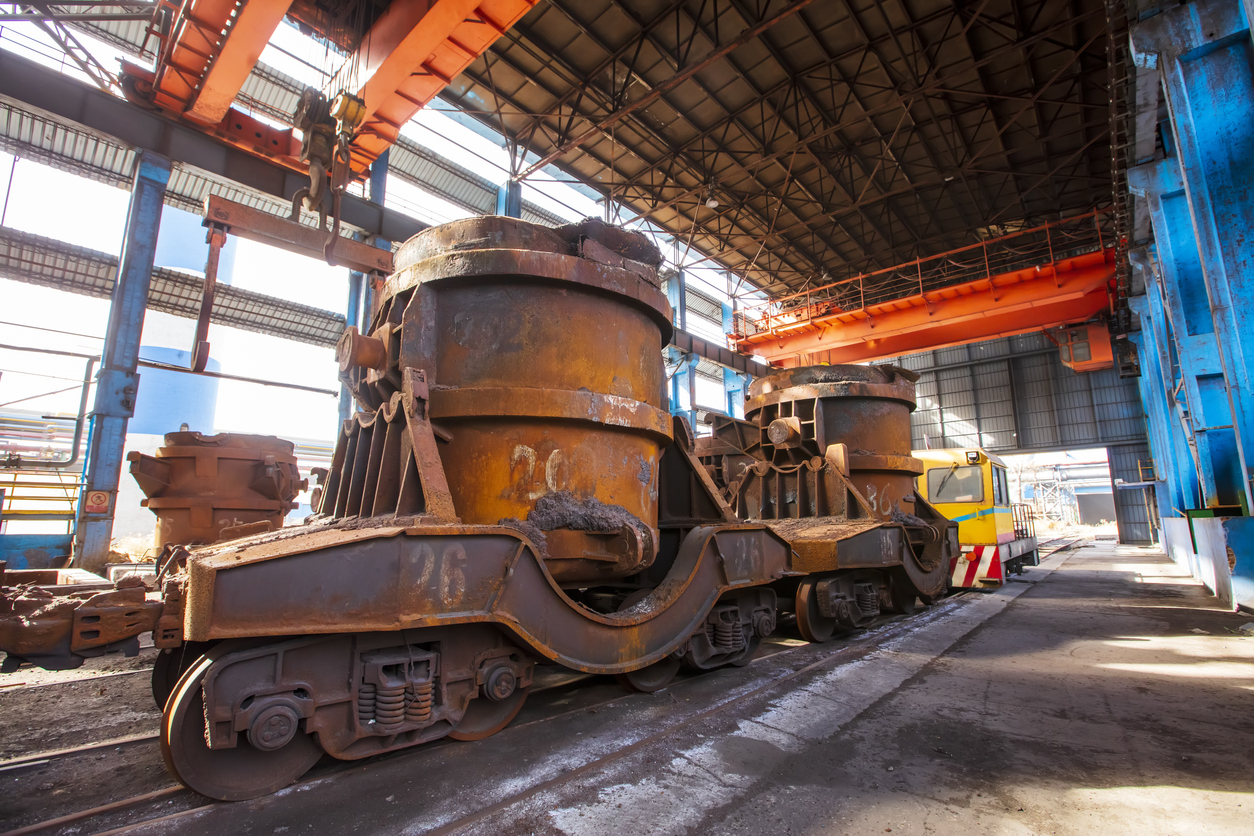
Coils, ingots, and slabs are among the heaviest and most valuable products moving through a melt shop. Their weight, heat, geometry, and handling frequency place extreme demands on material-handling equipment. Designing movers that remain stable, safe, and reliable in high-temperature, high-duty environments is essential to maintaining throughput and asset life.
This guide outlines key engineering considerations when specifying coil car slab handling steel mill equipment, using real examples of capacities, drive systems, and safety features used in modern melt shops.
Load Characteristics
The starting point for designing movers for coils, ingots, or slabs is understanding weight, temperature exposure, and duty cycle.
- Capacity & Load Cases: Handling equipment in melt shops regularly moves 50–200 tons. Examples include:
- 70-ton capacity, radio-controlled steel coil transfer car.
- 50-ton ingot-pouring transfer car with DC drive and hydraulic braking.
- 160-ton ladle transfer car for AOD vessel service.
- 200-ton automatic, self-powered transfer car used for clamshell charging buckets.
- Thermal & Structural Stress: Equipment frames, wheels, bearings, and drive systems must tolerate heat radiation from hot product, thermal cycling, and steel-shop debris. Heavy-weldment frames, stress-relieved components, and reinforced ribs or gussets are often leveraged to maintain structural stability over years of service.
- Geometry & Center of Gravity: Coils present a rolling hazard and require cradles or V-saddles. Ingots and slabs demand flat, stable beds and positive positioning methods to avoid shifting during braking or acceleration.
Mobility & Stability
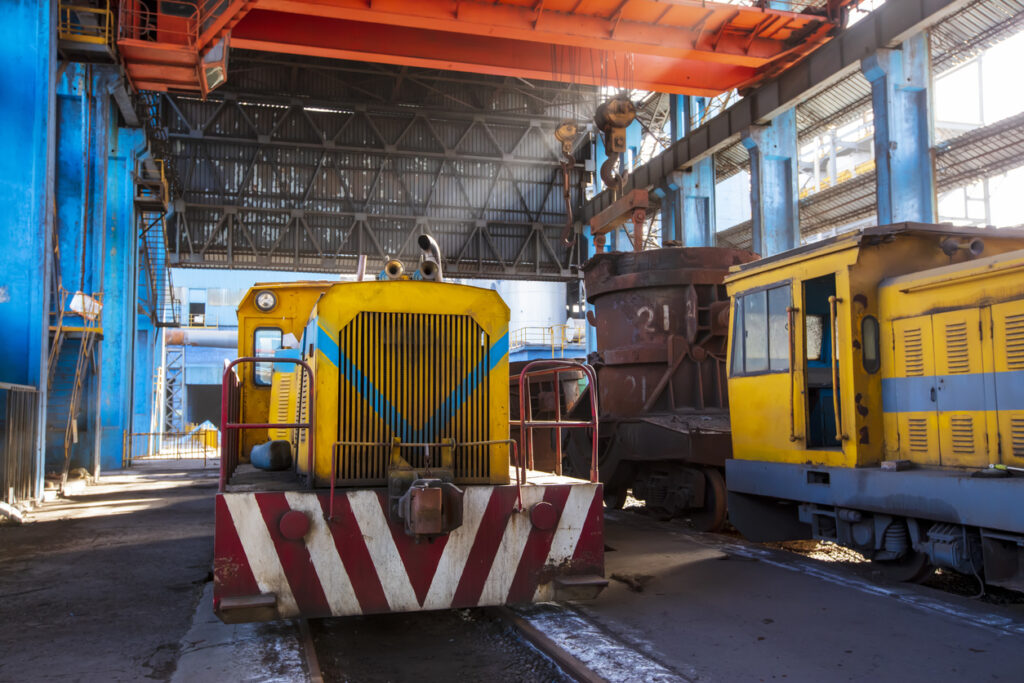
Product movers in coil car slab handling steel mill environments must remain stable on uneven floors, around tight curves, and in busy operational zones.
- Transport Modes:
- Rail-guided transfer cars provide predictable tracking for long-distance or repetitive routes.
- Self-powered, radio-controlled movers allow flexible routing when tracks are impractical.
- Drive Systems: DC-drive systems are standard for precise control under extreme loads:
- 10 hp DC motor on a 160-ton ladle car.
- 5 hp DC motor on a 50-ton slag pot car.
- Stability Controls: Slow-speed operation (typically 30–35 ft/min on heavy cars) enables stable acceleration, deceleration, and positioning—critical when placing ingots into mold rows or aligning coils at processing lines.
Operator Safety
Safety must be engineered into every movement of coils, ingots, and slabs to prevent crush, pinch, and heat-exposure hazards.
- Automatic Braking: The E-Z POUR ladle gearing utilized by Whiting features an automatic brake that prevents tilt without applied torque—this same philosophy is applied to avoid uncontrolled motion of transfer cars.
- Radio Controls: Remote operation keeps personnel clear of load paths and eliminates the need for workers to ride or walk beside moving equipment.
- Safe Access & Ergonomics: Handling Specialty, a subsidiary of Whiting that deals in material handling solutions, delivers lifts that reduce ladder work and have shown:
- 32% reduction in bricklayer discomfort.
- Up to 20% productivity improvement during refractory relining
While designed for ladle maintenance, the same ergonomic approach applies to coil and slab handling areas where safe operator access is needed.
Maintenance & Wear
Heavy movers must be engineered for predictable maintenance and minimal downtime.
- Thermal Protection: Air gaps in ladle trunnion designs prevent heat transfer to bearings—an approach that can be mirrored in coil and slab handling systems exposed to radiant heat.
- Component Life Extension:
- Ladle ring gears with dual keyways allow 180° rotation to double usable life.
- Sealed-for-life bearings and bushings reduce lubrication needs on personnel lifts.
- Serviceability: Designs should allow fast replacement of wheels, bearings, and drives. Remote-mounted gearboxes and standardized components speed repairs and reduce the spares burden.
Bearings & Lubrication
Load-bearing components must be selected for high-load, high-heat, and high-contamination environments.
- Anti-Friction Trunnion Bearings: Self-aligning antifriction bearings are sealed against dirt and shot for long, trouble-free operation.
- Automatic Lubrication:
- E-Z POUR ladle gearing includes an integral lubrication pump that feeds fresh oil to moving parts when the handwheel turns.
- Annual oil changes are recommended, with only periodic checks in between.
Drive Options
Drive systems determine controllability, maintenance, and resilience to power loss.
- Manual vs Motorized Tilt/Drive: Manual handwheel and lever systems remain valuable backup options for mission-critical movements.
- Motorized Drives:
- Hoist-type motors with disc brakes on ladle gear drives.
- DC-drive transfer cars for precise positioning under load.
- Redundancy:
- AOD tilt systems include dual DC mill motors plus nitrogen-driven emergency backup motors—an example of best practice for critical handling systems that cannot fail during a heat cycle.
Spec Checklist for Heavy Movers
When evaluating or comparing coil car slab handling steel mill equipment, ensure that the specs address:
| Category | What to Verify |
| Load & Duty Cycle | Max capacity, temperature exposure, cycles/shift |
| Mobility & Path | Rails vs self-powered, turning radius, floor condition |
| Safety | Braking logic, radio control, guarding, interlocks |
| Drives & Power | DC/AC drive selection, backup power, speed control |
| Bearings | Anti-friction vs plain, heat shielding, and sealing method |
| Lubrication | Manual vs automatic, service intervals |
| Maintenance Access | Component reach, lift/stand access, swap-out time. |
| Environment Hardening | Heat shielding, debris protection, enclosures |
Conclusion
Heavy coil, ingot, and slab handling equipment plays a pivotal role in melt shop flow, safety, and uptime. The proper engineering choices—from drive systems to bearing protection—can extend equipment life, reduce maintenance costs, and protect operators working in extreme conditions.
If you’re planning upgrades or specifying new heavy movers, our engineering team can help define the correct configuration and performance envelope for your melt shop’s environment and duty cycle. Want to review current equipment against modern design standards? Let’s talk.