
The Purpose of AOD Treatment: Solving the Chromium-Carbon Dilemma
Stainless steel’s defining characteristic is its corrosion resistance and that depends entirely on chromium, yet removing carbon from molten steel risks oxidizing and destroying it.
This is the central thermodynamic challenge of stainless-steel refining. At the high temperatures required for decarburization, chromium and carbon compete for available oxygen. Conventional steelmaking favors chromium oxidation, meaning aggressive carbon removal strips away the alloying element you most need to preserve. The Argon Oxygen Decarburization process was developed specifically to resolve this conflict at a commercial scale.
AOD as secondary refining
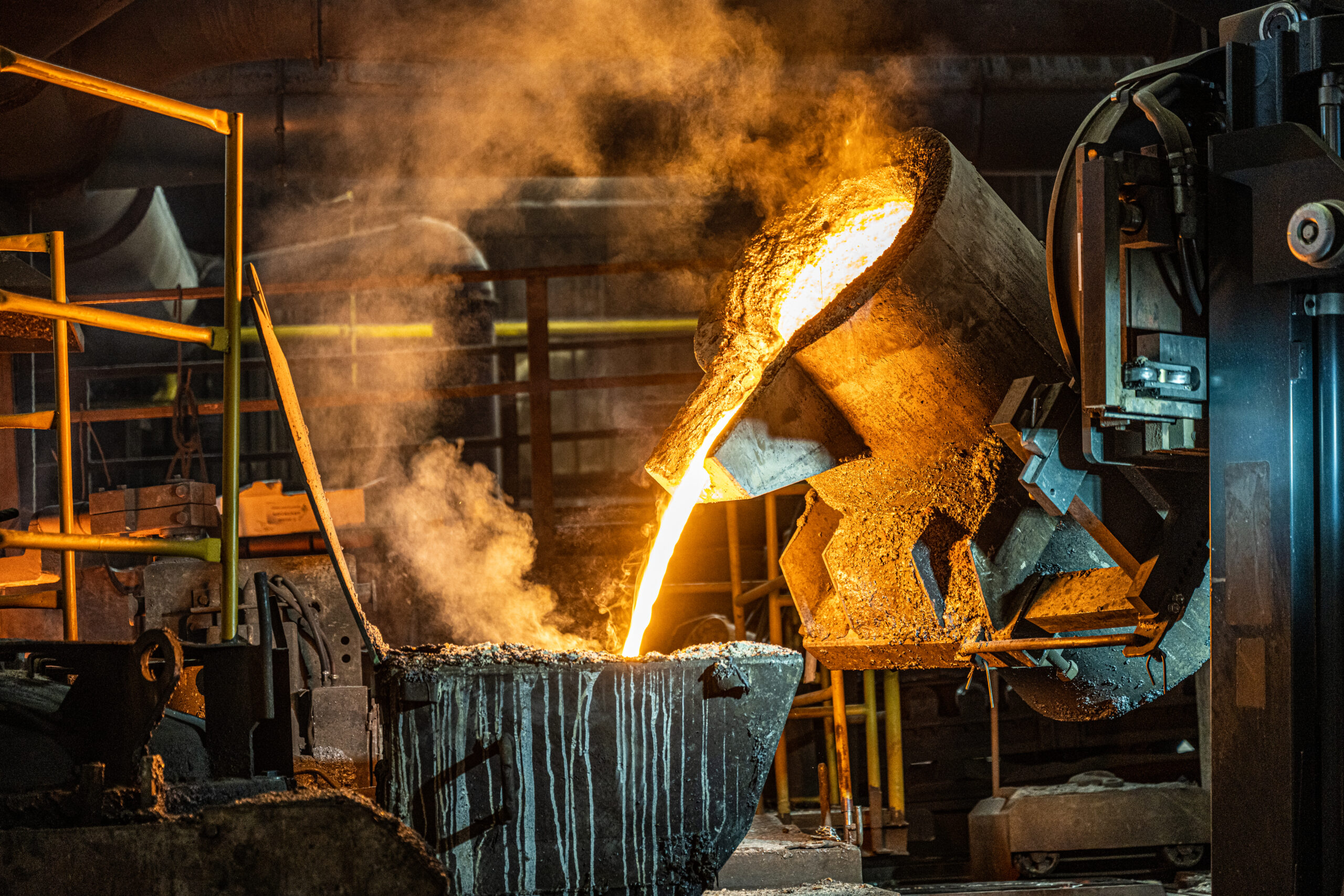
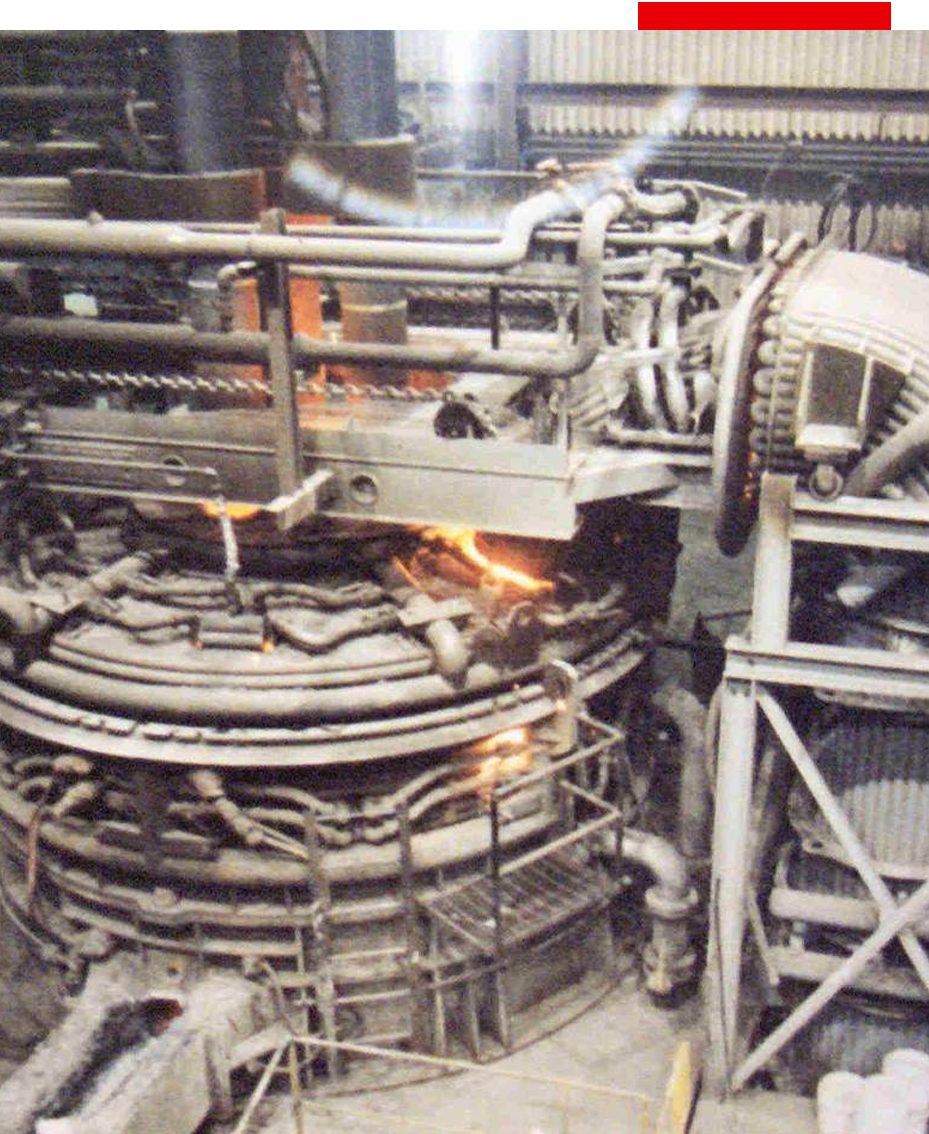
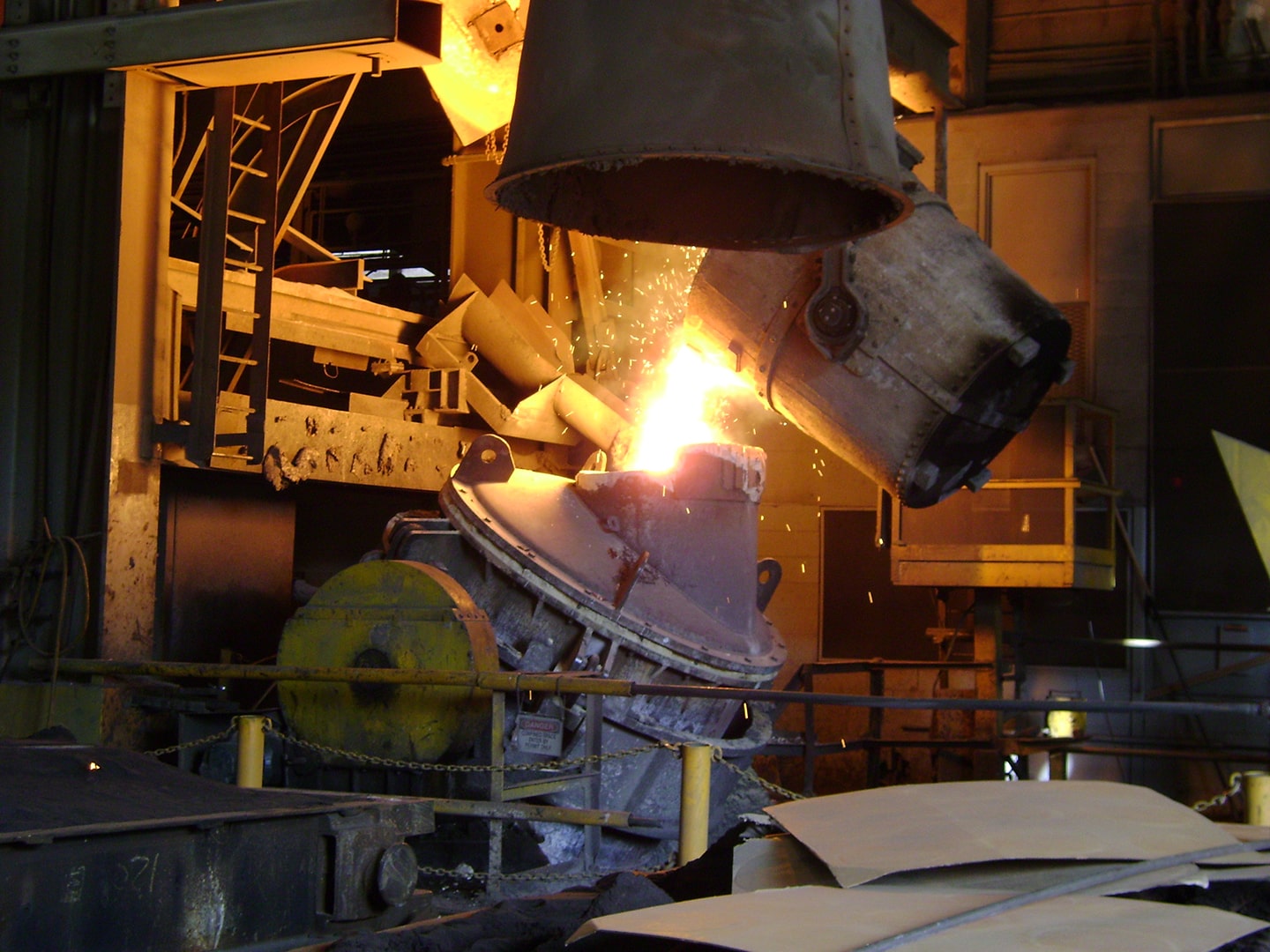
AOD treatment operates as a secondary refining step, receiving molten steel from a primary electric arc furnace where initial melting and bulk alloying take place. The EAF handles the energy-intensive work of melting scrap and ferro-alloys; the AOD converter then refines chemistry with far greater precision than any primary furnace can achieve. This deliberate separation of melting and refining is the foundation of what the industry calls the Duplex Process.
The Duplex Process advantage
By splitting responsibilities across two vessels, steelmakers unlock a significant economic lever: the ability to charge lower-cost, high-carbon ferrochrome rather than expensive pre-refined, low-carbon grades. High-carbon ferrochrome can cost substantially less per unit of chromium delivered, and used alongside controlled EAF practice, it shifts the bulk of refining cost to the AOD stage — where it’s handled efficiently. The result is over 75% of global stainless production now relying on AOD converters as the definitive refining standard.
Understanding why AOD solves the chromium-carbon dilemma requires a closer look at the dilution chemistry that makes it work — and that’s precisely where the process mechanics become compelling.
How the AOD Converter Process Works: Dilution is the Solution
The AOD converter solves the chromium-carbon dilemma not by applying brute force, but by changing the thermodynamic environment so that carbon removal becomes favorable before chromium oxidation does.
The key mechanism is partial pressure reduction. When argon is blended with oxygen and injected into the melt, it dilutes the CO gas produced during decarburization. Lowering the partial pressure of CO shifts the reaction equilibrium, enabling carbon to oxidize preferentially, even at relatively low carbon concentrations without triggering significant chromium loss. It’s an elegant application of thermodynamics, and it’s what makes AOD furnace operation so effective for stainless grades.
Gas delivery happens through submerged tuyeres positioned at the converter’s base. Because the gas enters below the bath surface rather than above it, the contact area between the gas mixture and the molten steel is dramatically higher. That deep injection also promotes vigorous stirring, which accelerates mass transfer and keeps the process moving efficiently.
The AOD process unfolds in three distinct stages:
Decarburization — Oxygen-argon mixtures (initially oxygen-rich) are blown through the tuyeres. As carbon drops, the ratio shifts progressively toward more argon, sustaining the partial pressure advantage and allowing carbon control precision as low as 0.01%.
Reduction — Once target carbon is reached, ferrosilicon or aluminum is added. These act as reducing agents, reclaiming oxidized chromium from the slag back into the steel bath — a critical step that directly protects yield.
Desulfurization — Lime-based slag chemistry is adjusted to create highly basic conditions. Sulfur migrates from the metal into the slag, meeting the tight specifications that grades like 316L or duplex stainless demand.
Slag chemistry is just as important as the gas regime. By manipulating basicity and oxidation state during the reduction phase, operators drive chromium recovery from oxides that would otherwise be lost. This is why understanding the upstream melting process matters — the composition arriving from the EAF shapes what the AOD must correct.
Of course, the AOD isn’t the only refining route available. How AOD compares to vacuum-based alternatives — and when each makes sense — is where the real operational decisions begin.
AOD vs. VOD: Choosing the Right Refining Route for Your Grade Mix
When it comes to high-volume stainless production, the AOD converter process consistently outperforms vacuum-based alternatives in throughput, flexibility, and total operating cost.
The two dominant refining routes — Argon Oxygen Decarburization (AOD) and Vacuum Oxygen Decarburization (VOD) — both solve the chromium-carbon dilemma but take fundamentally different paths to get there. AOD is a pneumatic process using gas dilution, whereas VOD relies on mechanical vacuum pumps to lower CO partial pressure. That distinction shapes everything downstream: capital requirements, operating costs, tap-to-tap times, and the grade mix each route handles best.
Here’s how the two processes compare across the metrics that matter most to a melt shop:
Limited to specific low-C/N targets
VOD’s genuine advantage lies in achieving ultra-low carbon and nitrogen levels that even a well-optimized AOD struggles to match. For super-ferritic grades or certain specialty alloys where carbon must drop below 0.01%, VOD earns its place. But those grades represent a narrow slice of most production schedules.
AOD dominates wherever your grade mix skews toward standard austenitic or high-chromium ferritic grades. Faster tap-to-tap cycles mean more heats per shift, and the absence of a vacuum vessel removes a significant maintenance burden. In practice, shops running broad grade portfolios find that AOD’s operational simplicity and speed more than offset its slightly higher gas costs compared to VOD’s vacuum energy demands. If you’re also optimizing the furnace stage that feeds your converter, it’s worth reviewing how arc stability upstream influences overall melt shop rhythm.
Choosing between AOD and VOD ultimately comes down to your specific grade commitments — but for most operations, the volume economics favor AOD. And as we’ll see next, how that converter is physically designed has just as much to say about throughput as the process chemistry itself.
Overcoming Melt Shop Bottlenecks with Advanced AOD Geometry
Vessel geometry is one of the most underappreciated levers in the stainless steel refining process — and optimizing it can unlock significant gains in throughput, refractory life, and overall melt shop efficiency.
Vessel shape and volume directly influence how gas and metal interact during refining. A converter that’s too narrow amplifies splashing, accelerating refractory wear and increasing maintenance intervals. Too wide, and you lose the bath agitation needed for efficient decarburization. In practice, finding the right balance between vessel diameter, taper angle, and working volume is what separates a high-performing AOD from one that becomes the bottleneck in your melt shop.
Revamping existing converters offers a practical path to higher capacity without the capital cost of a full replacement. New vessel geometry designs can increase vessel volume by up to 30% without changing the footprint, meaning producers can meaningfully expand heat size and reduce the number of cycles needed per shift. That’s a direct improvement in tap-to-tap time — and it compounds across every downstream operation.
Tuyere design and cooling systems are equally critical to reducing unplanned downtime. Modern side-blown tuyere configurations with optimized cooling shrouds extend service life considerably, keeping the converter online longer between relining campaigns. Fewer refractory failures mean more predictable scheduling and less emergency maintenance eating into production hours.
Taken together, these engineering improvements create a multiplier effect across the entire melt shop. A faster, more reliable AOD cycle means the electric arc furnace upstream and the continuous caster downstream can both operate closer to their rated capacity. And that efficiency dividend extends into cost savings — which we’ll examine closely in the next section.

The Economic Impact: Reducing Alloy and Electrode Consumption
Understanding what is the purpose of AOD treatment goes beyond chemistry — it’s fundamentally a cost-reduction strategy that touches every stage of stainless production.
Alloy charge savings represent the most immediate win. AOD converters allow melt shops to charge with high-carbon ferrochrome (HCFeCr) rather than the more expensive low-carbon grade (LCFeCr). Since HCFeCr trades at a significant discount, that substitution alone can dramatically lower raw material costs per heat — without sacrificing final carbon targets.
The downstream benefits are just as compelling. Cleaner steel exiting the AOD vessel means fewer inclusions and lower sulfur levels entering the caster. In practice, this translates directly to better surface quality, reduced reject rates, and lower conditioning costs. According to MetalTek International, AOD refining can lead to a 50% reduction in weld electrode consumption for certain casting applications — a tangible proof point that upstream refining discipline pays dividends well past the melt shop floor.
Energy efficiency is another underappreciated factor. The oxidation reactions inside the AOD vessel are exothermic, generating heat that partially offsets external energy input. That self-heating effect shortens overall tap-to-tap time and reduces power draw during the refining stage.
Taken together, the cost levers are substantial:
- Lower alloy costs from HCFeCr versus LCFeCr substitution
- Reduced electrode and welding spend from cleaner cast product
- Lower finishing costs tied to fewer surface defects and inclusions
- Energy savings from the exothermic AOD reaction reducing external heat requirements
These economics reinforce every process decision discussed earlier in this article — and they set the stage for a clear bottom-line summary of why AOD remains the definitive refining standard.
Key Takeaways: The Bottom Line on AOD Steelmaking
AOD treatment remains the definitive standard for stainless steel refining because it solves the core metallurgical challenge — removing carbon without sacrificing chromium — more efficiently than any competing approach.
When you stack up AOD vs VOD on the fundamentals, AOD consistently delivers broader process flexibility, higher throughput, and lower operating costs at scale. The four points below distill everything covered in this article into a clear, actionable framework.
Chromium-protective decarburization. AOD is the primary method for driving carbon out of stainless steel while holding chromium loss to a minimum. Argon dilution shifts the thermodynamic equilibrium, making it possible to refine without the destructive oxidation that would otherwise strip your alloy content.
Lower raw material costs. The process unlocks significant savings by allowing high-carbon ferrochrome and scrap charges rather than premium, pre-refined inputs. That cost advantage compounds over thousands of heats.
Carbon precision at 0.01%. Through carefully controlled argon-oxygen gas ratios, practical modeling of heat and mass balance enables carbon targets as tight as 0.01% — a level of accuracy that directly supports grade consistency and downstream quality.
Vessel geometry as a capacity lever. Modern AOD vessel design isn’t just mechanical — it’s a strategic tool for increasing tap weight, improving gas dynamics, and eliminating the shop-floor bottlenecks that limit output.
Taken together, these pillars explain why AOD has held its position at the center of stainless steel production for decades. And as the next section explores, getting the most from your AOD system often comes down to who’s supporting the equipment behind it.
Partnering for Performance: Engineered AOD Solutions
Custom-engineered AOD equipment isn’t a premium option — it’s a operational necessity in the demanding thermal and chemical conditions of a modern melt shop.
Harsh environment demands. Standard off-the-shelf components weren’t designed to withstand the sustained thermal cycling, corrosive slag exposure, and mechanical stress that define AOD operations. Vessels, tuyeres, trunnion assemblies, and supporting structures all require engineering that accounts for your specific heat size, alloy grades, and production cadence. Equipment that falls short under these conditions doesn’t just underperform — it introduces costly unplanned downtime.
Hands-on process expertise. Optimizing an AOD system isn’t purely a matter of hardware. Blowing practice, gas ratios, and flux additions must be continuously refined as charge mix and production targets evolve. Hands-on expertise — grounded in real melt shop experience — is what separates an AOD vessel that meets specification from one that consistently exceeds it. In practice, even well-maintained systems benefit from a structured process audit to identify efficiency gaps before they compound.
Full lifecycle support. Whiting Equipment Canada supports metallurgical equipment across its entire operational lifecycle — from initial engineering and fabrication through installation, commissioning, and ongoing technical support. That continuity matters in an environment where equipment performance directly determines steel quality and throughput.
If your operation is evaluating a new AOD installation or looking to extract more from an existing system, consulting with experienced engineers is the logical next step. Reach out to Whiting Equipment Canada to schedule a process audit and determine where targeted improvements can deliver the most measurable impact.