

EAF Off-Gas, Slag Practice & Yield Improvement
Modern electric arc furnaces are more efficient than ever—but even small process losses can compound into millions in wasted energy or metal. From fume control to slag conditioning, the key to higher yield lies in disciplined furnace practice and smart automation. Optimizing EAF slag practice yield not only boosts productivity but also extends refractory life and lowers cost per ton. Below are seven proven ways to capture more metal, recover more heat, and keep the melt shop cleaner and safer.
1. Master Off-Gas Measurement and Fume Capture
The first step toward yield optimization is understanding what’s leaving the furnace. Off-gas represents lost energy and a potential safety risk if not properly captured and analyzed.
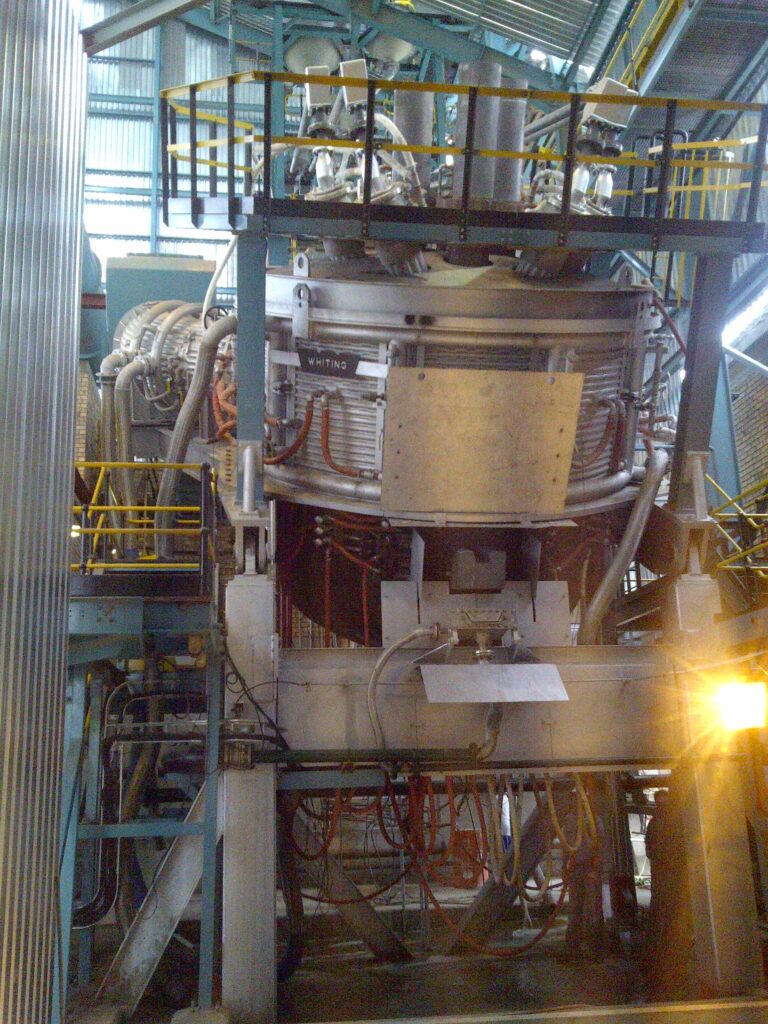
Whiting’s systems employ canopy-style fume capture for smaller (≈10-ft) EAF shells and doghouse-style systems for larger (≈20-ft) furnaces. Each design maintains negative pressure over the arc zone, directing particulates into filtration.
Similar technology on AOD converters—such as motorized, refractory-lined fume hoods with accelerator stacks—shows how air-cooled capture structures maintain integrity under high radiant heat. Integrating temperature and flow sensors into these ducts gives operators live off-gas volume and temperature data, helping fine-tune combustion and heat recovery.
2. Build and Maintain a Stable Foamy Slag
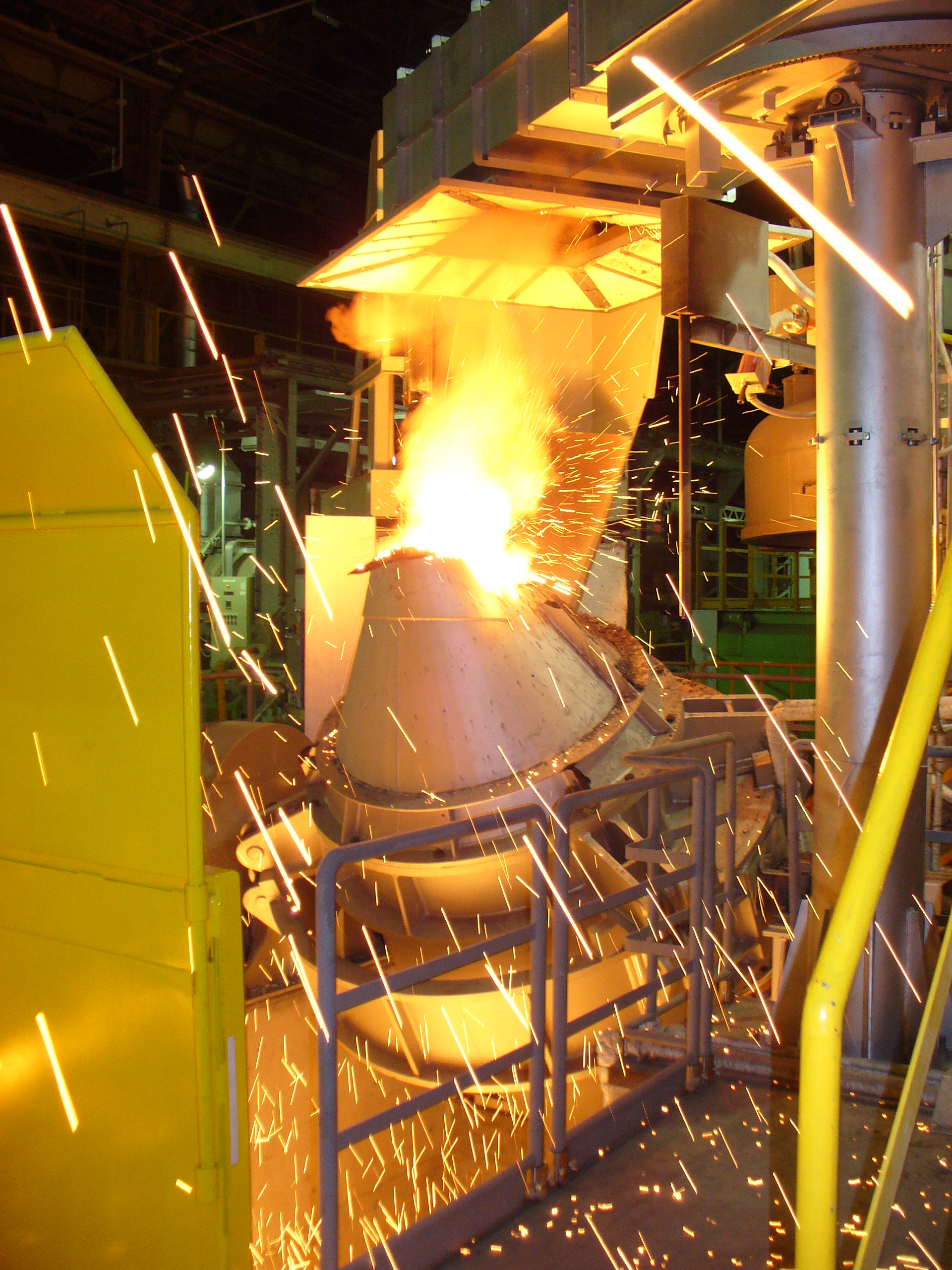
Foamy slag is the unsung hero of energy efficiency. A well-formed slag blanket insulates the melt, protects refractories, and stabilizes the arc.
While focus is often given to physical slag control features—such as submerged sidewall tap holes and fast-return tilt functions—the same design logic applies to foamy slag practice. Maintain consistent carbon and oxygen injection to create a viscous, buoyant slag layer that envelopes the arc without excessive overflow.
Stable foamy slag can improve energy transfer by up to 10–15 % (within the industry-typical range) and significantly reduce electrode wear.
3. Recover Energy Through Post-Combustion
Post-combustion of CO in the freeboard converts the chemical energy that would otherwise be lost as heat into usable furnace energy. Proper oxygen lance positioning and off-gas monitoring ensure CO + ½ O₂ → CO₂ occurs above the slag line, not at the roof.
Some modern systems recover up to 20–25 kWh per ton through optimized post-combustion and heat-recovery hoods. Coordinating these oxygen additions with off-gas temperature sensors helps keep roof panels and ducts within safe operating ranges while improving overall thermal efficiency.
4. Control Slag Carryover to Boost Yield
Every kilogram of slag carried into the ladle equals lost metal and process instability downstream. Design features such as Whiting’s fast-return tilt and submerged tap-hole systems enable slag-free pours by cleanly cutting off flow at the tap end.
Outside the furnace, dedicated slag-pot transfer cars (up to 50-ton capacity) remove by-product slag without tying up melt-shop cranes. Cleaner separation of metal from slag not only improves yield but also reduces reoxidation and slag contamination during ladle refining.
5. Optimize Carbon and Oxygen Practice
Precise carbon-oxygen balance governs decarburization rate, foamy-slag formation, and overall yield.
- The AOD process, long recognized for precision, achieves carbon control to 0.01
- Bottom tuyeres and a water-cooled top lance deliver measured gas mixtures that reduce residual oxygen, nitrogen, and hydrogen.
- Auxiliary wire-feed alloy systems and stirring stations maintain chemical homogeneity before casting.
For EAFs, adopting similar gas-injection sequencing—supported by automated mass-flow controllers—can significantly reduce oxidation losses and lower tap-to-tap variability.
6. Instrument, Calibrate, and Log Everything
Performance improvements depend on reliable data. Whiting’s Volta Furnace Master platform logs key metrics:
- Charge and alloy weights per heat.
- Heat and ladle running time.
- Tons per heat (yield KPI).
- Power and timing parameters.
- Refractory running time (wear indicator).
Routine sensor calibration—particularly on flow, pressure, and temperature circuits—prevents data drift that can mask inefficiency. Historical trend analysis reveals correlations among electrical energy input, slag composition, and yield-loss events.
7. Track Before-and-After KPIs to Close the Loop
Yield improvement isn’t theoretical—it’s measurable. Plants implementing tighter slag-free tapping and automated alloy addition often report:
- 1–2 % higher metallic yield.
- Reduced tap-to-tap times by 3–5 minutes.
- Lower refractory wear rates and cleaner ladle slags.
Documenting these KPIs before and after process changes provides the evidence base for further optimization and supports internal funding for future upgrades.
Bringing It All Together
Improving EAF slag practice yield is not about any single innovation—it’s about coordination. Off-gas sensors, slag control, carbon-oxygen balance, and automated charging all connect through integrated PLC/SCADA systems like Volta Furnace Master.
When every parameter—gas flow, slag height, off-gas temperature, and tap weight—is tracked and tuned together, yield climbs and downtime falls.
Whiting’s engineered furnaces and auxiliary systems give melt shops the data visibility and control needed to consistently hit these targets—turning everyday operations into measurable performance gains. Contact our team to begin a no-obligation conversation.