
Scrap & DRI Charging Strategies for EAF
Efficient scrap and DRI charging sits at the core of every high-productivity Electric Arc Furnace (EAF) operation. The choice between traditional EAF charging buckets vs continuous charging systems directly influences melt rate, thermal balance, safety, and plant footprint in 2025 and beyond. Many melt shops face—and will continue to face—the same trade-off: how to move material faster without overextending space, power, or maintenance budgets.
Charging Options Overview
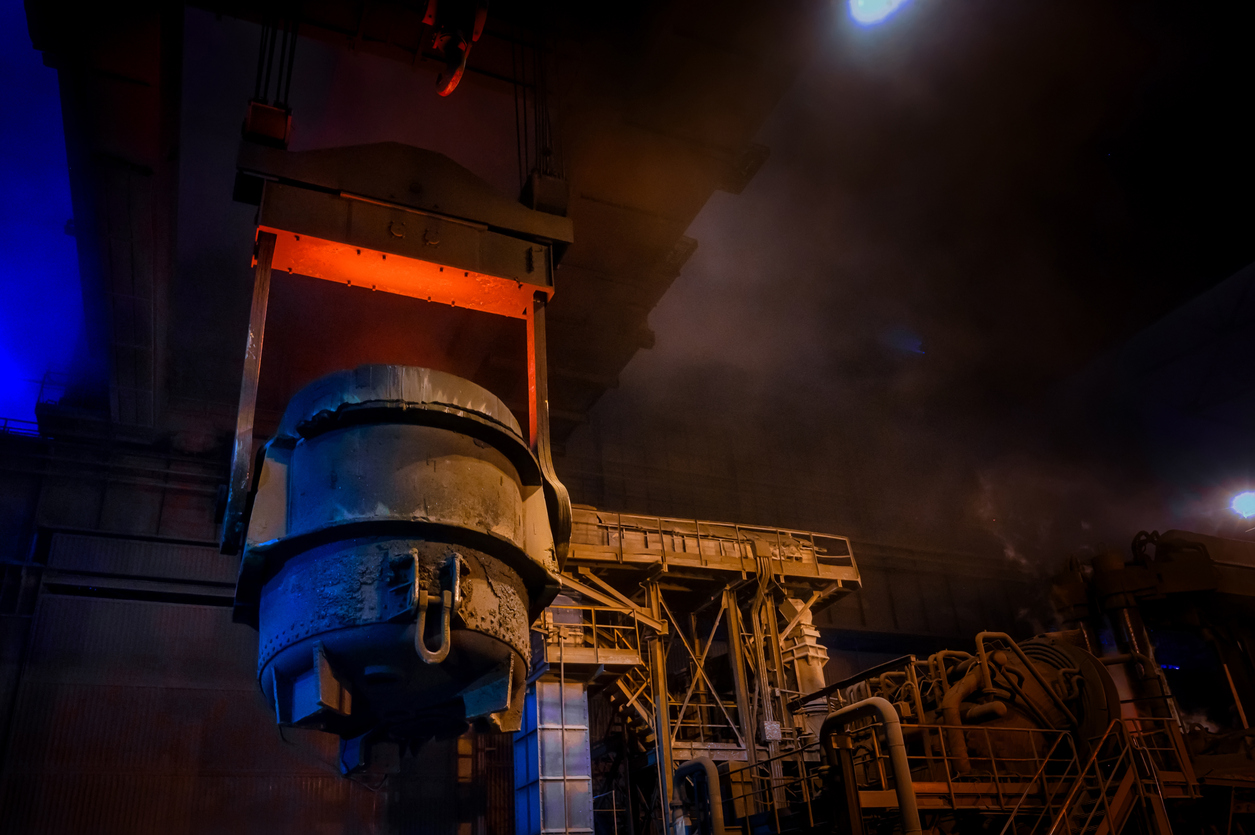
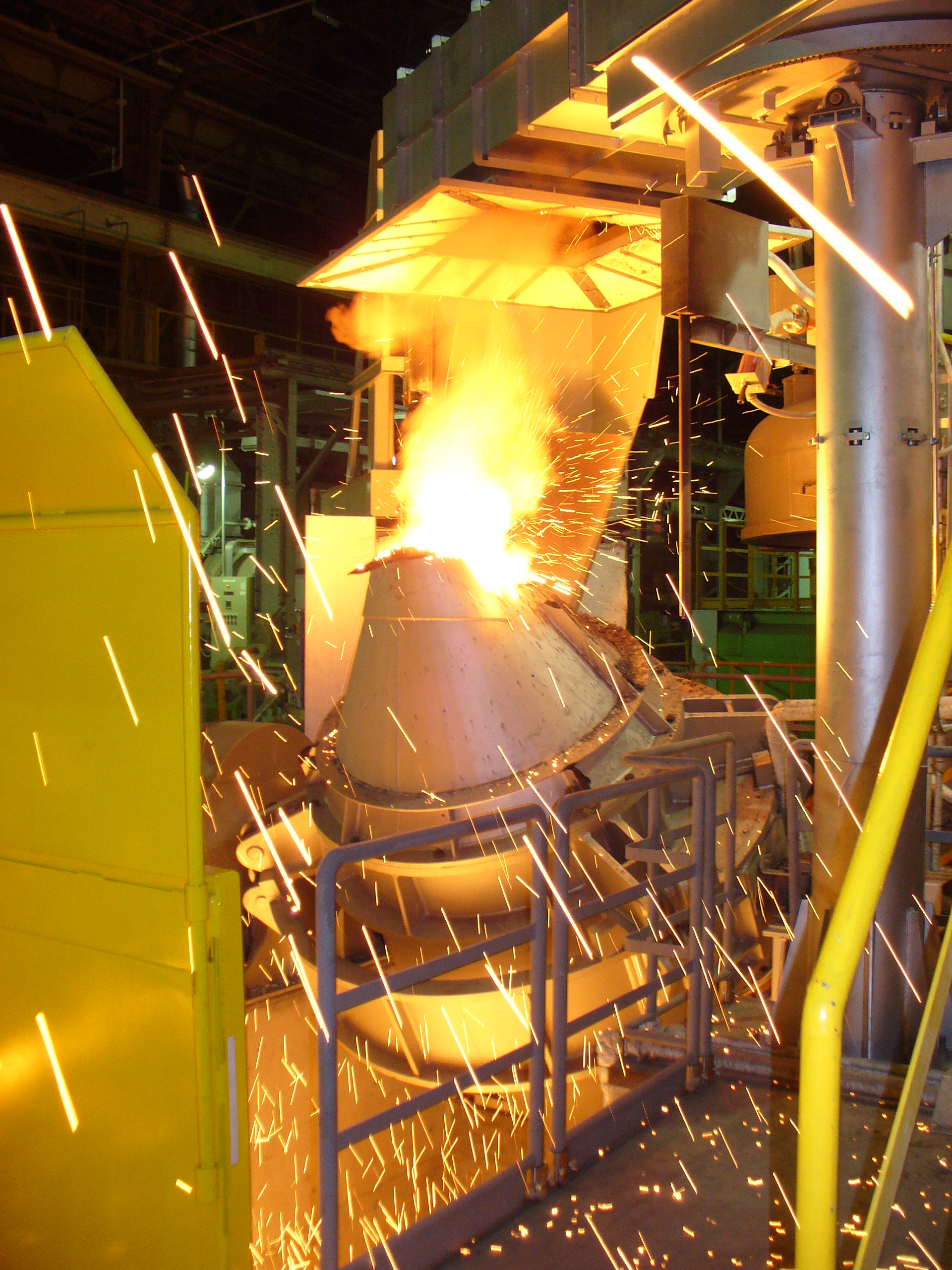
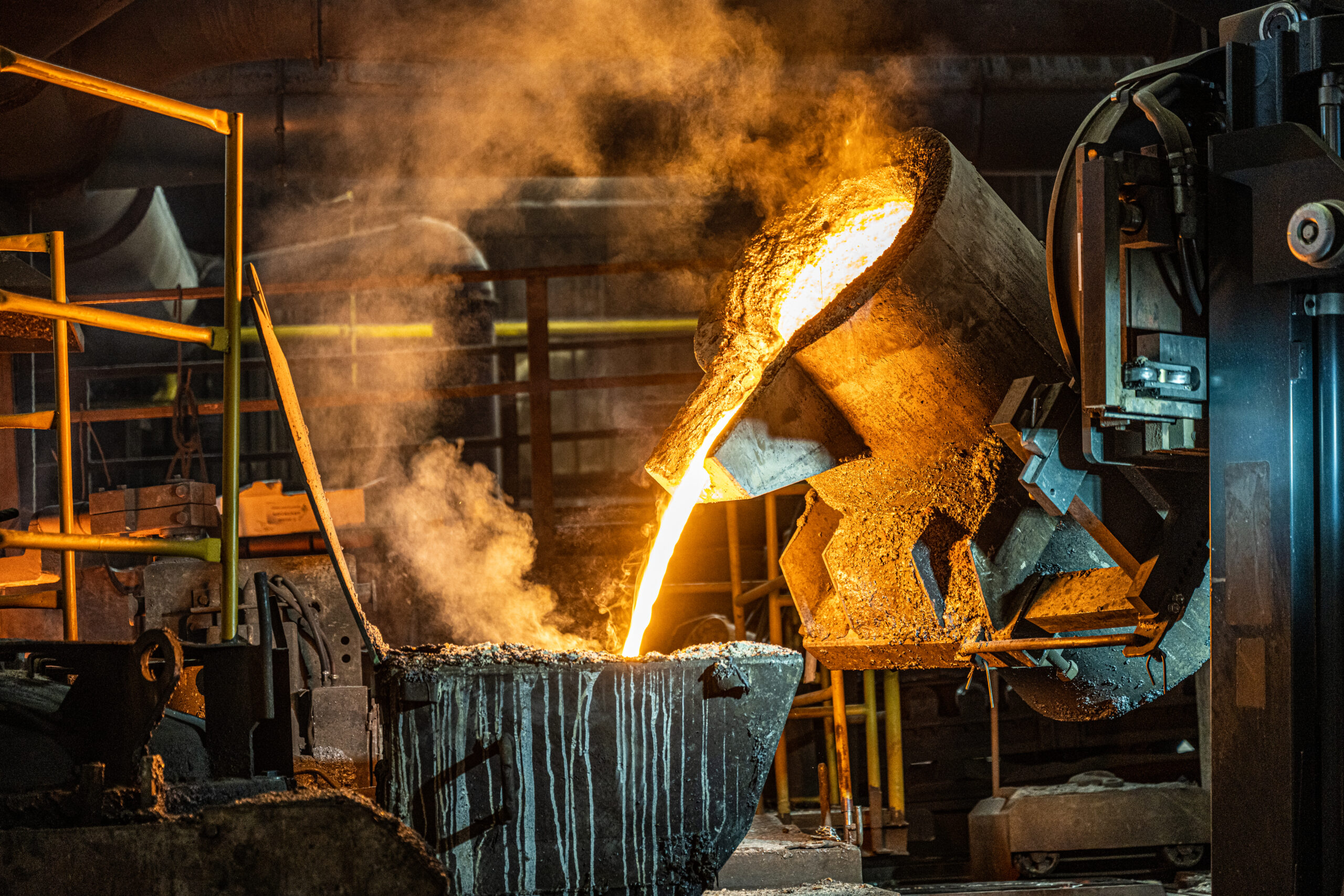
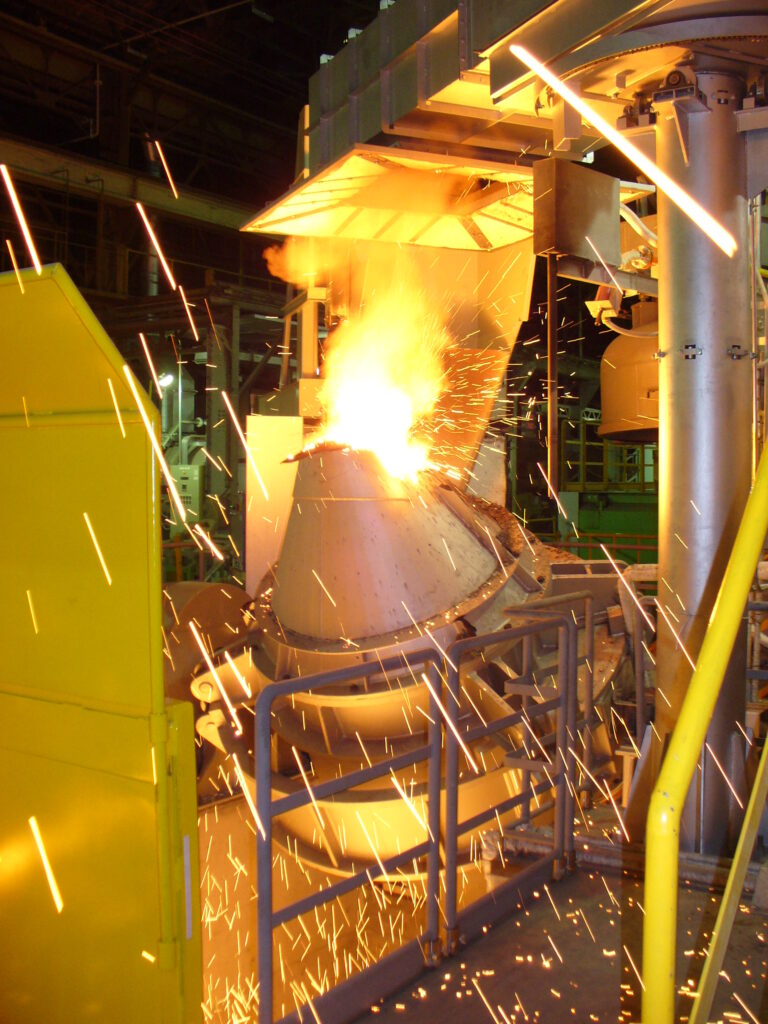
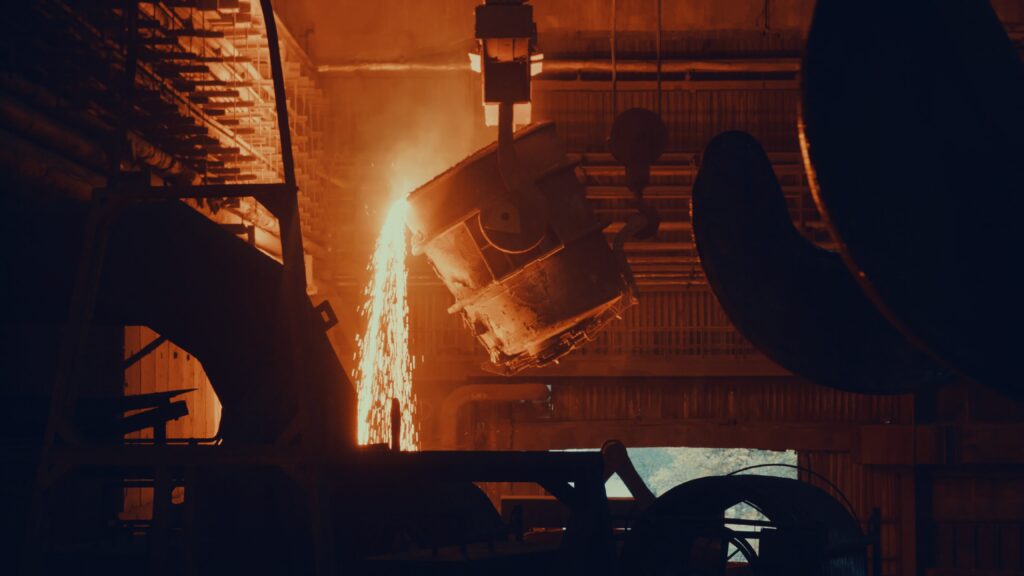
The most common system across global EAF shops remains clamshell charging buckets, designed to lift and dump bulk scrap into the furnace shell. Whiting manufactures these heavy-duty units for its Hydro-Arc® EAFs, offering capacities from 1,500 to 2,850 cubic feet depending on furnace size.
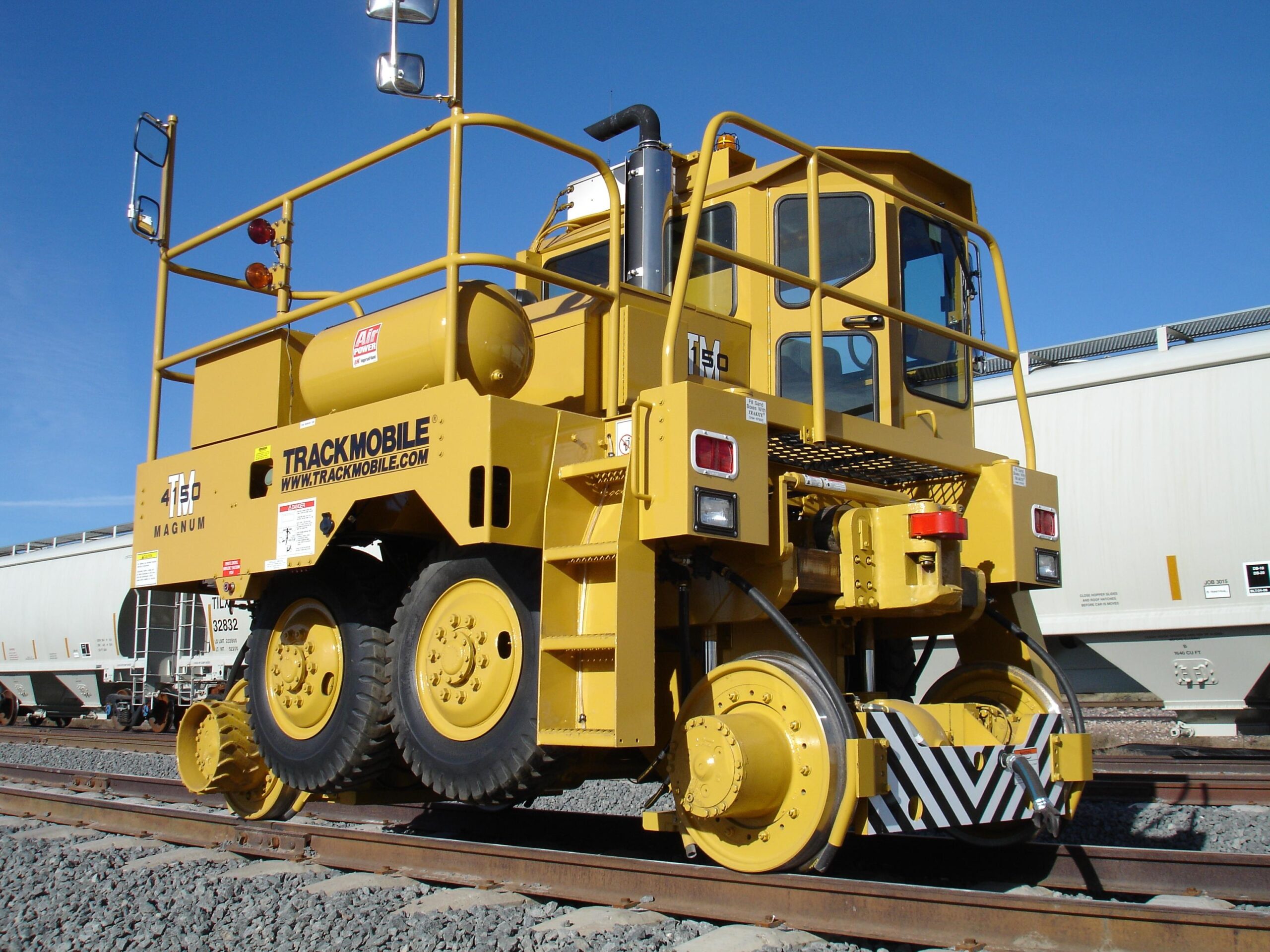
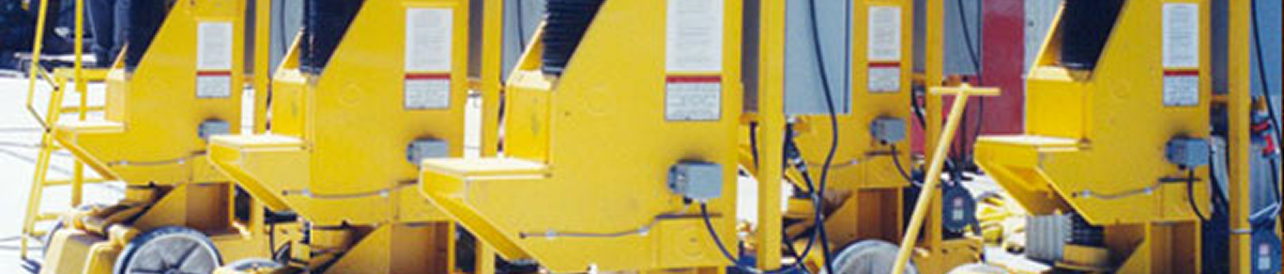
Buckets are loaded in the scrap yard and transported to the furnace bay via radio-controlled transfer cars—self-powered, 200-ton units that move independently of overhead cranes. This decoupling of crane and charge motion shortens turnaround time and reduces congestion around the furnace floor.
Bucket Design and Cycle Time
Each charge bucket cycle defines a large portion of the EAF’s tap-to-tap time. Cycle time depends on charge density, bucket volume, and handling coordination between the scrap yard and the furnace operator.
- Capacity Upgrades: One Whiting system upgrade reduced the melt cycle from a five-charge to a three-charge heat, thanks to larger bucket volume and an expanded furnace shell.
- Hydro-Arc Shell Capacity: Deep sidewalls and dished bottoms allow greater scrap loading—ranging from 7 cu. Ft. in small 3′-4″ shells to 8,020 cu. Ft. in large 32′-0″ furnaces.
- Transfer Cars: Self-powered cars carrying the loaded bucket minimize crane time, improve scheduling, and enhance safety by keeping operators out of the immediate charging zone.
This approach remains the benchmark for high-tonnage operations where full-batch charging still offers the fastest melt rate per heat.
Continuous Charging Systems
Continuous or semi-continuous charging systems are now finding their place in mid-size and energy-optimized plants. While not always applied to full scrap loads, the automation philosophy mirrors Whiting’s Alloy Additions System used for fluxes and cooling scrap:
- Weigh-Belt Feeders: Materials are pre-weighed and delivered through retractable chutes directly into the furnace or converter mouth.
- Sequential Feed Logic: Programmable control sequences allow operators to continuously meter DRI, fluxes, or small scrap, smoothing the energy input curve.
- Thermal Benefits: Continuous charging stabilizes furnace temperature, enabling longer arc-on time and less power fluctuation between charges.
Although the mechanical systems differ — between EAF charging buckets and continuous charging systems — both approaches rely on the same PLC-based integration, linking feed weight, furnace temperature, and electrical parameters in real time.
Throughput vs. Footprint
Bucket charging delivers raw speed, but it requires vertical clearance and crane access. Continuous charging lines demand horizontal space and automation controls.
The trade-off is straightforward:
- Bucket systems handle large scrap batches, ideal for large furnaces and facilities with overhead capacity.
- Continuous charging favors smaller furnaces or brownfield sites with limited vertical space.
Whiting’s experience shows that upgrading shell capacity (e.g., a 19′ to 20′ EBT furnace) can increase throughput without changing the transformer or crane—an elegant compromise between footprint and productivity.
Controls Integration
Modern melt shops rely on data-driven automation. Systems such as Volta Furnace Master and Volta-SAF Regulators log each charge weight, control hydraulic and cooling sequences, and synchronize charging events with electrode motion.
This integration ensures that thermal, electrical, and material parameters remain balanced during each phase of the melt. Whether charging via bucket or belt, all key metrics—charge weight, tap selection, electrode current, and water flow—are tracked continuously.
Thermal Balance Impact
The charging strategy directly influences the furnace’s thermal balance. Rapid, well-timed bucket drops allow operators to maintain high active power input with minimal idle time, while continuous charging distributes the heat load more evenly.
Energy efficiency improves when less cold scrap interrupts the arc. Whiting’s Hydro-Arc furnaces with liquid heel capability demonstrate how maintaining a hot metal base at each charge enhances thermal stability and shortens tap-to-tap cycles.
Dust and Off-Gas Implications
Every charging method must control particulate release and off-gas flow. Whiting systems integrate dust control and fume capture throughout the charging path:
- Automated Alloy Additions Systems include localized dust collectors to suppress emissions at the furnace mouth.
- Fume Management: Large furnaces employ canopy or doghouse capture systems, channeling off-gas to filtration or combustion units.
Continuous charging can reduce thermal shocks and minimize the burst of fume typical in full-bucket drops—but requires reliable gas-handling synchronization to prevent suction imbalance.
Safety Interlocks
Safety remains a defining requirement in EAF charging design.
- Remote operation via radio-controlled transfer cars keeps personnel away from hot zones.
- PLC-based interlocks in the Volta control suite monitor transformer temperatures, hydraulic pressure, and roof movement before enabling a charge.
- Fail-safe logic ensures that a roof or electrode position cannot conflict with a bucket approach command.
These layers of protection make both charging modes viable under strict safety regimes.
Common Design Trade-Offs
Designing an EAF charging system always involves balancing throughput, flexibility, and physical constraints:
- Throughput vs. Capacity: Larger shells reduce the number of charges per heat, improving tap-to-tap time—but require higher crane loads and more power.
- Scrap Volume vs. Metal Ratio: Deep sidewalls increase light-scrap capacity but can limit molten-metal holding volume in duplex operations.
- Cycle Speed vs. Integration: Bucket systems are faster per charge, while continuous systems spread power and control across the heat for steadier operation.
The Bottom Line
In the ongoing comparison of EAF charging buckets vs. continuous systems, there’s no single winner—only the solution that best fits a plant’s throughput targets, footprint, and automation strategy.
Full-batch charging remains dominant for large, high-power furnaces seeking maximum tons per hour. Continuous charging offers smoother thermal control and improved dust management for compact or energy-sensitive operations.
Whiting’s integrated Hydro-Arc® EAF, Volta Furnace Master controls, and automated handling solutions allow melt shops to optimize both methods, ensuring faster cycles, safer charging, and higher electrical efficiency no matter how scrap reaches the arc. Contact us to talk about how Whiting can help your melt shop become more efficient and profitable.