

The Complete Guide to Railcar Movers in Canada: Trackmobile®, Zephir, and BOSS Solutions
Introduction: The Strategic Importance of Railcar Movers in Canadian Logistics

In the demanding landscape of Canadian logistics, where mining, agriculture, and chemical processing form the backbone of the economy, operational downtime is not merely an inconvenience—it is a significant revenue drain. For facility managers, the traditional reliance on heavy locomotives for internal shunting is rapidly becoming a strategy of the past. Today, the industry is shifting toward agile, cost-effective railcar movers that offer unparalleled versatility. As Canadian operations face the dual pressures of extreme environmental conditions and the need for rigorous safety standards, selecting the right equipment has never been more critical. This guide examines the strategic deployment of Trackmobile®, Zephir, and BOSS solutions, providing an objective analysis for decision-makers tasked with optimizing their rail yard performance.
Defining the Modern Railcar Mover: Beyond the Locomotive
The modern railcar mover is not just a downsized locomotive; it is a sophisticated piece of industrial engineering designed to bridge the gap between road and rail. Unlike a massive, dedicated train engine, these machines are compact, agile, and specifically engineered for short-distance switching and spotting. By utilizing bi-modal technology, these movers can travel on asphalt or concrete to reach a target railcar and then lower steel wheels onto the track to engage in rail operations. This ability to traverse the entire yard without being confined to the track layout provides a degree of flexibility that conventional locomotives simply cannot match.
Why Canadian Operations are Switching to Bi-Modal Solutions
The transition toward bi-modal railcar movers in Canada is driven primarily by the need for efficiency and cost control. Operating a large locomotive for simple yard movements is inefficient; it consumes excessive fuel, requires a crew with specific, often expensive, certifications, and demands extensive maintenance on heavy track infrastructure. In contrast, modern movers offer a significantly lower total cost of ownership. By reducing idle time and minimizing fuel consumption—often by up to 73% compared to conventional engines—these units allow Canadian businesses to streamline their internal logistics while meeting stricter environmental and safety regulations.
Operational Efficiency: Streamlining the Rail Yard
Efficiency in a rail yard is measured by the speed and safety of each move. A railcar mover excels here by allowing for rapid deployment. Because these machines can move from the workshop to the railcar without the need for complex switching maneuvers, the time taken to initiate a move is drastically reduced. Furthermore, the integration of remote-control technology allows a single operator to manage the coupling and spotting process from the ground, ensuring they have the best line of sight and eliminating the communication bottlenecks that frequently lead to accidents in busy terminals.
Understanding Bi-Modal Technology: Versatility on and off the Tracks

The Mechanics of Steel Wheels and Heavy-Duty Pneumatic Tires
The core of bi-modal functionality lies in the interplay between steel wheels and heavy-duty pneumatic tires. When operating on the ground, the mover behaves like a truck, using high-traction rubber tires to maneuver around the facility. When the rail operation begins, hydraulic systems lower the steel guide wheels onto the tracks. These wheels maintain the alignment of the unit, while the machine’s weight is cleverly redistributed to provide the necessary friction for pulling heavy loads.
Weight Transfer Technology: How Small Machines Pull Massive Loads
The true engineering marvel of these movers is Weight Transfer Technology. A railcar mover is significantly lighter than a standard locomotive, which would suggest it lacks the power to pull heavy strings of railcars. However, by using a hydraulic weight transfer system, the mover effectively “lifts” a portion of the railcar’s weight onto its own chassis. This increases the vertical load on its drive wheels, drastically increasing the friction coefficient. This physics-based maneuver allows a compact mover to achieve the high Tractive Effort necessary to move dozens of cars, effectively leveraging the mass of the load it is pulling to secure its own traction.
Navigating Tight Spaces: The Advantage of Road-to-Rail Transitions
Canadian facilities often contend with legacy infrastructure, including tight curves and limited space. A locomotive is restricted by its rigid wheelbase and track-bound nature. A railcar mover, however, can navigate to a railcar from any angle, provided there is a small stretch of track available for the transition. This flexibility allows for the design of more efficient yard layouts and simplifies the retrieval of cars from blocked or inaccessible areas of the facility.
Trackmobile®: The Industry Standard for High Tractive Effort
The Lineup: Comparing the Titan, Hercules, and Viking Models
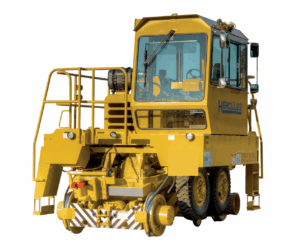
Trackmobile® has long been the synonym for quality in the North American railcar mover industry. Their current lineup, including the Titan, Hercules, and Viking models, is designed to cater to different operational demands. The Viking is often favored for smaller, lighter applications, while the Hercules and Titan models serve the heavier, high-volume requirements of major Canadian industrial hubs, offering robust frames and high-performance components capable of handling massive tonnage.
Max Tractive Effort and Performance Specs
The Trackmobile® range is defined by its ability to deliver consistent Tractive Effort, regardless of the load. Each model is engineered with a specific balance between engine torque and weight transfer capability. The Titan, for example, is built for extreme workloads where high starting force is required. By matching the Tractive Effort profile to the specific material density being moved, be it grain, timber, or chemicals Trackmobile® ensures the equipment is never under-powered or wasteful.
Technology Integration: CAN-Bus Control and UltraView Color Touch Screen Displays
Modern Trackmobile® are high-tech command centers. The integration of CAN-Bus control systems provides real-time diagnostics, while the UltraView color touch screen display gives the operator immediate feedback on engine health, hydraulic pressure, and traction metrics. This digital layer improves predictive maintenance, as operators can identify potential faults before they lead to costly operational downtime.
Stability and Power: The Vulcan and Atlas Models
The Vulcan and Atlas models serve as the flagships of the Trackmobile® range. These units are designed for extreme stability, ensuring that even when pulling long strings of loaded cars, the machine maintains perfect contact with the rail. The emphasis on high-torque output makes them the ideal choice for heavy, low-speed pulling applications where reliability is the absolute priority.
The Whiting Equipment Canada Inc. Connection: Local Support and Service
For Canadian operators, the availability of parts and service is paramount. Whiting Equipment Canada Inc. provides the essential regional infrastructure that keeps these machines running. Given the harsh Canadian climate, having access to local expertise for specialized cold-weather maintenance—such as ensuring hydraulic seals remain flexible in -40°C—is an invaluable advantage that differentiates Trackmobile® from international competitors.
Zephir: Innovation in Electric and Green Railcar Moving Solutions
The Shift to Electric: Exploring the LOK E Series
As ESG goals become standard in Canadian industry, the Zephir LOK E series represents the cutting edge of green railcar movement. These electric movers eliminate diesel exhaust, making them ideal for indoor operations, such as maintenance facilities or food-grade storage areas where fumes are unacceptable. The LOK E series maintains the high Tractive power required for heavy switching while providing a near-silent operating environment.
Maneuverability with the CRAB EZ Line

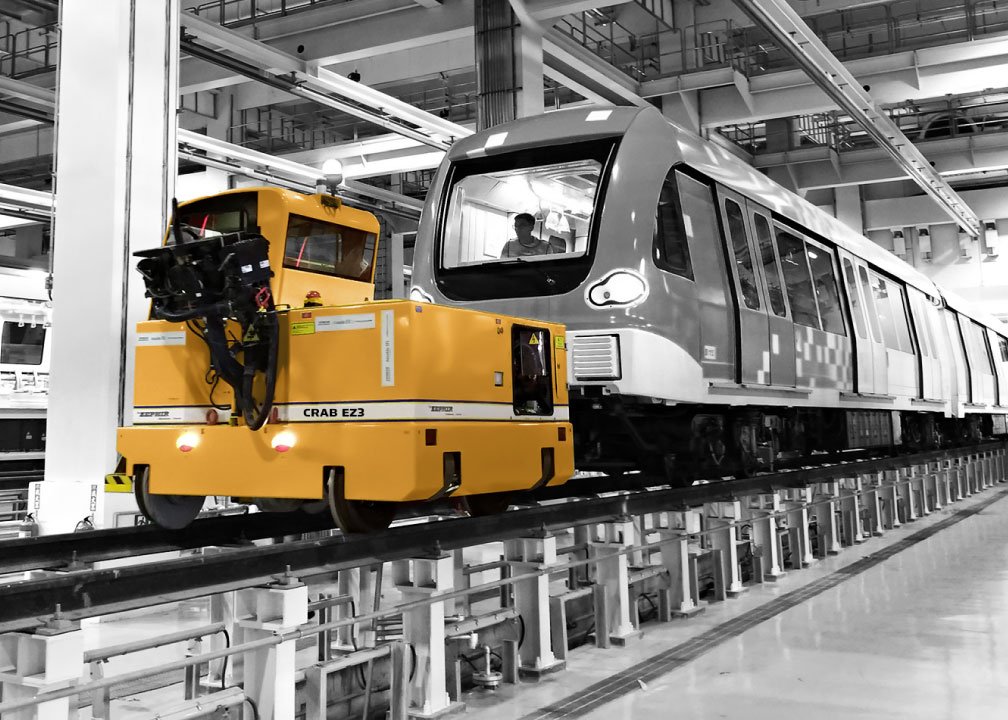
The CRAB EZ series from Zephir is engineered for extreme maneuverability. It allows for sideways movement, which is particularly useful in tight yards where conventional turning radii are impossible to accommodate. This unique steering capability significantly reduces the time required for repositioning, making it an excellent choice for congested urban rail terminals.
Sustainability in the Rail Yard: Reducing Idle Time and Carbon Footprints
Electric movers significantly reduce the carbon footprint of a facility. Unlike diesel engines that often idle for hours to keep fluids warm or engines ready, electric units consume virtually no energy while standing by. This instant-on capability, combined with regenerative braking systems that feed energy back into the batteries, maximizes overall energy efficiency.
Maintenance Benefits of Electric Motors vs. Diesel Equipment
Electric propulsion systems have fewer moving parts than traditional internal combustion engines. There are no oil changes, complex fuel systems, or turbochargers to fail. For a maintenance manager, this means a lower total cost of ownership and significantly reduced downtime, as the electric drivetrain is fundamentally more reliable and easier to service.
BOSS Railcar Movers: Heavy-Duty Performance and Customization

The BOSS Lineup: Exploring the ZX and MX Mobile Railcar Movers
BOSS railcar movers offer a specialized approach, with the ZX and MX lines focused on raw power and durability. These movers are the “workhorses” often found in the most punishing environments. They prioritize heavy-gauge steel construction and simplified, bulletproof hydraulic systems that can withstand the rigors of heavy industrial service without the complexities of overly delicate electronics.
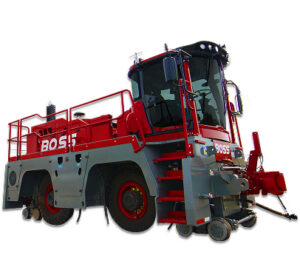
Built for Extreme Environments: Steel Plants, Mining, and Power Plants
In industries like mining or steel production, equipment is subject to extreme dust, heat, and physical impacts. The BOSS units are designed with reinforced shielding to protect sensitive components. Their build philosophy focuses on “rugged utility,” ensuring that the machines remain operational even when covered in grit or exposed to the harshest Canadian elements.
Customizable Solutions: Tailoring Equipment to Unique Rail Axle Gauges
Every yard has its idiosyncrasies. BOSS distinguishes itself through its willingness to customize, particularly regarding rail axle gauges. Whether a facility operates on a non-standard gauge or requires specialized coupler heights for unique rolling stock, BOSS provides bespoke engineering to ensure the mover fits the operation, not the other way around.
Critical Factors for Selecting a Railcar Mover in Canada
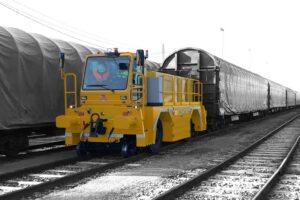
Tractive Effort vs. Towing Capacity: What Your Facility Actually Needs
A common mistake is focusing on “towing capacity” rather than “Tractive Effort.” Towing capacity is a marketing figure that assumes ideal conditions; Tractive Effort is a physical measure of how much force the machine can exert on the track. In the Canadian climate, with rails often covered in frost or ice, a high Tractive Effort rating is essential to maintain movement.
Coupler Styles and Hydraulically Actuated Coupler Combinations
Railcars vary in their coupling mechanisms. Using a mover that supports hydraulically actuated coupler combinations allows a single machine to service a diverse fleet of cars, including everything from legacy tankers to modern grain hoppers, without the operator needing to manually change equipment.
Assessing Rail Yard Grade and Curvature
The grade (incline) of the rail yard has a massive impact on the power required. Even a slight grade can double the force needed to move a train. Before selecting a mover, it is imperative to calculate the effective grade of the track and the sharpness of the curves, as these factors directly dictate the required weight transfer performance and frame rigidity of the equipment.
Industry-Specific Needs: From Grain Terminals to Chemical Plants
Different industries have different safety requirements. Chemical plants may require explosion-proof configurations, while grain terminals need dust-ignition-proof systems. Understanding the safety certifications required for your specific site is as important as the mechanical specs of the mover itself.
The “Canadian Factor”: Operating in Extreme Cold and Remote Locations
Operating in Canada requires specific adaptations. Standard equipment often fails in sub-zero temperatures due to brittle hydraulic hoses and frozen lubricants. A “Canadian Package” is mandatory, including high-capacity block heaters, low-temperature hydraulic fluids, and heated cabins. Furthermore, given the distance from urban centers, equipment must be serviceable by local technicians who understand these specialized modifications. Prioritize brands like Whiting Equipment Canada that offer robust Canadian dealer networks to ensure that when a line goes down, a support team is never more than a few hours away.
Conclusion
Selecting the right railcar mover is a foundational decision for any Canadian industrial operation. Whether you prioritize the industry-leading reliability of Trackmobile®, the green innovation of Zephir, or the rugged customizability of BOSS, the goal remains the same: maximizing operational efficiency while ensuring safety. To implement the right solution, start by auditing your current yard grades and throughput requirements, then consult with local experts who understand the specific rigors of your regional climate. By moving away from oversized, inefficient locomotives and adopting specialized bi-modal movers, your facility can achieve a higher standard of productivity, reduce maintenance costs, and ensure a safer, more sustainable workflow for years to come.
Enquire About Trackmobile®, BOSS, or Zephir Railcar Movers in Canada Today.