
The Evolution of the Ladle from Transport to Reactor
The steel ladle has transformed from a simple bucket into one of the most consequential process vessels in modern metallurgy — and understanding that shift changes how you think about steel quality entirely.
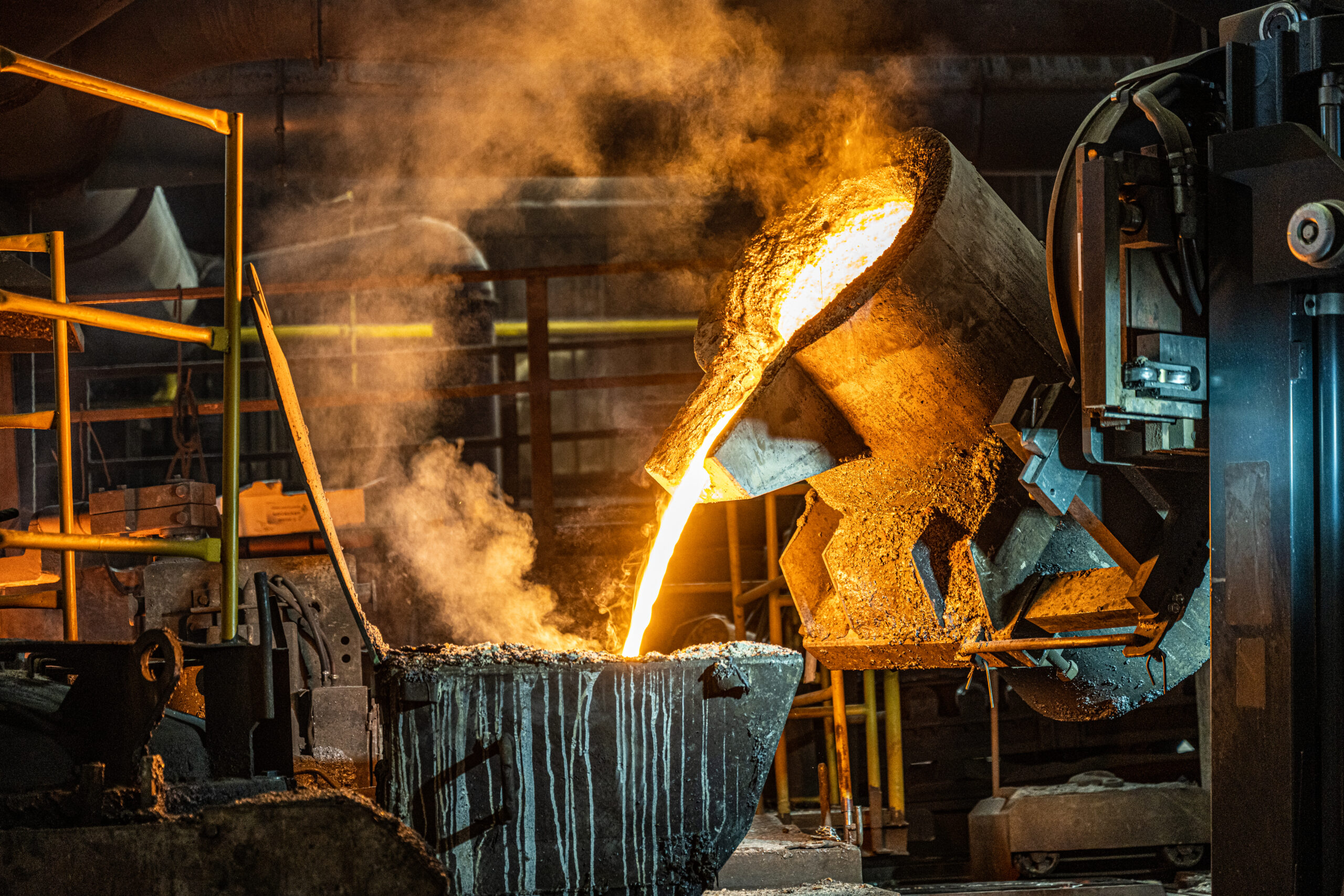
For much of industrial history, the ladle served a single, unglamorous purpose: moving molten steel from one point to another. Early transfer ladles were passive containers, valued for their refractory lining and structural integrity rather than any metallurgical function. But as steelmakers demanded tighter chemical tolerances and cleaner grades, the ladle was pressed into a far more active role.
The ladle is now the primary site where final steel chemistry is defined, not merely transported.
The journey from iron ore to finished steel is a long one, and the ladle sits at its most critical intersection. Modern operations rely on three core functions the ladle now performs:
- Chemical homogenization — ensuring alloy additions are uniformly distributed throughout the melt
- Temperature management — holding or adjusting heat between the converter and the caster
- Inclusion control — providing a stable environment for slag-metal reactions and floatation of harmful particles
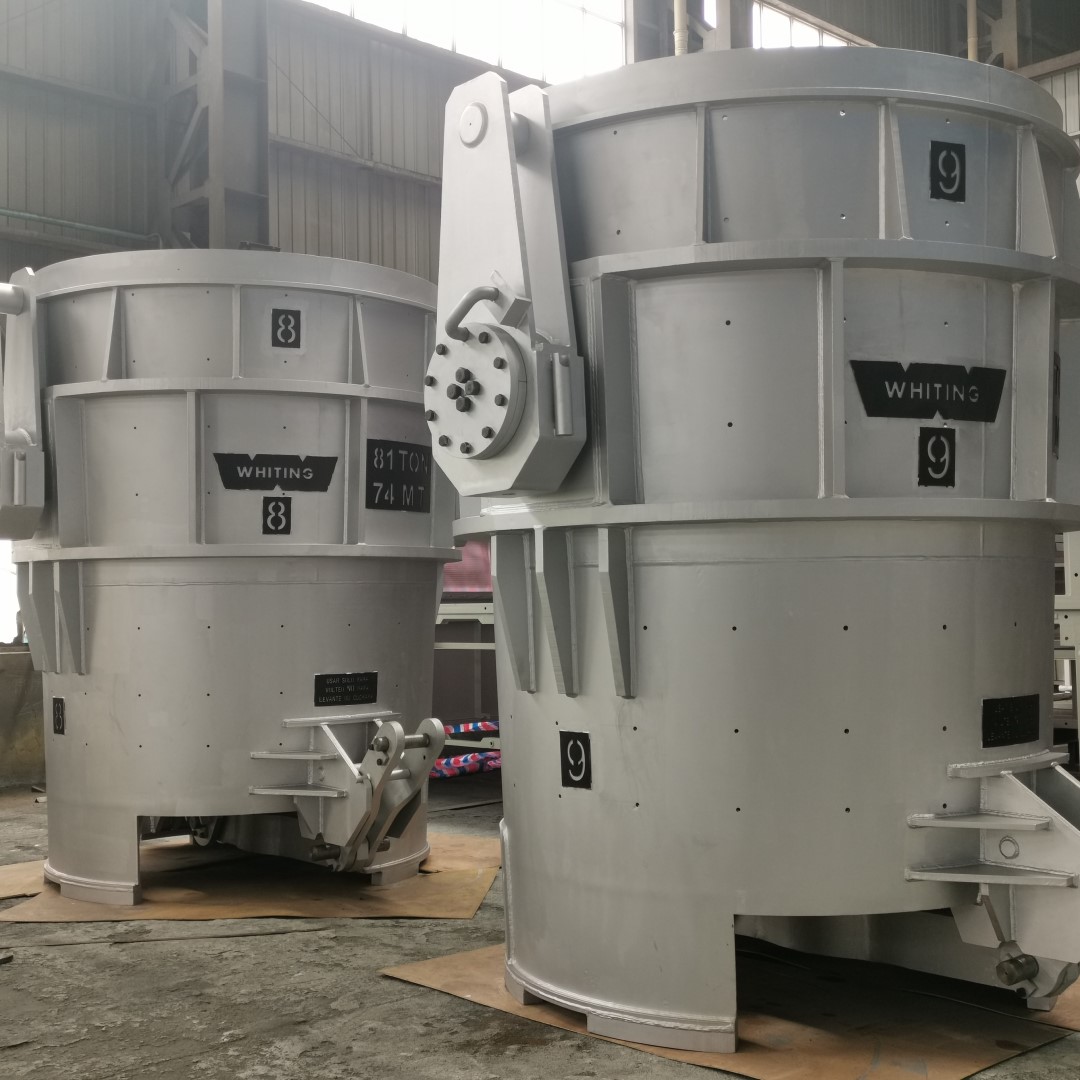
The bottom pour ladle, with its slide-gate or stopper-rod mechanism, enables precise, controlled teeming that a simple lip-pour vessel could never achieve. Paired with the ladle furnace, which delivers arc heating and stirring capability, today’s ladle functions as a fully equipped secondary metallurgy reactor.
This integration is central to the emerging Smart Melt Shop concept, where real-time data links every ladle cycle to upstream converter outputs and downstream caster requirements. The ladle is no longer a passive link in that chain. And in the next stage of the steelmaking process, the Ladle Refining Furnace becomes the defining environment where chemistry is locked in — which is exactly where the story continues.
Ladle Metallurgy: Where Quality is Defined
The molten steel ladle is not merely a transport vessel — it is the primary site where steel chemistry is locked in and quality grades are won or lost.
Ladle metallurgy is the collective term for the refining operations performed after steel is tapped from the primary furnace. As Britannica notes, these operations encompass alloying, refining, and temperature adjustment — all executed while the heat remains in the ladle. The sequence matters enormously. Deoxidation comes first, typically through additions of aluminum or silicon, which bind with dissolved oxygen and pull it out of solution. Desulfurization follows, using lime-based slag systems to drive sulfur levels down to the tight tolerances demanded by automotive and pipeline grades.
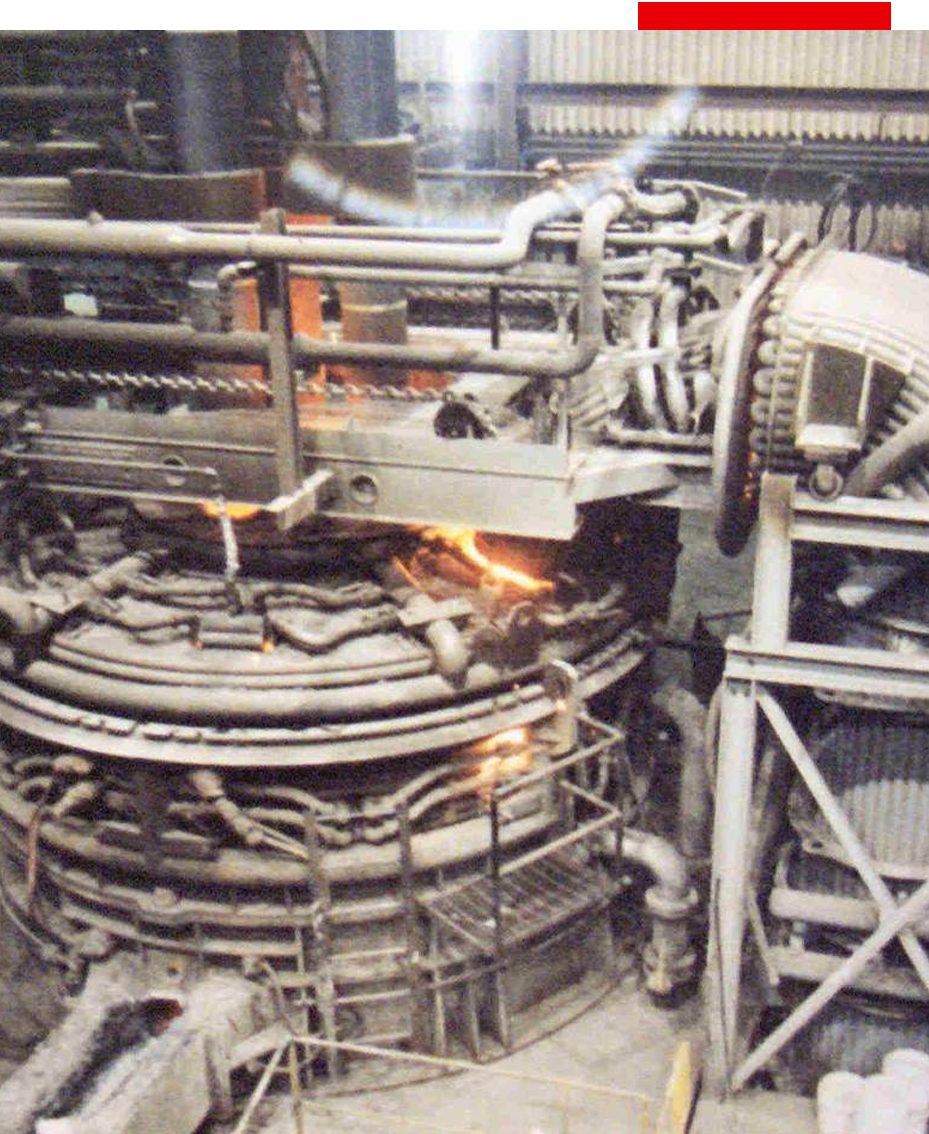
The Ladle Refining Furnace (LRF) addresses the inevitable temperature drop that occurs during these treatments. By passing electrical current through graphite electrodes submerged into the slag layer, the LRF reheats the steel precisely — maintaining the casting temperature window without remelting or contaminating the steel.
Alloying additions — manganese, chromium, niobium, and others — are introduced at this stage to hit the mechanical property targets of specific steel grades. And because inclusions formed during deoxidation must be removed before casting, stirring is applied throughout. Injecting argon gas through a porous plug in the hot-metal ladle creates a gentle upwelling that floats inclusions into the slag layer, cleaning the steel from within.
Technical Spotlight — The LRF Process: The Ladle Refining Furnace combines arc reheating with flux additions and inert gas stirring in a single station. Operators adjust arc power, slag chemistry, and stir rate in real time, giving the melt shop a controllable buffer between the primary furnace and the caster. It is this control — not the primary melt — that defines the ceiling of steel quality.
Understanding what happens inside the ladle during refining naturally raises a follow-on question: how does the vessel itself survive such extreme conditions? The answer lies in a carefully engineered structure of refractory materials and precision hardware.
Anatomy of a Ladle: Refractories and Engineering
A steelmaking ladle survives conditions that would destroy ordinary materials — and understanding why begins with its carefully engineered, multi-layered construction.
The steel shell forms the outermost layer, but it is not what protects the vessel from the molten steel within. That job belongs to two distinct refractory linings installed inside it. The safety lining sits directly against the shell and acts as a last line of defense, absorbing heat and preventing catastrophic breach. The working lining, the innermost layer, makes direct contact with molten steel at temperatures exceeding 2,900°F. These refractory materials are precisely what prevent the liquid metal from consuming the outer shell entirely.
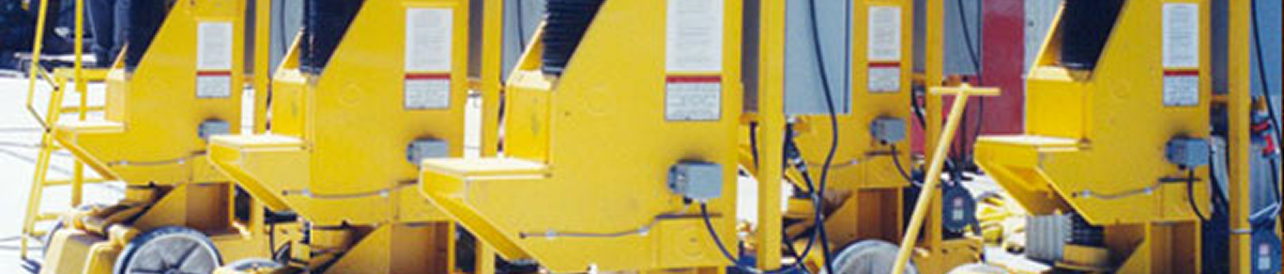
The refractory chemistry behind this protection is not accidental. High-alumina bricks and magnesia-carbon compounds are the dominant materials used in modern working linings because both resist slag attack and thermal shock at extreme temperatures. Magnesia-carbon, in particular, offers exceptional resistance to the basic slag environments common in secondary metallurgy. These bricks are changed out occasionally to maintain structural integrity and to continue to protect the steel ladle itself. Ladle lifts are commonly employed to safely and effectively perform this maintenance duty. The table below illustrates how each structural component functions:
| Component | Material | Purpose |
| Outer shell | Carbon steel plate | Structural integrity and load-bearing |
| Safety lining | High-alumina brick | Secondary thermal barrier; breach prevention |
| Working lining | Magnesia-carbon brick | Direct contact with molten steel; slag resistance |
Critical hardware completes the picture. Trunnions — the heavy axle-like pins mounted on each side — allow crane operators and ladle cars to tilt and rotate the vessel with precision. Bail arms connect the trunnions to the lifting crane. The slide-gate mechanism at the base controls steel flow with remarkable accuracy during casting, and it is a component that distinguishes the modern transfer ladle from earlier designs that relied solely on gravity and tilting.
Every element is engineered for the harshest environment in the melt shop, where thermal cycling, mechanical stress, and chemical attack occur simultaneously with every heat processed. How these ladles are then deployed — whether moving metal between process stations or delivering it directly to a caster — is where operational variety enters the picture.
Operational Varieties: Teeming, Transfer, and Bottom-Pour
Not every ladle in a melt shop serves the same purpose — and matching the right vessel to the right stage of production is where ladle metallurgy meets operational discipline.
Transfer ladles handle the earliest and most physically demanding leg of the journey. These vessels move hot metal — typically at temperatures above 2,500°F — from the blast furnace or electric arc furnace to the primary converter or refining station. Because their primary job is transport rather than refining, transfer ladles are built for thermal retention and mechanical resilience above all else. Capacity tends to be large, lining tolerances are engineered for repeated thermal cycling, and turnaround speed is prioritized.
Teeming ladles enter the process at the opposite end of the production sequence. Teeming ladles are specifically used for the final pouring of steel into molds or the continuous casting machine — meaning any contamination, temperature loss, or mechanical failure at this stage translates directly into finished product defects. The margin for error is essentially zero.
Bottom-pour vs. lip-pour mechanisms represent a critical design decision within teeming applications. Bottom-pour ladles discharge steel through a nozzle at the base, which minimizes turbulence and reduces the entrainment of slag and inclusions — a meaningful advantage for high-grade, clean steel specifications. Lip-pour designs are simpler and lower-cost, but they tend to introduce more slag carry-over, making them better suited to less demanding foundry grades. For inclusion-sensitive applications, bottom-pour is almost always the preferred choice.
Foundry operations and integrated mill environments also place distinct demands on ladle design. Smaller foundry ladles prioritize maneuverability and frequent pouring cycles, while integrated mill ladles are optimized for high-volume throughput and extended campaign life. As these operational distinctions grow more complex, the case for intelligent monitoring and scheduling — explored in the next section — becomes increasingly clear.
The Digital Shift: Ladle Tracking and Smart Melt Shops
Digital transformation is reshaping how melt shops manage their most critical asset — and the ladle is at the center of that change.
Real-time ladle tracking is no longer a luxury; it is a baseline requirement for competitive, safe steel production.
Modern sensor systems monitor ladle location, temperature profiles, and thermal retention continuously throughout the production cycle. That data feeds directly into scheduling algorithms that sequence ladle deployment to minimize heat loss between the ladle refining furnace and the casting station — reducing the risk of a “cold heat” and the costly delays that follow.
Refractory wear prediction.
This is where smart systems deliver some of their most measurable value. Ultrasonic thickness gauges and thermal imaging tools can flag lining degradation before it reaches a critical threshold, giving maintenance teams the window they need to schedule relining rather than respond to a breakout. Platforms designed specifically for ladle tracking and maintenance management integrate wear history, heat cycle counts, and inspection records into a single dashboard, making it far easier to act on data rather than instinct.
Automated scheduling.
This builds on that foundation by coordinating ladle availability with furnace tapping cycles and caster demand — a capability that, according to ABB’s smart melt shop research, is central to the broader digital transformation occurring across steelmaking operations today. Safety improves alongside ROI when fewer surprises occur on the floor.
Future-Proofing Tip: Prioritize ladle management platforms
This is what unify wear tracking, thermal history, and scheduling in one system — fragmented data is the primary reason predictive maintenance programs underperform.
When you look at the full picture — smarter tracking, predictive maintenance, optimized scheduling — the ladle emerges not just as a transport vessel but as a measurable performance lever. That perspective shapes the key takeaways worth carrying into any strategic conversation about melt shop operations.
The Bottom Line: Key Takeaways for Plant Managers
Every decision made around ladle management — from refractory choice to digital monitoring — directly shapes steel quality, operational safety, and long-term profitability.
The steel ladle is not a passive vessel; it is an active metallurgical tool that influences chemistry, temperature, and inclusion behavior at every stage of production. As Whiting Equipment Canada research confirms, proper ladle management and development are critical for efficiency across the entire steel melting operation — a finding that reinforces what experienced plant managers observe daily.
- Refractory selection is your first line of defense. The lining material determines how well a ladle retains heat, resists chemical attack, and survives repeated thermal cycling. Poor refractory choices compound into costly unplanned outages.
- Ladle metallurgy furnace (LRF) treatment is non-negotiable for high-purity steel grades. Desulfurization, degassing, and precise alloy trimming happen inside the ladle — not before it.
- Digital tracking prevents cold heats and breakouts. Monitoring lining wear, preheat cycles, and campaign life keeps every teeming ladle in service within safe operating parameters.
- Custom-engineered ladles deliver stronger long-term ROI than off-the-shelf alternatives, particularly in harsh environments where standard designs wear prematurely.
Understanding these fundamentals sets the stage for a more strategic question: what does it actually take to invest in ladle solutions that perform consistently under pressure?
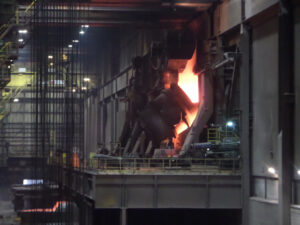
Investing in Performance-Driven Ladle Solutions
Every steel plant ladle represents a long-term engineering commitment, not simply a capital purchase — and the partners you choose to build and maintain that equipment will shape your operational outcomes for years.
Matching engineering expertise to operating conditions is the single most important procurement decision a plant manager can make. Environments inside a melt shop are extreme by any measure: thermal cycling that stresses steel shells, slag chemistry that erodes refractories, and mechanical loads that test every weld and trunnion. As Whiting Equipment Canada puts it, the goal is to “design and manufacture equipment that delivers long-term performance in the harshest environments.” That standard should be the baseline expectation for any supplier you evaluate.
Balancing capital and lifecycle costs is equally critical. A lower-cost ladle that demands frequent reline cycles or unplanned downtime will consistently outpace the upfront savings in maintenance spend. In practice, custom-engineered ladles — sized and configured around your specific tap weight, alloy grades, and process routing — tend to reduce refractory wear rates and extend campaign life more effectively than off-the-shelf alternatives.
And when you are working through a specific bottleneck, whether that is slow heat turnaround, inconsistent argon stirring, or refractory failure at the slag line, a custom-built solution addresses the root cause rather than patching around it.
If your operation is ready to move beyond reactive maintenance toward a performance-driven ladle strategy, connect with a qualified furnace and ladle systems engineer to review your current configuration and identify where targeted investment will deliver the strongest return.