


Canada’s power infrastructure is at an exciting juncture where aging assets, accelerating electrification, and a surging renewables sector are converging to create unprecedented demand for specialized industrial power transformers.
The scale of the challenge is significant. Roughly 40% of Canada’s power system assets have already outlived their anticipated lifespan, leaving utilities and industrial operators managing infrastructure that was never designed for today’s grid complexity. And that pressure is compounding. The shift toward intermittent renewable generation, EV charging infrastructure, and energy-intensive industrial processes is pushing legacy transformer installations well beyond their original design parameters.
The market numbers reflect this urgency. The Canadian transformer market is valued at approximately $1.5 billion in 2024 and is projected to reach $2.6 billion by 2032. This is a trajectory driven by grid modernization programs, provincial clean energy mandates, and the growing complexity of industrial load profiles. From mining operations in northern Ontario to Melt Shops, and data center clusters in Quebec, the demand for purpose-built power solutions is accelerating across every sector.
What’s becoming increasingly clear is that standard, off-the-shelf transformer configurations are struggling to meet these requirements. Modern industrial applications — including arc furnace operations that demand precise tap-to-tap voltage control — require engineering that accounts for harmonic distortion, variable load cycles, and site-specific environmental conditions. A one-size solution doesn’t serve a grid in transition.
Understanding who builds and supplies these specialized assets across Canada is the natural next question — and the answer is more nuanced than it might appear.
Navigating Canadian Transformer Companies and Manufacturers
The transformer companies in Canada range from domestic specialists with decades of engineering heritage to global brands adapting their product lines to meet strict Canadian regulatory requirements. Knowing the difference matters.
Established domestic manufacturers have built their reputations on designing equipment specifically for Canadian grid conditions, including wide temperature swings, remote site access challenges, and utility interconnection requirements that differ meaningfully from US or European standards. These aren’t off-the-shelf solutions repackaged for a northern market. They’re purpose-built.
Global brands also operate within the Canadian framework, but their involvement typically comes through local distribution agreements or regional offices rather than dedicated domestic manufacturing. That setup can work well for standardized equipment categories. However, it introduces lead time and support gaps that become expensive liabilities when a transformer fails in a remote oil sands facility or a coastal pulp mill.
Local dealership models — like those offered by Whiting and Norsk — close that gap. When a unit goes down, response time is measured in hours, not transatlantic shipping windows. Parts availability, on-site technical support, and familiarity with regional utility specs all improve significantly when your supplier has a physical presence close to your operations. That local accountability is a practical differentiator, not just a sales point.
It’s also worth distinguishing between the core transformer categories serving Canadian industry:
- Distribution transformers — step-down voltage for commercial and light industrial end use
- Dry-type transformers — preferred for indoor or environmentally sensitive installations
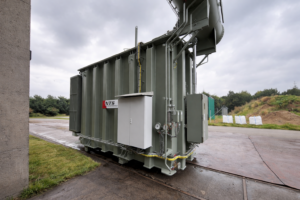
- Heavy industrial power transformers — designed for high-MVA applications like mining, steel production, and large-scale renewables integration
Each category carries different engineering tolerances, cooling requirements, and certification pathways. Understanding which type your application demands is the first step — and ensuring that equipment meets Canadian compliance standards is the critical next one.
The Critical Role of CSA Standards and Regulatory Compliance
Sourcing industrial power transformers in Canada without verified CSA certification isn’t a cost-saving shortcut and a liability that can halt operations, void insurance, and put workers at risk.
Canadian regulatory compliance starts with understanding what the standards actually demand. CSA C22.3 No. 1 governs electrical infrastructure resilience across the country, and its 2025 edition reflects a significant shift in how engineers and procurement teams must think about equipment selection. The update explicitly prioritizes resilience against extreme climate events from ice storms in Ontario to wildfire-driven grid instability in British Columbia. Meaning the performance envelope for compliant transformers has expanded considerably.
2025 Compliance Baseline: Equipment must now demonstrate resilience across a wider range of environmental stress conditions, not just standard operational parameters.
- Thermal performance under sustained high-ambient conditions
- Moisture and contamination resistance for outdoor and semi-exposed installations
- Seismic and mechanical durability in regions with variable ground stability
CSA certification for industrial hazardous locations is non-negotiable for facilities handling flammable gases, combustible dust, or volatile liquids. Without it, a transformer simply can’t be legally installed in those environments, regardless of how capable it looks on a spec sheet.
The risk of importing non-certified equipment from international markets is real and well-documented. Transformers built to IEC or other regional standards may appear compatible on paper, but subtle differences in insulation ratings, tap changer design, and thermal classification can create dangerous gaps when deployed in Canadian industrial environments. And when something goes wrong, the absence of CSA certification means your facility and not the manufacturer, absorbs the liability. That’s a risk no serious industrial operator should accept.
Understanding these compliance requirements sets the stage for a deeper question: not just whether a transformer meets Canadian standards, but whether its core engineering design is matched to the extreme demands of the application itself.
Why EAF Operations Require Specialized Shell-Type Engineering
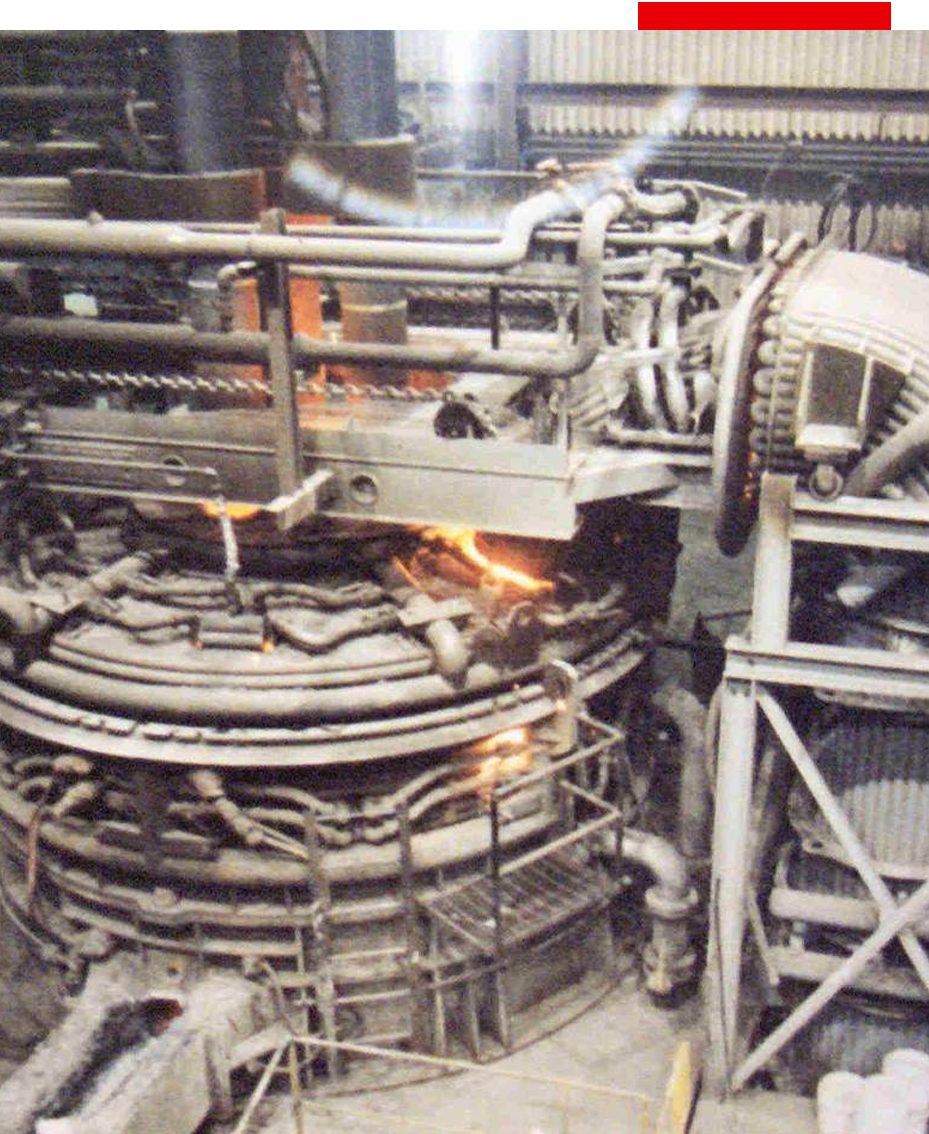
Electric Arc Furnace service places mechanical and electrical demands on transformers that standard industrial designs simply aren’t built to handle.
EAF mechanical stresses are unlike anything found in conventional power delivery. Rapid load cycling, violent current surges during electrode contact, and continuous electromagnetic force fluctuations all combine to fatigue transformer windings far faster than typical industrial service would. Canadian transformer manufacturers working in the steel sector have long recognized that EAF service isn’t just a power rating problem — it’s a structural engineering challenge that starts at the design stage.
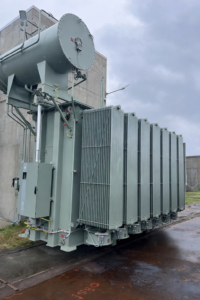
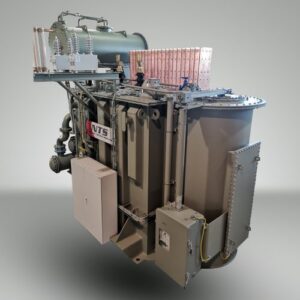
That’s where the choice between shell-type and core-type designs becomes critical. Shell-type transformers offer roughly 1/2 to 1/3 the reactance of comparable core designs, which directly enables higher secondary current output. And in EAF service, secondary current is everything. It’s what drives arc stability and melting efficiency. Core-type designs may be adequate for steady-state loads, but they can’t match shell-type performance under the punishing variability of arc furnace operation.
Lower impedance translates directly into higher power transfer efficiency. Shell-type designs are preferred for EAF service due to lower impedance and higher power transfer efficiency, meaning more of the available energy actually reaches the arc rather than dissipating as heat in the transformer itself. That efficiency gap compounds quickly when you’re running multiple heats per shift.
“Optimizing tap-to-tap melt time isn’t just about raw power — it’s about delivering that power with precision. Superior reactance management lets operators maintain a stable, efficient arc throughout the melt cycle, reducing both energy waste and electrode consumption,” says Ugur Coskun, Director, Metallurgical Product Group for Whiting Equipment Canada.
Getting the reactance curve right shortens melt times, lowers operating costs, and extends equipment life. Choosing the right supplier to deliver that engineering precision is equally consequential — and that’s exactly what the next section addresses.
How to Choose a Transformer Supplier in the Canadian Market
Choosing the right transformer supplier in Canada isn’t just a procurement decision, rather, it’s an engineering partnership that directly affects your facility’s uptime, safety, and long-term capital efficiency.
Procurement leads often focus on price and lead time, but those metrics only tell part of the story. The more consequential questions are about depth: Does this supplier design from first principles, or do they simply assemble standard components? Can they engineer custom solutions for demanding applications like EAF transformers for steel industry environments, where thermal cycling, high current, and continuous duty are the norm rather than the exception? Evaluating engineering capability over assembly capacity is the first and most important filter.
Warranties and service commitments signal how much confidence a manufacturer has in their own product. Custom transformer manufacturers in Canada often differentiate through extended 5-year warranties, and that commitment reflects a supplier willing to stand behind long-term performance and not just the delivery date. Look for service agreements that include on-site support, spare parts availability, and documented response times. In remote Canadian industrial sites, those terms aren’t a nice-to-have; they’re operationally critical.
Custom-engineering capacity is another non-negotiable. Facilities with non-standard voltage requirements, unusual load profiles, or harsh environmental exposures need suppliers who treat each project as a distinct engineering challenge. A supplier who can’t produce detailed application-specific documentation — tap changer configurations, thermal modeling, impedance analysis — isn’t equipped for complex industrial procurement.
The partnership model changes the calculus entirely. What Whiting Equipment Canada and Norsk Transformers offer isn’t a catalog transaction — it’s a coordinated engineering relationship built for specialized industrial needs. That distinction matters when you’re making procurement decisions that will shape your facility’s reliability for the next decade. The sections ahead will pull these threads together into a clear framework for what to prioritize.
The Bottom Line: Key Takeaways for Industrial Power Procurement
Canada’s industrial power landscape is evolving fast, and the gap between generic transformer procurement and purpose-built engineering has never been more consequential.
The Canadian transformer market reflects genuine infrastructure momentum. Grid expansion projects, electrification mandates, and the push to modernize aging industrial facilities are all accelerating demand for high-specification power equipment. According to industry analysis of the Canadian transformer sector, Canada’s unique combination of geographic scale, climate extremes, and energy-intensive industries creates procurement conditions that off-the-shelf solutions simply can’t meet.
Compliance isn’t a checkbox exercise here — it’s structural. CSA C22.3 No. 1 sets the benchmark for electrical infrastructure resilience in Canadian environments, and any transformer deployed in a demanding industrial context needs to be engineered around those requirements from the ground up. Meeting that standard isn’t just about legal clearance; it’s about ensuring your equipment can handle freeze-thaw cycles, ice loading, and the operational stresses that Canadian facilities routinely face. You can review the CSA Group’s standards framework for resilient electrical infrastructure to understand how deeply climate resilience is embedded in Canadian compliance requirements.
Shell-type transformer design remains the proven choice for EAF operations and heavy industrial environments. As covered earlier in this article, the mechanical and electrical demands of arc furnace service rapid load cycling, harmonic distortion, extreme current surges) require a design architecture that core-type units simply aren’t optimized to handle. Shell-type construction delivers the thermal management and short-circuit tolerance that keeps critical operations running.
The engineering partnership matters as much as the equipment itself. Whiting Equipment Canada, working through the Norsk Transformers relationship, brings the specialized design capability and field experience that harsh-environment industrial procurement demands. That combination of Canadian market knowledge and purpose-built transformer engineering is what positions facilities for long-term reliability — not just initial compliance.
The decisions you make at the procurement stage shape operational outcomes for decades. The next section explores how to secure that future with confidence.
Securing Your Facility’s Future with Engineered Solutions
Generic transformer equipment simply cannot meet the demands of Canada’s harshest industrial environments, and the cost of that mismatch compounds over time.
In practice, facilities that invest in purpose-built systems from the outset avoid the cascading consequences of underperformance: unplanned downtime, accelerated maintenance cycles, and regulatory exposure under CSA standards. Whether your operation runs continuous heavy loads, endures extreme cold, or operates in hazardous classified zones, the engineering behind your transformer isn’t a secondary consideration, rather, it’s the foundation everything else depends on.
Whiting’s commitment centers on long-term performance in exactly these conditions. Shell-type transformers, engineered to spec for Canadian industrial realities, deliver the thermal resilience and fault tolerance that off-the-shelf alternatives can’t match. That’s not a marketing claim but a structural advantage built into the design methodology, from insulation selection to cooling configuration to tap range.
And the right partner doesn’t disappear after commissioning. Consulting with engineers who understand your specific load profile, site conditions, and regulatory environment before procurement means fewer surprises across the full asset lifecycle. That upstream investment in expertise consistently translates to downstream reliability.
If your facility is navigating complex power requirements, the Whiting and Norsk Transformers partnership brings together deep application knowledge and proven manufacturing capability. Explore what that partnership means for your operation at whiting.ca and start the conversation with engineers who build for where Canadian industry actually operates.