

Defining the Industrial Transfer Car for Operations
A 40-ton steel coil doesn’t care how experienced the forklift operator is. Neither does a ladle of molten metal, a stamping die the size of a compact car, or a slab moving between crane bays in a hot mill. These loads impose demands that standard lift trucks were never designed to absorb, and the plants that keep trying to force the issue pay for it in damaged product, cracked floor slabs, and unplanned downtime.
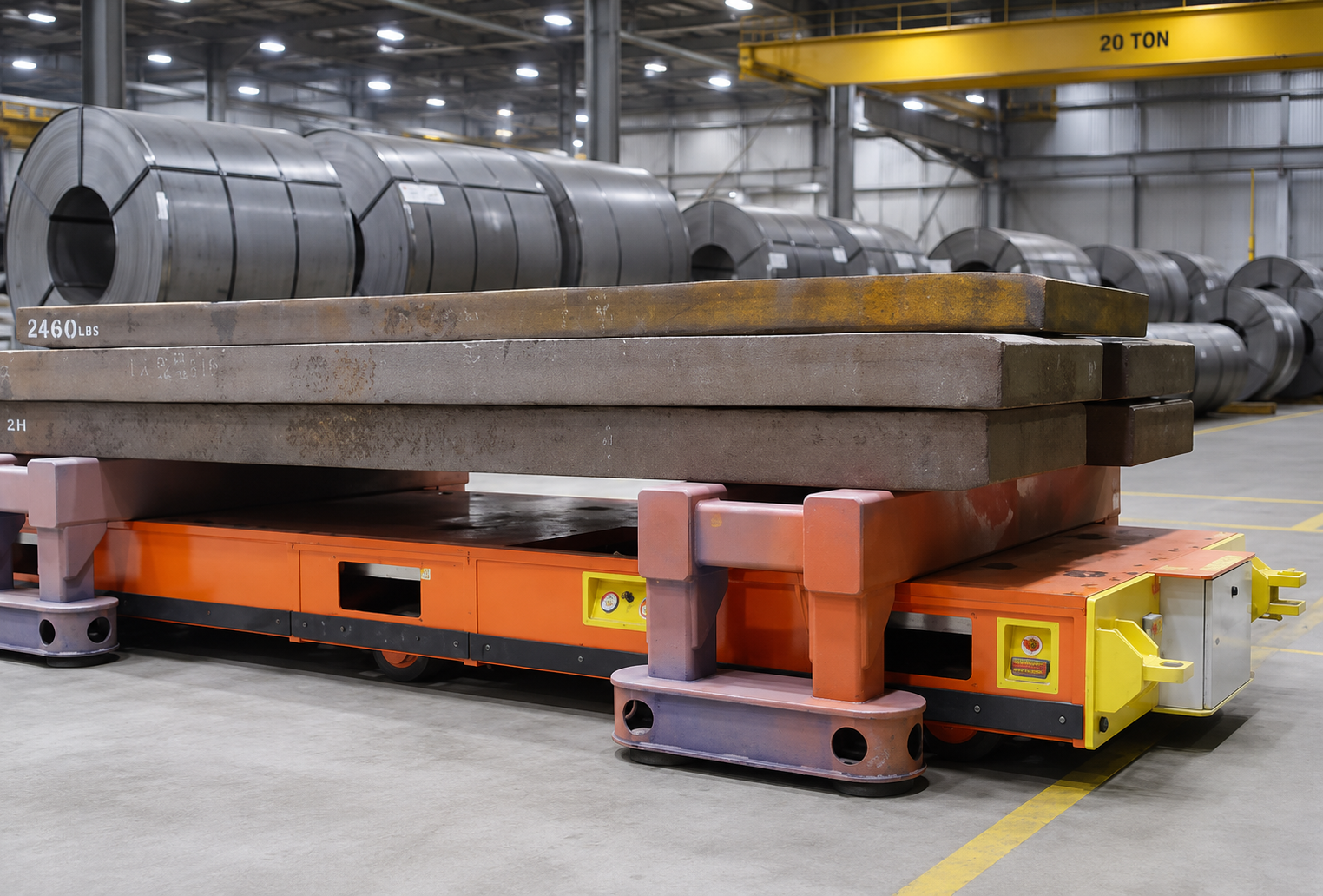
An industrial transfer car is a floor-based, powered material handling vehicle engineered to move extremely heavy loads along a defined path typically between crane bays, production cells, or processing lines, either on rails or on a trackless wheel system. The terminology matters here. A “cart” in most catalogs means something light, often manually pushed or towed. For example, the autonomous guided cart is capable of towing a trolley of mass not exceeding 350 kg in light applications, but industrial versions scale to hundreds of tons. That gap isn’t incremental — it’s a different category of machine entirely.
The economics support the shift. The material handling industry contributed $266 billion to the U.S. GDP in 2024, and the global industrial vehicle market is projected to reach USD 86.90 billion by 2034. At Whiting Equipment Canada, the operating principle is direct, tackling one-of-a-kind applications with unique requirements.
Rail-Mounted vs. Trackless: Choosing the Right Movement Profile
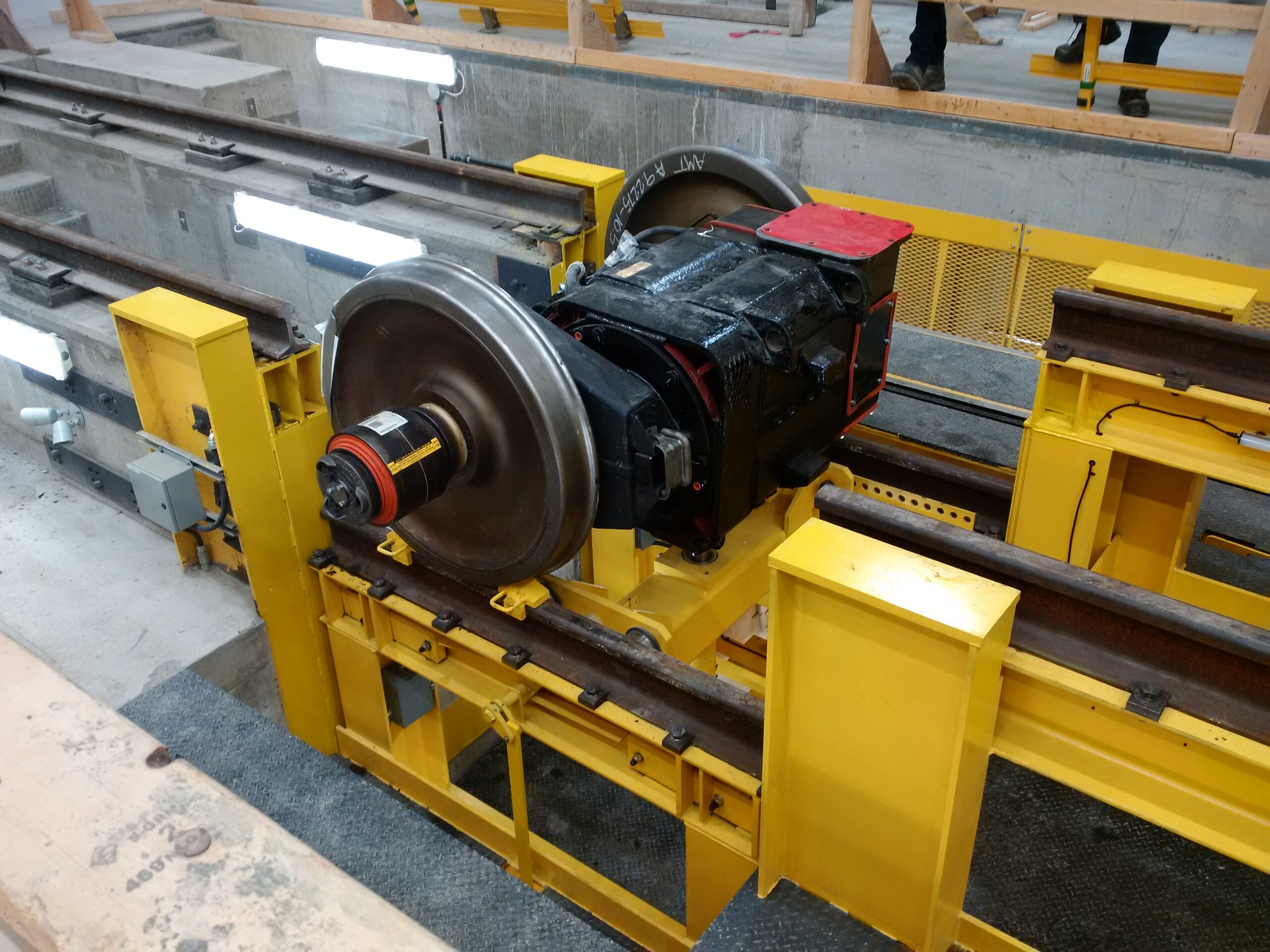
The first specification decision is whether the car runs on rail or on the floor. Rail-mounted cars travel a fixed route with the load path fully constrained, which gives maximum stability at extreme tonnages and removes any question of drift or operator error. Trackless designs trade that constraint for flexibility. A steerable transfer car can serve multiple destinations, navigate tight aisles, and be redeployed as the plant layout changes.
| Type | Best For | Power Source |
| Rail-mounted | Fixed, repetitive bay-to-bay routes at maximum tonnage | Cable reel, busbar, or onboard battery |
| Trackless (steerable) | Multi-destination routing, constrained aisles, flexible layouts | Onboard battery |
| Hybrid / turntable-equipped | Crossing intersecting rail lines or changing travel axis | Busbar or battery |
Existing rail is usually workable. Wheel profiles, flange dimensions, and axle spacing can be engineered to match in-place track, which avoids tearing up a working floor to install a new system.
Power selection follows duty cycle. Cable reels and busbars suit continuous, high-draw operation on a fixed path with no charging interruption. Battery power suits intermittent cycles and trackless routes where a tether is impractical.
Heavy-Duty Applications: Steel, Automotive, and Foundries
Three sectors drive most heavy transfer car demand, and each imposes a distinct set of engineering constraints.
Steel. A coil transfer cart moves finished and semi-finished coils between the mill, annealing, and shipping without the edge damage and scuffing that comes from fork contact. Custom tooling like coil saddles or V-decks cradle the load across its circumference rather than pinching it at two points. The same plants rely on heavy load transfer cart designs for slab and scrap movement, where abrasion, impact loading, and mill scale destroy conventional running gear.
Automotive. Stamping operations need repeatable, precise die placement. A mold transfer car positioned to tight tolerances lets a press change happen in minutes instead of hours, and the flat, reinforced deck accepts the concentrated point loads a die set imposes.
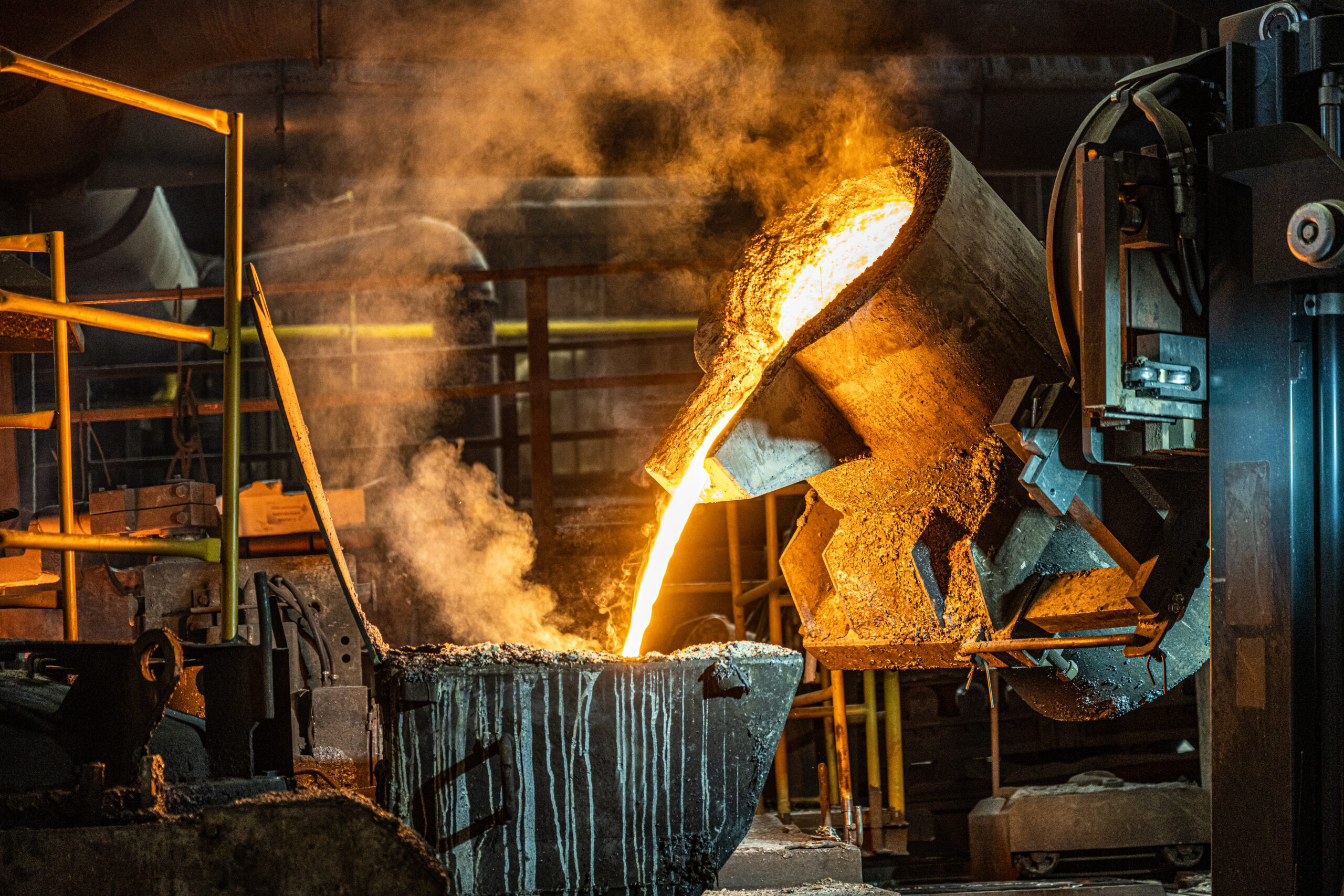
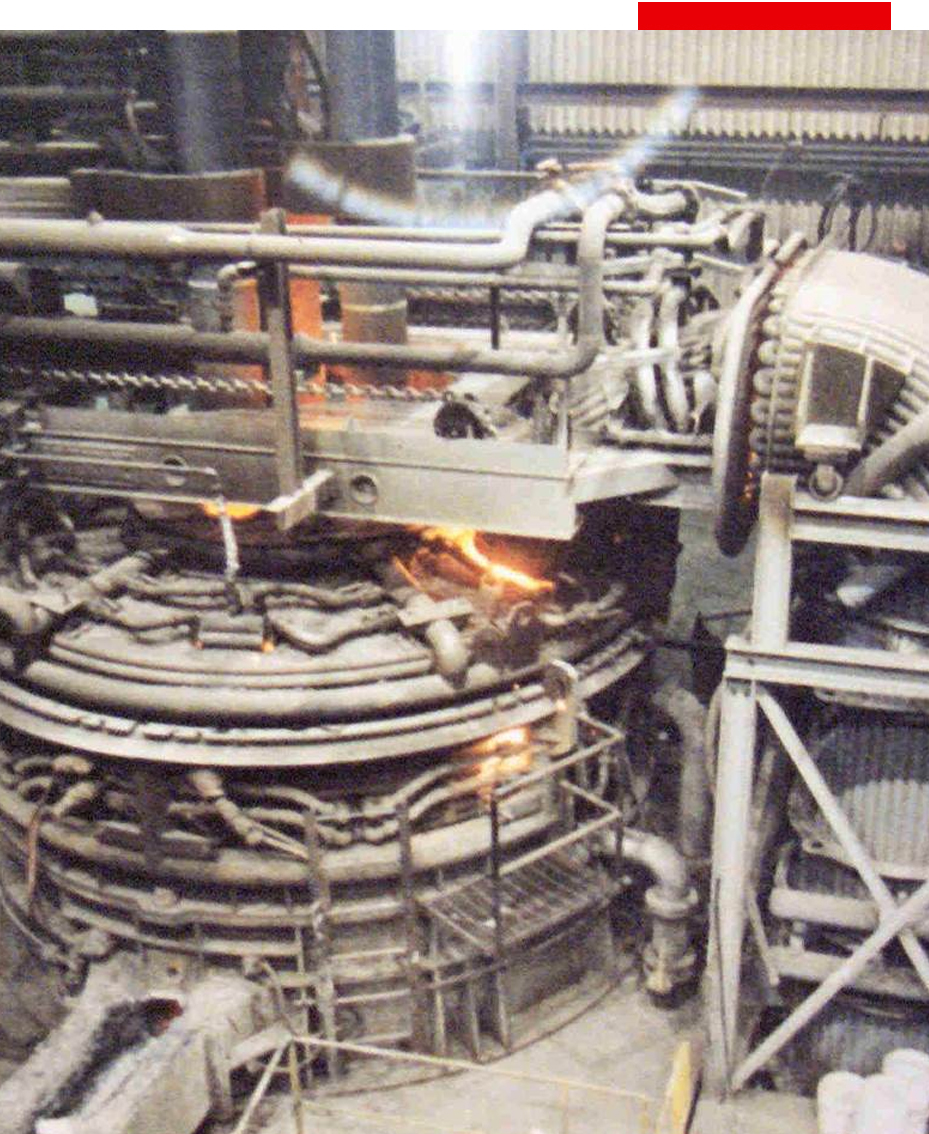
Foundry. Ladle and mold transfer cars operate adjacent to molten metal. That means heat shielding, protected cabling, sealed drive components, and materials selected to survive radiant heat and spatter.
- Coil handling without surface damage
- Die and mold changeover for press lines
- Ladle transport in high-heat zones
- Slab, billet, and scrap movement in primary production
Why Transfer Cars Outperform Forklifts for Massive Loads
Forklifts remain a good tool for palletized goods, mixed inventory, and anything requiring vertical lift in a warehouse. Their versatility is real. But versatility and extreme capacity are different design targets, and heavy industry needs the second one.
- Safety: A transfer car carries its load low and close to the deck. There’s no raised mast, no load-center derating curve, and on rail, no possibility of the vehicle leaving its path.
- Capacity: Standard lift trucks top out well short of what a mill needs. Transfer cars are built for hundreds of tons on a single deck.
- Floor wear: Load is distributed across rails or multiple wheel sets rather than concentrated under two drive tires, reducing slab cracking and spalling.
- Automation readiness: A constrained or guided path integrates cleanly with plant control systems. The autonomous guided cart is capable of towing a trolley of mass not exceeding 350 kg in light applications, but industrial versions scale to hundreds of tons under the same automated logic.
The cost argument follows from the duty cycle. A forklift pushed near its structural limit on every shift accumulates damage in the mast, hydraulics, and frame. A transfer car sized correctly for the load operates well inside its design envelope indefinitely.
The Engineering Edge: Custom vs. Off-the-Shelf Solutions
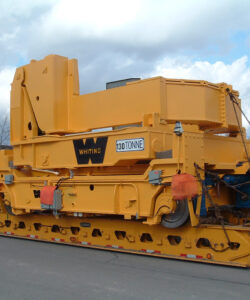
If your application appears in a product catalog, go ahead and buy from the catalog. Most heavy industrial applications don’t. Standard equipment fails in extreme environments for a predictable reason: it’s engineered against an assumed average duty cycle, an assumed ambient temperature, and an assumed load geometry. Change any one of those and the margins disappear.
Deck configuration is the clearest example. A V-deck or saddle arrangement is mandatory for coils and useless for a stamping die, which needs a flat, reinforced surface with locating features. Ladle transport requires heat shielding and component placement that no general-purpose deck accounts for. Travel speed, acceleration profile, braking distance, and drive sizing all shift with cycle frequency — a car making six moves a shift and a car making sixty are not the same machine.
Whiting’s engineering philosophy is stated plainly, tackling one-of-a-kind applications with unique requirements. That means sizing structure, drives, and controls around the actual usage pattern and heavy-duty cycles of a specific plant, so the equipment performs over decades in the harshest industrial environments rather than meeting a nominal rating on day one.
Key Takeaways for Industrial Material Handling
The core decision points for plant managers evaluating heavy material handling:
- Transfer cars are the answer when loads exceed forklift capacity. Lift trucks handle versatility and vertical reach; transfer cars handle mass. Steel coils, ladles, slabs, and die sets fall firmly in the second category.
- Rail-mounted systems maximize stability on fixed paths. When the route doesn’t change and the tonnage is extreme, constraining the path removes an entire class of risk.
- Trackless and steerable designs buy flexibility. They serve multiple destinations and adapt to layout changes, at the cost of the absolute stability rail provides.
- Hazardous and specialized environments require custom engineering. Foundry heat, coil geometry, and press-line tolerances each demand purpose-built decks, shielding, and drive configurations that standard equipment doesn’t carry.
- The sector’s economic weight is substantial and automation is expanding it. The material handling industry contributed $266 billion to the U.S. GDP in 2024, and automation adoption is the stated driver behind industrial vehicle market growth through 2034.
Solving Your Unique Handling Challenges
Before specifying anything, document two things precisely: the duty cycle and the environment. How many moves per shift, at what tonnage, over what distance, with what dwell time? What are the ambient temperature extremes, the contamination exposure, the floor condition, and the available clearances? Those answers determine drive sizing, wheel and rail selection, power delivery method, and whether the application needs rail constraint or trackless steering. Guessing at them is how plants end up replacing equipment in five years that should have lasted thirty.
From there, the conversation belongs with engineers at an OEM rather than a catalog. Deck geometry, load distribution, control integration, and structural margins all have to be resolved against the actual application — not against a nominal rating that assumes conditions your plant doesn’t have.
Whiting Equipment Canada designs and manufactures heavy-duty transfer cars for steel, automotive, and foundry operations where standard equipment falls short. If you’re moving loads that conventional handling can’t safely accommodate, bring the application to our engineering team and we’ll build the solution around it.