
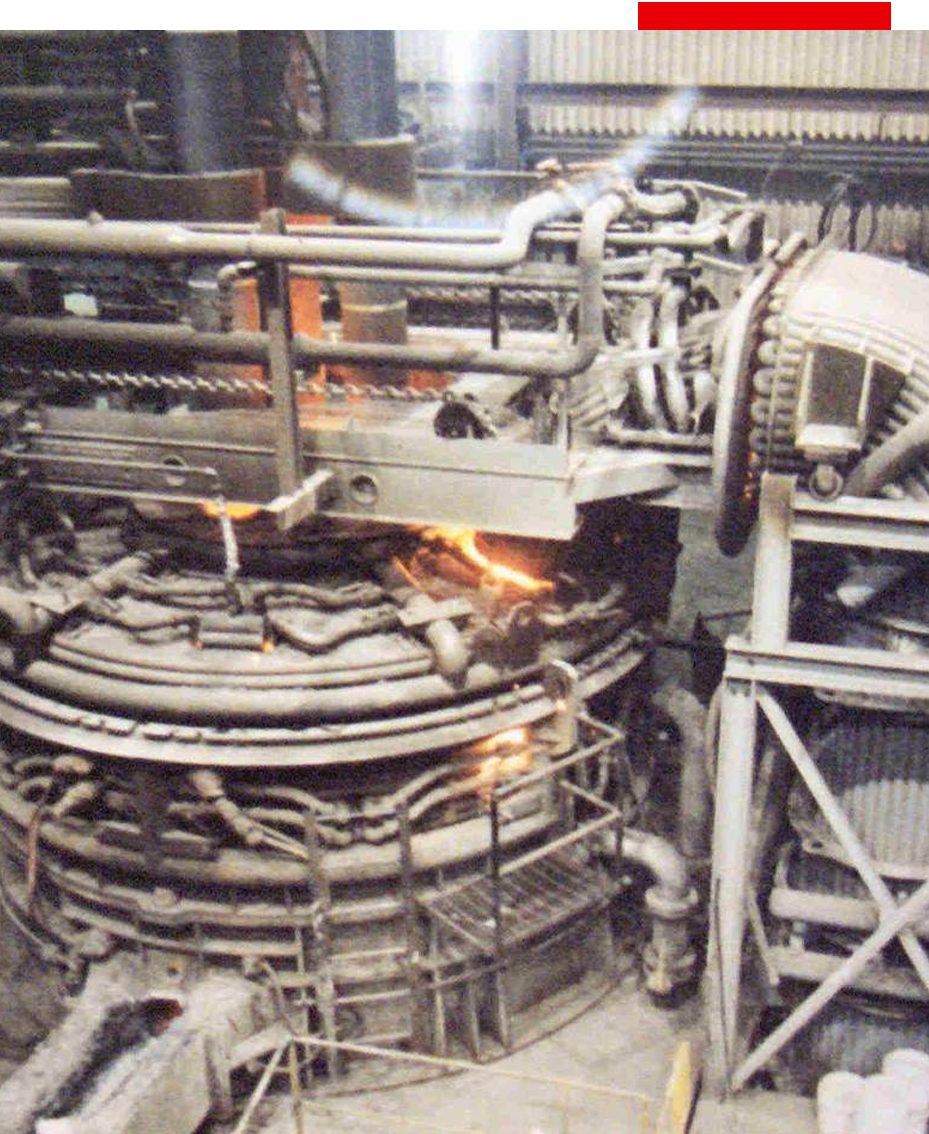
A melt shop is a highly specialized steelmaking department where scrap metal is charged into industrial furnaces and converted into liquid steel.
In modern steelmaking, the melt shop refers specifically to the EAF-based production environment found in mini-mills and specialty steel operations and not the vast, integrated blast furnace complexes of the previous century. Where traditional integrated mills relied on continuous iron-ore reduction, today’s EAF facilities operate on a fundamentally different model: one built around flexibility, scrap metal feedstock, and high-intensity electric arc melting that generates temperatures exceeding 3,000°F.
The extreme thermal environment makes the melt shop a demanding engineering challenge. Every component from the transfer car systems to the electrode regulation controls must perform reliably under sustained mechanical stress, intense heat, and significant electromagnetic interference. It’s more than just a room housing a furnace. It’s a tightly integrated ecosystem where equipment selection, facility layout, and operational sequencing all intersect. Understanding how that ecosystem is structured starts with recognizing what sets the EAF apart from the steelmaking methods it has largely displaced.
EAF vs. Blast Furnace: The Shift Toward Flexibility
The blast furnace dominated steelmaking for over a century, but its rigid, continuous operation is increasingly mismatched with modern market demands — where the EAF melt shop excels.
Blast furnace limitations. Traditional blast furnaces are engineering marvels built for one purpose: scale. They run continuously, often for years without shutdown, converting iron ore and coke into molten iron at enormous volumes. This permanence is also their weakness. You can’t simply pause a blast furnace when steel prices dip or demand softens. The capital commitment is massive, the feedstock supply chains are complex, and the operational flexibility is essentially nonexistent.
EAF adaptability. Understanding what a melt shop built around EAF technology actually enables reframes the whole comparison. An EAF can be started up or shut down within hours, not weeks. Production volume scales with electricity pricing and order books rather than being locked into a fixed output rate. That responsiveness is a genuine competitive advantage in a market where demand fluctuates by product type, region, and quarter. This operational design reflects a broader industry shift toward leaner, more adaptive steelmaking.
Scrap as the strategic feedstock. Where blast furnaces rely on raw iron ore, EAF melt shops run almost entirely on recycled scrap metal. It is a feedstock that’s widely available, domestically sourced in most markets, and far less energy-intensive to process. That material choice shapes everything from procurement logistics to facility layout.
The EAF as the facility’s core. Every other system in the melt shop — crane handling, fume extraction, power supply, secondary refining — is engineered around the EAF itself. It’s not one component among many. It’s the anchor, and the next section examines exactly how that primary melting core is structured.
The Primary Melting Core: EAF, Ladle Furnaces, and AOD
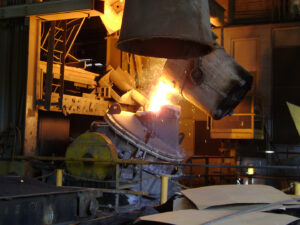
The three primary vessels at the heart of any melt shop are the electric arc furnace, the ladle furnace, and the AOD converter. Each handle a distinct stage of the steelmaking sequence, and together they define what modern melt shop equipment is built to do.
The Electric Arc Furnace. The EAF is where the process begins. Scrap metal is charged into the vessel and melted through the intense energy of electrical arcs, generated by graphite electrodes carrying tens of thousands of amperes. The result is liquid steel at temperatures that push well beyond 2,900°F. Understanding how that energy conversion works at a component level is essential for anyone specifying or maintaining the systems built around it. The EAF is engineered for thermal abuse — every heat cycle expands and contracts the vessel’s steel shell, refractory lining, and electrode arms under conditions that most industrial equipment would never survive.
The Ladle Furnace. Once the EAF taps liquid steel into a transfer ladle, the ladle furnace takes over for secondary metallurgy. It’s not a melting vessel — it’s a refining and temperature-holding station. The LF uses graphite electrodes and argon stirring to homogenize chemistry, adjust alloying additions, and hold the steel at a precise temperature window until the caster is ready to receive it. That temperature control is critical; even a modest deviation can result in off-spec product or casting disruptions.
The AOD Converter. For stainless and specialty steel grades, the argon oxygen decarburization process adds a third stage. The AOD vessel receives molten steel from the EAF and refines it by injecting a controlled argon-oxygen gas mixture through submerged tuyeres. This drives carbon out of the melt while protecting chromium content, which is something conventional oxygen blowing alone can’t achieve without excessive alloy loss. The thermal and mechanical demands across all three vessels make one engineering requirement universal: every structure, vessel support, and drive system must be purpose-built to handle repeated thermal cycling without fatigue. That same principle extends directly to the material handling systems that move charge and liquid steel between them.
Essential Material Handling: Charge Buckets and Transfer Cars
In electric arc furnace steelmaking, the vessels and furnaces get most of the attention, but the material handling equipment that feeds them is just as critical to keeping a melt shop running safely and efficiently.
The process starts with the scrap charge bucket. These heavy-duty containers come in two primary configurations: clamshell buckets, which open from the bottom via hinged panels to drop scrap directly into the furnace, and orange peel buckets, which use multiple grapple segments to grip and release loose or irregular material. The choice depends on scrap density, material mix, and furnace geometry. Both designs must withstand enormous static and dynamic load. A fully charged bucket can weigh several hundred tons while cycling repeatedly through extreme thermal environments without structural fatigue.
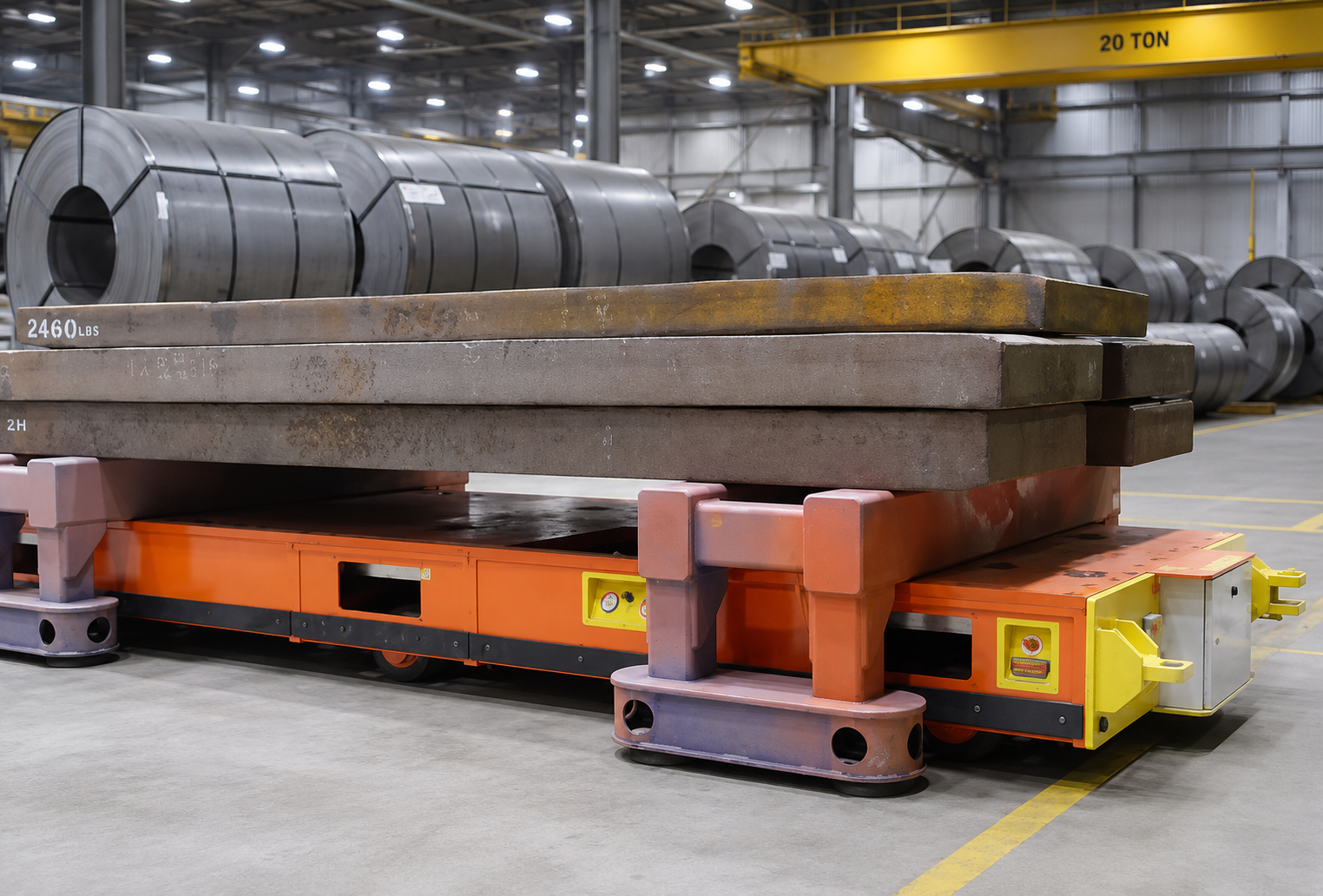
Once liquid steel leaves the EAF, ladle transfer cars take over. These rail-mounted platforms move ladles between the EAF taphole, the ladle furnace station, and the continuous caster entry point, maintaining precise positioning at each stop. Delays or misalignment at any transfer point ripple through the entire production sequence, so car speed, load capacity, and positional accuracy aren’t optional features, but rather, core engineering requirements.
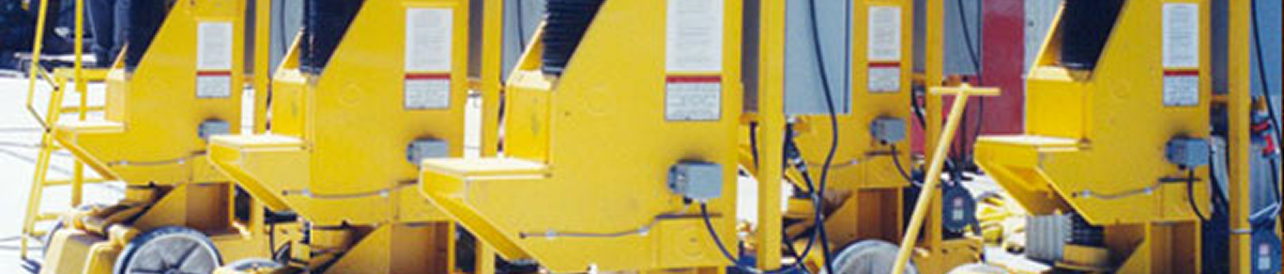
This is why custom-engineered material handling outperforms off-the-shelf alternatives in melt shop environments. Standard equipment isn’t designed for the combined stresses of thermal exposure, electromagnetic interference, and repetitive heavy-cycle loading that define this setting. Whiting’s purpose-built charge buckets and transfer cars are engineered specifically for these demands, with power and control systems matched to the thermal and electrical realities of the melt shop floor.
Understanding what this equipment must endure makes the next question obvious: what does a complete melt shop cycle actually look like, from the moment scrap enters the facility to the point molten steel reaches the caster?
- Clamshell charge buckets — bottom-opening design for controlled, high-volume scrap drops into the EAF
- Orange peel buckets — segmented grapple configuration for handling loose, irregular, or mixed scrap grades
- Ladle transfer cars — rail-mounted platforms engineered for precise positioning and heavy-cycle reliability between process stations
- Custom structural frames — purpose-built to resist thermal fatigue, electromagnetic interference, and sustained mechanical stress
The Melt Shop Process: From Scrap Yard to Molten Steel
The melt shop process moves in a tight, sequential loop, and every stage depends on the one before it executing without fault.
Charging the furnace. It starts at the scrap yard, where bulk material is sorted, graded, and loaded into high-capacity charge buckets. Those buckets are lifted overhead by crane and positioned above the open EAF, then released in a controlled drop that loads the vessel in a matter of seconds. The entire sequence is engineered for speed. Tap-to-tap time is a core efficiency metric, and a slow charge slows everything downstream.
The melting phase. Once the furnace roof closes and the electrodes descend, the arc strikes. The electrical energy delivered at this stage is enormous, generating temperatures well above the melting point of steel. Operators manage power curves, slag chemistry, and oxygen injection throughout the heat to drive carbon out and build a workable melt. It’s the most energy-intensive point in the entire process.
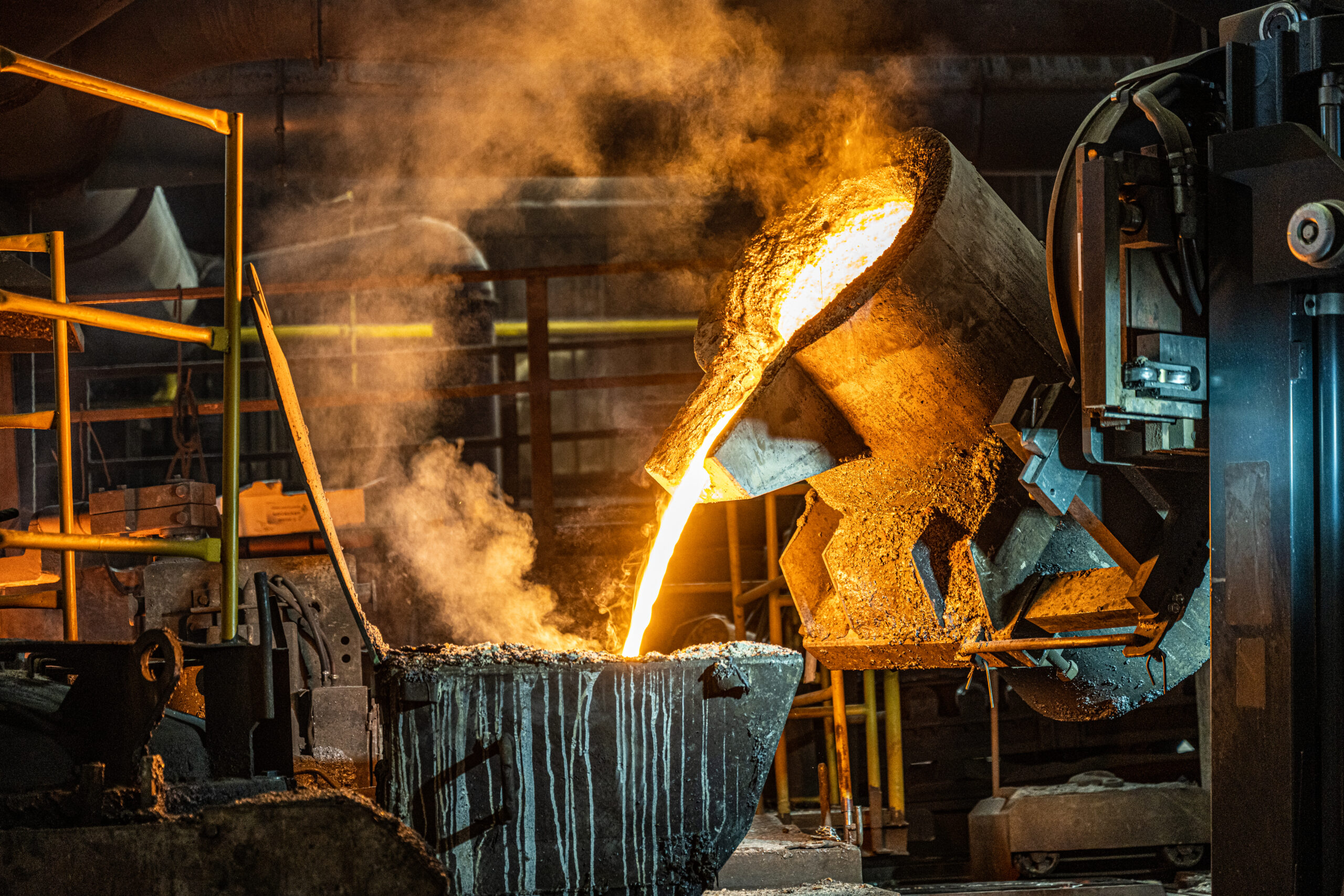
Tapping and refining. When the heat is ready, the furnace tilts and liquid steel flows into the waiting ladle below. From there, the ladle moves by transfer car to the secondary metallurgy station — typically a ladle furnace or AOD, depending on the grade being produced — where temperature adjustments, alloying additions, and final chemistry corrections are made. This step is where grade consistency is locked in.
Transfer to the caster. Once refining is complete, the ladle travels to the continuous caster, where liquid steel is shaped into billets, blooms, or slabs. Every handoff along this route from bucket to furnace, furnace to ladle, ladle to caster, demands equipment precision and reliability that doesn’t waver heat after heat. Understanding how each stage connects is what makes the full picture of melt shop operations come into focus.
What You Need to Know: Melt Shop Essentials
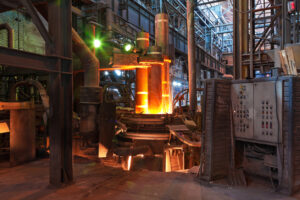
A melt shop is the EAF-centered core of a steel mill — where carefully sequenced equipment, extreme heat, and precise metallurgy combine to turn scrap into liquid steel.
Understanding how these operations fit together comes down to a few essentials that tie back to everything covered in this article. At the center is the electric arc furnace, supported by secondary refining vessels like the ladle furnace and AOD, and kept moving by material handling systems purpose-built for the demands of continuous industrial production.
EAF vs. blast furnace. The distinction matters because it shapes everything downstream. Equipment design, facility layout, energy sourcing, and environmental footprint. EAF-based melt shops operate with far greater flexibility, respond to market demand without the rigid throughput constraints of integrated steelmaking, and carry a meaningfully lower carbon profile. In 2026, that combination isn’t just an operational preference; it’s a competitive and regulatory reality.
Reliability is the non-negotiable. The entire sequence from scrap yard to caster runs inside one of the harshest industrial environments that exists. Thermal cycling, electromagnetic stress, and the relentless pace of back-to-back heats mean that equipment engineered specifically for the melt shop isn’t a premium choice; it’s the baseline requirement. Off-the-shelf solutions that aren’t designed for these conditions don’t just underperform – they fail. And a single failure point can halt an entire production sequence.
That reality is exactly what separates purpose-built melt shop equipment from generic alternatives — and it’s where the right engineering partner makes all the difference.
Partnering for Performance: The Whiting Advantage
In a melt shop, equipment that isn’t purpose-built for the environment doesn’t just fall short, it becomes a liability that compounds across every heat cycle.
The previous sections have made one pattern clear: the melt shop demands precision at every stage. Thermal fatigue, electromagnetic interference, and the relentless pace of continuous production leave no margin for equipment that was designed to meet a general standard rather than a specific application. Generic solutions may function under normal industrial conditions, but the melt shop isn’t a normal environment. When equipment fails under these conditions, it doesn’t just interrupt one operation, it stalls the entire production sequence.
Whiting’s approach starts with that reality. Every furnace, ladle, charge bucket, and transfer car is custom-engineered to the operational demands of the facility it will serve and not adapted from a standard catalog. That means accounting for the specific thermal cycles, load profiles, and spatial constraints of each melt shop before a single component is specified. It’s an engineering-first methodology that produces equipment built to perform heat after heat, not just pass an acceptance test.
Whether you’re planning a new melt shop build or looking to optimize the performance of an existing operation, Whiting’s engineering team is ready to consult on the right solution. Contact Whiting today to schedule a technical consultation and put purpose-built expertise to work for your facility.