


How Does an Electric Arc Furnace Work?
The electric arc furnace process is one of the most energy-intensive and precisely orchestrated operations in heavy industry and its efficiency lives or dies on material handling.
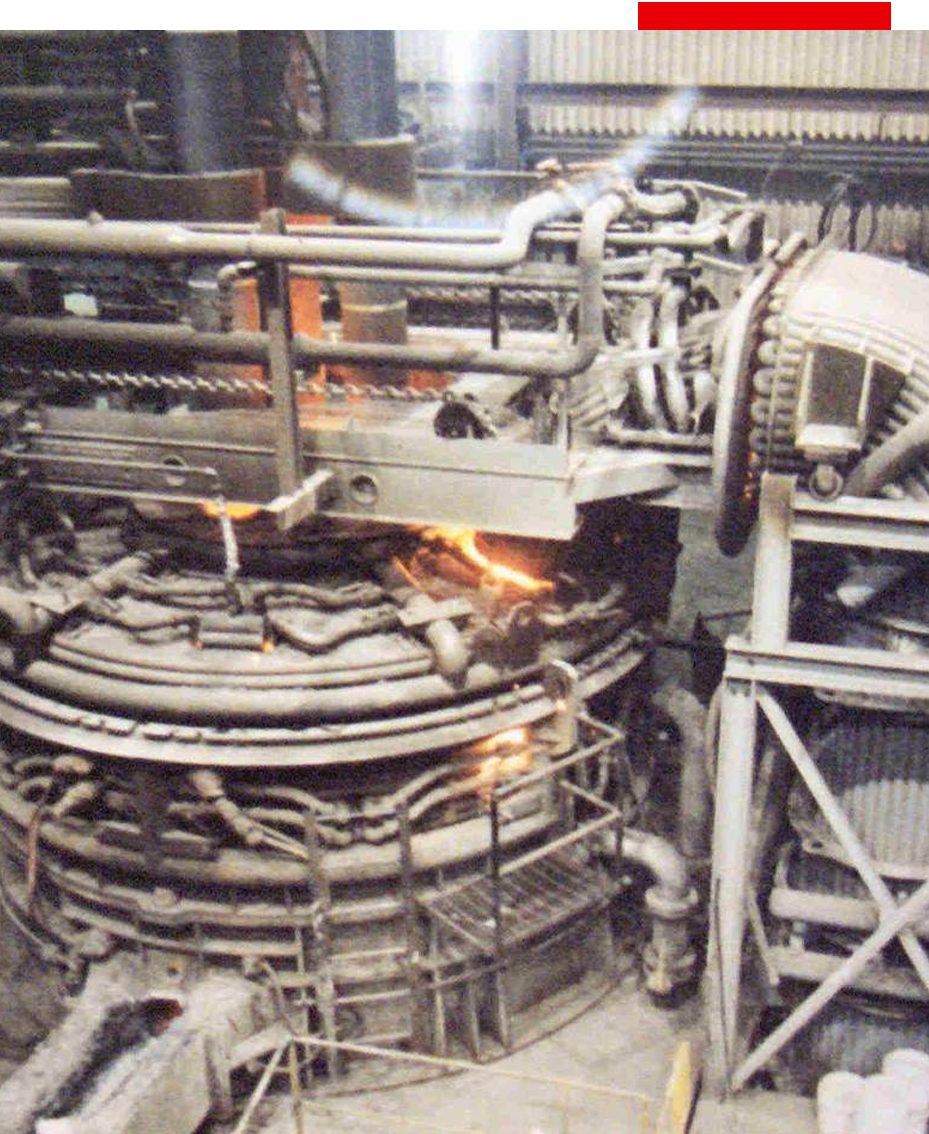
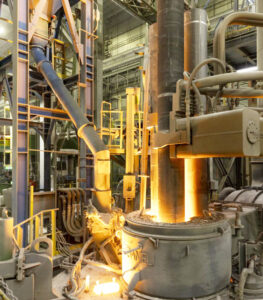
An electric arc furnace (EAF) is fundamentally a recycling powerhouse. It uses high-voltage electricity, channeled through three graphite electrodes, to generate an arc that reaches temperatures exceeding 3,000°C which is hot enough to melt dense scrap steel into liquid form within minutes. Unlike traditional blast furnaces, which depend on raw iron ore and coke and require days of continuous operation to start and stop, the EAF offers operators remarkable flexibility. It can be powered down, reconfigured, and restarted on demand, and its carbon footprint is substantially lower because its primary feedstock is recycled scrap rather than virgin ore.
The fundamental unit of EAF production is called a heat, a single melt cycle that begins with a cold, scrap-loaded furnace and ends when refined liquid steel is tapped into a ladle. U.S. EAF production consumes approximately 440 kWh of electricity per ton of crude steel, which means every minute of unnecessary delay translates directly into cost. Compressing that tap-to-tap cycle without sacrificing steel quality is the central challenge every melt shop faces.
That challenge extends well beyond the furnace shell itself. The melt-shop material handling systems surrounding the EAF — charge buckets, ladles, transfer cars, and overhead cranes — determine how quickly and safely each heat progresses. Understanding what drives efficiency in an EAF starts where every heat starts: the scrap charge.
Step 1: The Critical Role of Scrap Charging and Charge Buckets
n the EAF steelmaking process, the way scrap enters the furnace is just as consequential as what happens once the electrodes strike an arc.
Scrap layering isn’t a minor operational detail — it’s a deliberate engineering strategy. Heavy, dense scrap goes in first to form a protective bed over the furnace hearth, absorbing the initial electrode impact. Lighter, more combustible material layers on top. Proper scrap charging involves layering to optimize initial arc stability and prevent electrode breakage, which means a poorly sequenced charge can damage electrodes worth tens of thousands of dollars before a single heat is complete.
Charging speed is where equipment design becomes a competitive differentiator. Charge buckets must release their full load rapidly and completely — any hesitation means the furnace lid stays open longer, and heat escapes. That directly eats into tap-to-tap time, the industry’s core productivity metric. Even a 30-second delay per charge, compounded across hundreds of heats per week, translates into measurable losses in throughput and energy efficiency.
Thermal cycling is arguably the harshest test any material handling equipment faces in a melt shop. Charge buckets endure repeated exposure to extreme heat, mechanical shock from dense scrap loads, and the stress of rapid temperature swings. Whiting designs heavy-duty charge buckets specifically to withstand these conditions, maintaining structural integrity heat after heat. And because equipment failure during charging cascades into furnace downtime, the engineering tolerances here aren’t conservative, they’re critical.
That precision in the charging phase sets up everything that follows. How well electrodes can bore down into a fresh scrap charge depends almost entirely on how that charge was placed — a connection the next section explores in depth.
Step 2: Melting and the Science of Electrode Regulation
Precise control of electric arc furnace electrodes during the melting phase is what separates efficient, high-yield heats from costly, unpredictable ones.
Once scrap is charged and the furnace roof closes, the melting phase begins with what operators call the boring-down phase. The electrodes descend into the scrap pile, striking an arc that generates temperatures exceeding 3,000°C. During this stage, the scrap is dense, irregular, and highly resistant — conditions that demand careful, adaptive electrode positioning to maintain arc stability without mechanical damage.
Electrode regulation systems are the technical backbone of this phase. These automated systems continuously adjust electrode height in response to real-time voltage and current feedback, preventing the arc from “blowing” — a condition where the arc becomes unstable, wastes energy, and risks damaging furnace components. Effective electrode regulation can significantly cut power-on time without risking arc instability, which directly improves productivity per heat. The benefits of well-tuned regulation are concrete:
- Reduced power consumption by maintaining optimal arc length throughout the melt
- Shorter tap-to-tap times through consistent, uninterrupted energy transfer
- Lower electrode consumption by avoiding erratic arcing and mechanical contact with scrap
- Minimized refractory wear by keeping arc radiation directed into the melt, not toward furnace walls
Refractory wear is a particularly consequential variable here. When electrode positioning is imprecise, arc deflection increases heat exposure on the furnace sidewalls, accelerating refractory degradation and driving up maintenance costs. Consistent electrode control keeps that arc centered and focused — protecting the furnace lining over thousands of operational cycles.
With the melt reaching its target temperature and chemistry, the process transitions to a stage where the real metallurgical work begins — refining the steel and managing slag to lock in both quality and yield.
Step 3: Refining, Slag Formation, and Yield Optimization
The refining phase is where understanding how an electric arc furnace works goes beyond raw power, it’s where chemistry, slag control, and precise oxygen injection determine final steel quality.
Oxygen injection kicks off this phase. As the scrap melts into a molten bath, operators inject oxygen through lance systems to oxidize impurities like carbon, silicon, and phosphorus. This reaction produces a critical byproduct: foamy slag. When carbon monoxide bubbles rise through the molten slag layer, they create a thick, frothy barrier that effectively insulates the arc from the furnace walls. The practical payoff is significant — foamy slag practices are essential for shielding the furnace refractories from the intense radiation of the arc, reducing both thermal stress on the shell and overall energy consumption.
Slag management isn’t just about protection, though. A well-maintained slag layer improves arc stability, reduces heat loss to the roof and walls, and directly influences yield. When slag composition drifts — too thin, too oxidizing, or improperly timed — it exposes the refractory lining to arc radiation and drives up tap-to-tap times. Consistent slag chemistry is, in practice, one of the most reliable levers operators have for improving furnace efficiency heat after heat.
The transition from melting to refining requires careful timing. Once the bath reaches a homogeneous liquid state, the focus shifts from simply generating heat to hitting precise metallurgical targets — carbon content, temperature, and cleanliness. Off-gas monitoring plays a key role here, giving operators real-time feedback on combustion efficiency and bath chemistry as the heat progresses toward tapping temperature.
Once the steel meets grade specifications, attention shifts downstream — and that’s where the logistics of safely moving 100+ tons of molten metal from the furnace to the ladle become the next critical challenge.
Step 4: Tapping and Ladle Handling Logistics
The tapping and ladle handling phase is where metallurgical precision meets heavy-industrial logistics — and where a single equipment failure can halt an entire melt shop.
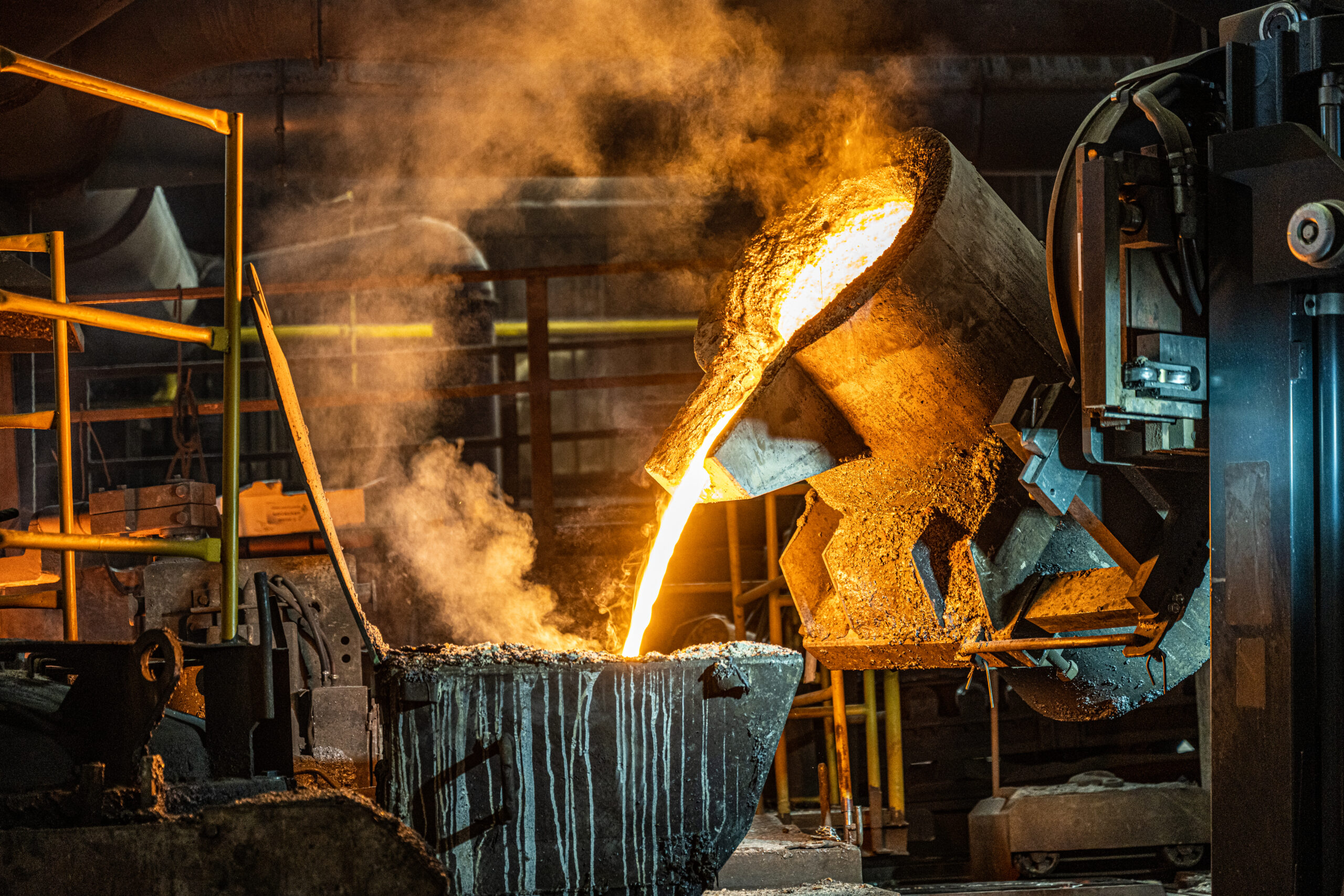
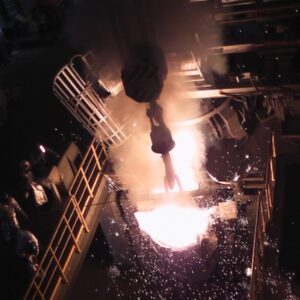
Once the refining phase is complete, the EAF tilts on its rocker mechanism to pour molten steel through the tap hole and into a waiting ladle positioned below. This controlled tilt is deceptively complex. The furnace must deliver steel at the right temperature and chemistry, and the ladle must be ready to receive it without thermal shock or contamination. Just as scrap charging systems set the foundation for a successful heat, the tapping sequence determines whether that refined steel reaches the casting floor in peak condition.
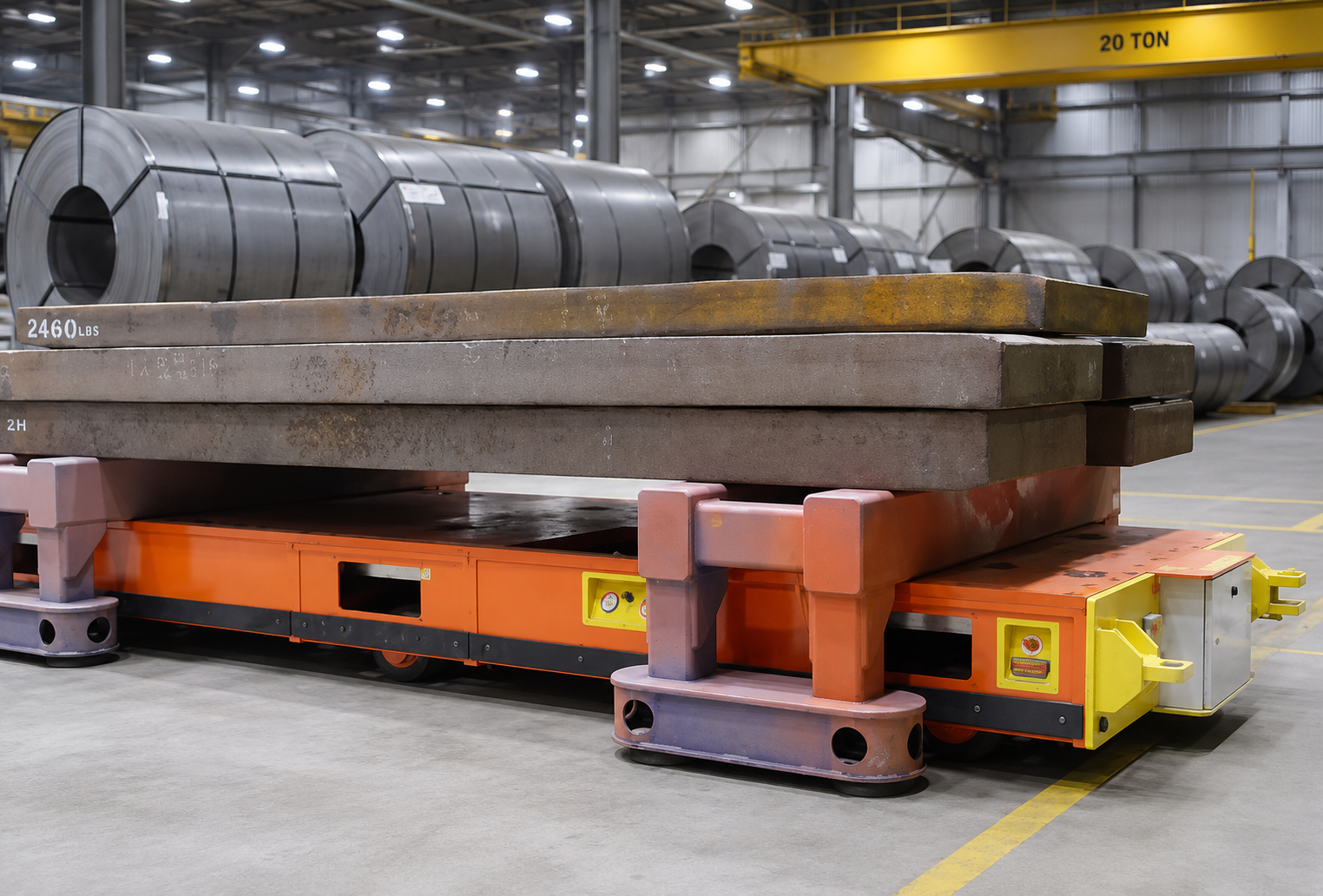
Ladle transfer cars are the workhorses of this phase. Moving 100 or more tons of liquid steel across a melt shop floor demands equipment engineered for extreme reliability — not standard industrial transfer vehicles. Melt-shop material handling requires specialized ladles and transfer cars built to perform consistently under intense radiant heat, heavy cyclic loads, and demanding production schedules. When specifying this equipment, thermal shielding, braking response, and load capacity all factor into duty cycle and safety system design.
Ladle preparation is equally critical and often underestimated. Pre-heating ladles to the correct temperature before tapping prevents premature steel solidification and protects refractory lining integrity. Inconsistent preheat temperatures introduce metallurgical variability that no downstream process can fully correct. Regular ladle maintenance — including refractory inspection and lining repairs — directly impacts both yield quality and operational safety.
Taken together, these elements — tapping control, transfer car engineering, and ladle conditioning — reveal just how much efficiency depends on the full system working in concert. The next section pulls these threads together into the key takeaways every EAF operator should keep front of mind.
The Bottom Line: Key Takeaways for EAF Operations
EAF efficiency isn’t driven by any single variable — it’s the combined result of electrical precision, chemistry control, and material handling speed working in tight coordination.
The sections above trace that logic from scrap yard to tapping spout, and the pattern is consistent: delays, mismatches, or equipment failures at any stage compound across the entire heat cycle. Pulling those threads together into a clear operational picture is how melt-shop leaders move from reactive troubleshooting to proactive performance management.
Scrap charging is the foundation. Every heat cycle starts with what you load into the furnace. Poorly graded, inconsistently charged scrap drives up tap-to-tap time and forces expensive chemistry corrections downstream.
Electrode regulation is your primary cost lever. Electrical energy typically represents the largest single operating cost in EAF steelmaking, and arc stability directly determines how efficiently that energy converts into molten steel.
Refining and slag control are where yield is won or lost. Proper foamy slag practice protects the furnace shell, reduces electrode consumption, and improves energy transfer — three compounding gains from one disciplined process.
Robust ladle handling equipment is non-negotiable. Safe, reliable ladle transfer isn’t a support function, it’s a throughput constraint. A ladle crane failure or transfer car misalignment can stall an entire shift.
hat connects all four points is infrastructure that’s engineered to the specific demands of your melt shop, not generic equipment applied to a specialized environment. That’s exactly where purpose-built solutions make a measurable difference, which is worth exploring in more depth.
Optimizing Your EAF Infrastructure with Whiting
Custom-engineered material handling solutions consistently outperform off-the-shelf equipment in electric arc furnace environments because melt-shop operations demand precision that generic designs simply can’t deliver.
he limitations of standard equipment become apparent quickly in high-cycle, high-temperature environments. Off-the-shelf solutions are built to broad tolerances, they aren’t designed around your specific ladle capacity, tap weight, crane geometry, or charging sequence. The result is compromised throughput, increased maintenance burden, and operational risk that compounds over time. Engineered solutions, by contrast, are matched to your exact duty cycle and floor layout from the outset.
Whiting’s engineering expertise spans the full scope of melt-shop infrastructure — from EAF furnace structures and ladle handling systems to foundry and steel industry solutions that integrate across your entire production chain. That breadth matters. When the equipment handling your scrap charge, your tapped steel, and your slag removal is designed as a coordinated system rather than a collection of independent components, efficiency gains are measurable and sustained.
The opportunity for most operations isn’t starting from scratch, it’s identifying where existing infrastructure is limiting performance. Whether that’s a ladle transfer car rated below your current tap weight, a charging system misaligned with your power-on time targets, or a crane configuration that creates bottlenecks at tapping, targeted upgrades can deliver significant returns without a full facility rebuild.
If you’re looking to reduce tap-to-tap time, improve yield, or simply eliminate the equipment constraints holding your melt shop back, consult with Whiting’s engineering team to assess your current layout and identify the highest-impact improvements.